
What Alum Kevin Garcia Wants Designers to Know About Strategy and Guidelines

In April, Gensler promoted NYSID alum Kevin Garcia ‘17 (MFA2) to Strategy Lead at the age of 33. Strategy is a specialization that few interior design students know exists, and they should, because it’s a highly compensated and growing part of the architecture and interior design business.
Garcia earned a bachelor’s degree in architecture from the Universidad de Puerto Rico before attending NYSID in the Post-Professional Master of Fine Arts in Interior Design (MFA2). He worked in interior design at WeWork and amenity experience strategy at Google before taking his first job with Gensler’s Strategy team, as a strategy manager. Over the past five years, Garcia has participated in NYSID’s student mentorship program, working with students one-on-one. He also regularly serves as a guest critic on the NYSID MFA2 thesis juries. He sits down with Jennifer Dorr, NYSID’s managing editor, to share a glimpse into his career and the strategy studio at Gensler.
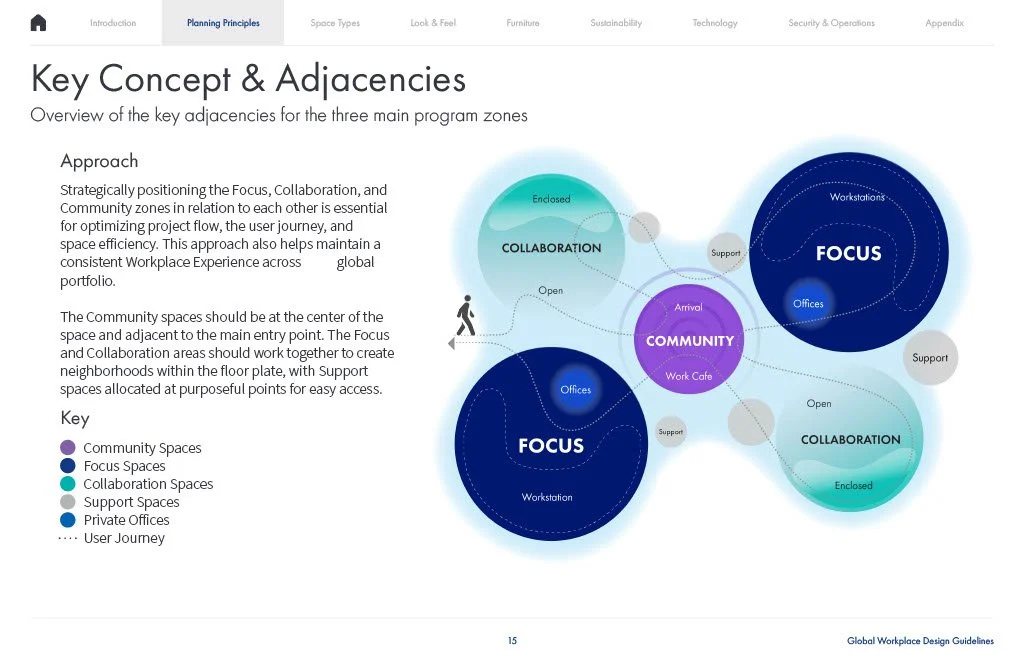
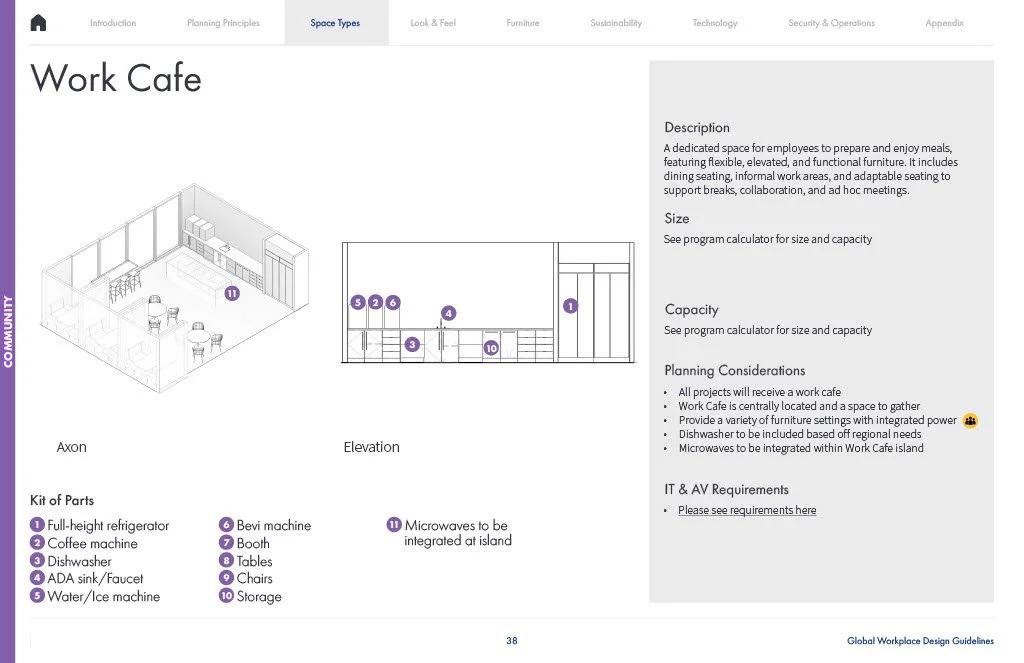
Global workplace design duidelines presentation by Kevin Garcia ‘17 (MFA2)
Jennifer Dorr: What is design strategy at Gensler and in general?
Kevin Garcia: Gensler was my first choice in the strategy industry. There are not a lot of design firms that have a big strategy practice. My studio has between 30 and 40 people in New York exclusively dedicated to strategy. What is now known as “strategy” used to be called consulting. Our role is to help clients define what their vision for that new project is; what they need in terms of program and employee experience. We tend to be the first interaction the client has with Gensler. We step in before our design team even starts designing the project and make recommendations based on research and data. By analyzing trends along with data collected by clients, we help them define what the project should be, so when the team starts working, they already know what the big goal and vision for that project is. So that's the beginning. We also play an important role at the end of the project. We provide services around change management, assisting those teams that are moving into a new workplace to adapt. What I specialize in, specifically, is design guidelines.
Will you tell me about your specific role?
I am a strategy lead for design guidelines. I work closely with clients, analyzing the best of the best in their portfolio. If they don't have a best in class project, I look at what others are doing and help our clients standardize what the future of their portfolio should look like. We do workplace, hospitality, healthcare, and most recently, airlines. Our clients tend to be huge international corporations. They've already built multiple flagship projects, and one or several worked out really well. And then you systematically look at that, what works about that, and what can be replicated. We ask: Which projects should future designers learn from? The deliverable is usually a PDF or a website where designers can go and learn from those past projects and reference inspirational guidance and standards to shape future ones. We help clients standardize and scale in a strategic way
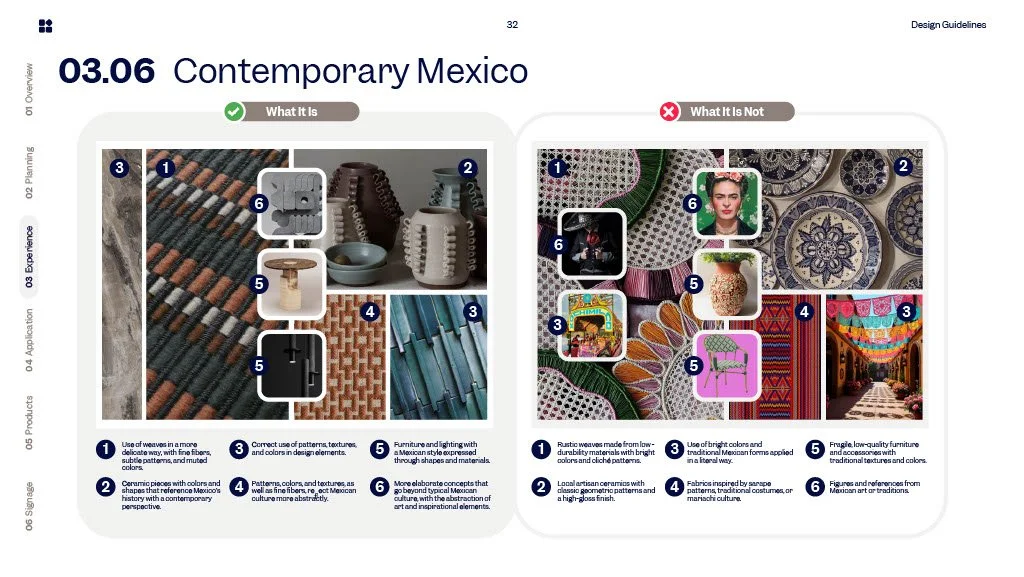
Design guideline presentation slide on experience of interior by Kevin Garcia ‘17 (MFA2)
How did your job change when you became a Strategy Lead?
I'm new to the lead role. I was originally hired as a Strategy Manager, working with clients to define what the scope should be, scheduling meetings, invoicing. . . It was an administrative role. I have been told I am a unicorn, because I have such diverse work experience. I have worked as a designer, but I wanted to get some management experience. It happened that my company needed someone who could facilitate sessions in both English and Spanish for a client, and I started leading a design guideline for this client. It showed my company what I could do and I was eventually offered the option of changing my role from manager to a lead specializing in guidelines. Now I work on leading the workshops with clients, leading the research, creating the graphics, and developing the content for all the deliverables in collaboration with my team.
Will you tell me about a project you are proud of?
I created design guidelines for an international airline at the end of last year. This was a pivotal project for me at Gensler. As I said, I was hired as a manager. Some directors knew about my design background, because they interviewed me when I first started, so when we won the opportunity of creating design guidelines for this airline, I was asked to lead the project in English and Spanish. I noticed this was a great opportunity to showcase my design and graphic skills to the broader team. I have a passion for graphic design. . . and I know I'm jumping ahead, but that's usually what my mentoring focuses on: elevating the student’s graphics and portfolio. Part of what we worked on with the client was: What's your brand expression? How do you want your brand to come across in your spaces? How can we make sure the interpretation of your country by travelers is an authentic representation of contemporary design in your country? And then the other portion was more technical. For example, if you're designing a check-in area, we listed and illustrated all the elements you need and what is important to consider while doing it.
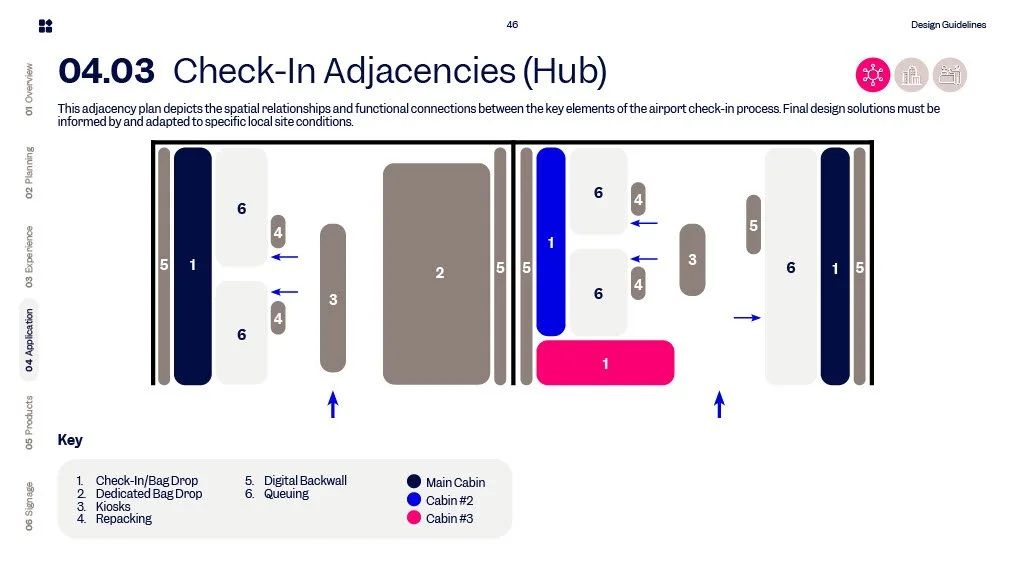
Design guideline presentation slide on application of design by Kevin Garcia ‘17 (MFA2)
What trends are you seeing in your work?
There are so many ways I could answer this and the use of AI is an obvious answer, but from my corner of the industry I would say it's the increased popularity of design guidelines. We used to sometimes have to explain the value to clients, but now they are often requesting guidelines at the outset. There is growing interest in consistency. Clients want to make sure all their spaces are branded and experienced in a way that feels true to their company’s values.
What is your best advice for an interior designer at the beginning of their career?
It took me 12 years of working in and studying in the design and architecture profession to find the place where I belong, which is developing design guidelines. There is so much more to the design business than the classic definition of “interior design.” I have functioned as a stylist on photo shoots, graphic designer, manager, strategist. . . I found what I want to do, and it is only because I exposed myself to so many things and I said yes to everything my employers asked me to do. So I tell mentees to stay open-minded and never limit themselves. Strategy and management jobs can be higher compensated and less saturated than other positions, so getting some exposure to these sides of the business can be worthwhile.
You have been a NYSID mentor and guest critic at NYSID for years. Your mentees have included alum Grace Kwan (MFA1), Kelly Ratner (MFA2), Amina Shinassylova (MFA2) and Nelson Sanchez (MFA1). Why do you mentor at NYSID?
The main reason is to give back. I had amazing mentors at NYSID, including my thesis instructor Joe Goldstein. It’s his class that I often visit as a guest critic. The faculty at NYSID is very good. The education is practical and I worked in the library for two years coming to know fabrics and materials. NYSID helped me make the transition from architecture to interior design in a very successful way.
Mentoring and giving critiques at NYSID also help me in my work. I’m exposed to the new [graphic communications software and technologies] the students use. It also helps me practice giving feedback, which is not easy to do. I always start with what’s working, and then show mentees how their portfolios and resumes could be even better.
Are you an alumni interested in mentoring?
Reach out to Development & Alumni Relations Manager Samantha Fingleton at Samantha.Fingleton@nysid.edu.
About the Post-Professional Master of Fine Arts in Interior Design
NYSID’s two-year MFA2 program is for design professionals who want to broaden their expertise, explore interior design at a deeper level, and ultimately lead the profession. It is open to those who have a professional degree in interior design, architecture, or a related field. The program’s reputation for excellence draws talented designers from around the globe. Learn more here.