
Sketching the Surface: Exploring the New York School of Interior Design Archives and Contemporary Pattern Design explores the legacy of 20th-century pattern designs from the NYSID Archives—fabric, rugs, carpets, wall coverings, tiles—created by Joann Nelsen, Joe Martin, Joseph Grusczak ‘56, and Inez Croom. Their fabric, rugs, carpets, wall coverings, and tiles are featured alongside contemporary works designed by Dan Funderburgh, Jeanetta Gonzales, Li Iordanov Dan, and Andrew Raftery. The show celebrates the enduring impact of pattern in design.
Together, these materials illustrate the iterative and interconnected nature of pattern design—a discipline that resonates with interior design in its concern for the visual and spatial qualities of "the surface." Process drawings, renderings, and finished manufactured works are on display, offering insight into the creative processes that remain central to many design practices today. Historical pattern books and reference material from the NYSID Library will also be featured. Visitors to the exhibit are invited to participate in interactive programming, a workshop, and other public programs where they can explore how patterns are conceived and applied.
The exhibition is not a chronological or exhaustive history of pattern design; rather, this exhibition invites visitors to engage with the richness of the NYSID Archives and Library on their own terms: to wander, observe overlaps and intersections, take pleasure and delight in the work presented—and drawing from the past, imagine new possibilities for design.
NYSID Gallery
170 E. 70th Street, NYC
On View Until April 3, 2026
Monday–Saturday, 10am–6pm
Admission to the gallery is free and no reservation is needed. From January 5– 20 and March 9–15 the gallery hours are 9–5 pm Monday–Friday and is closed on the weekends. The gallery is closed on October 2, November 26–November 30, December 20–January 4, January 19, February 16, and March 14.
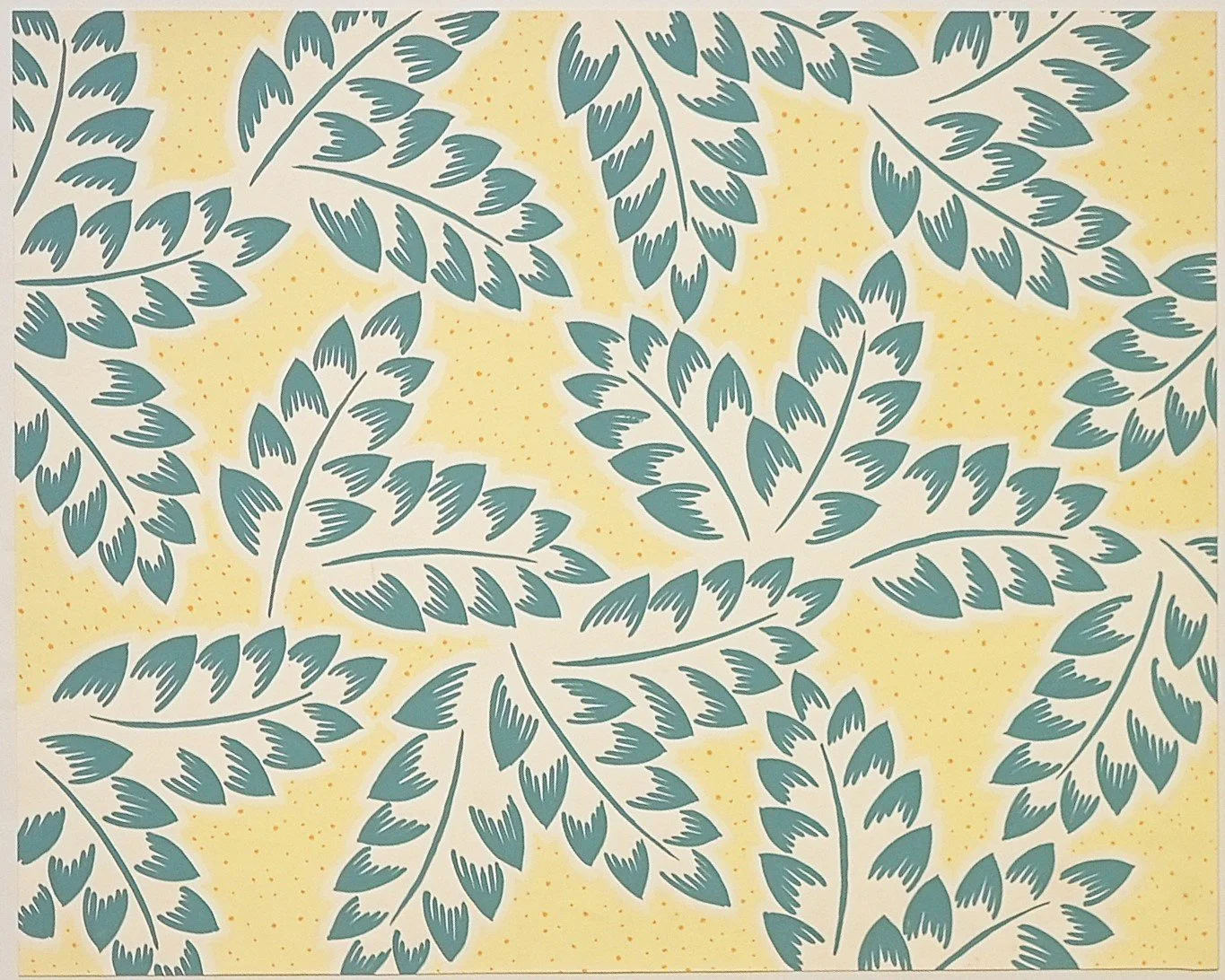
Joann Nelsen (née Hanson, 1937–2013)
Untitled Leaves for Half Drop Designs, Ltd., Date Unknown Gouache on paper
-
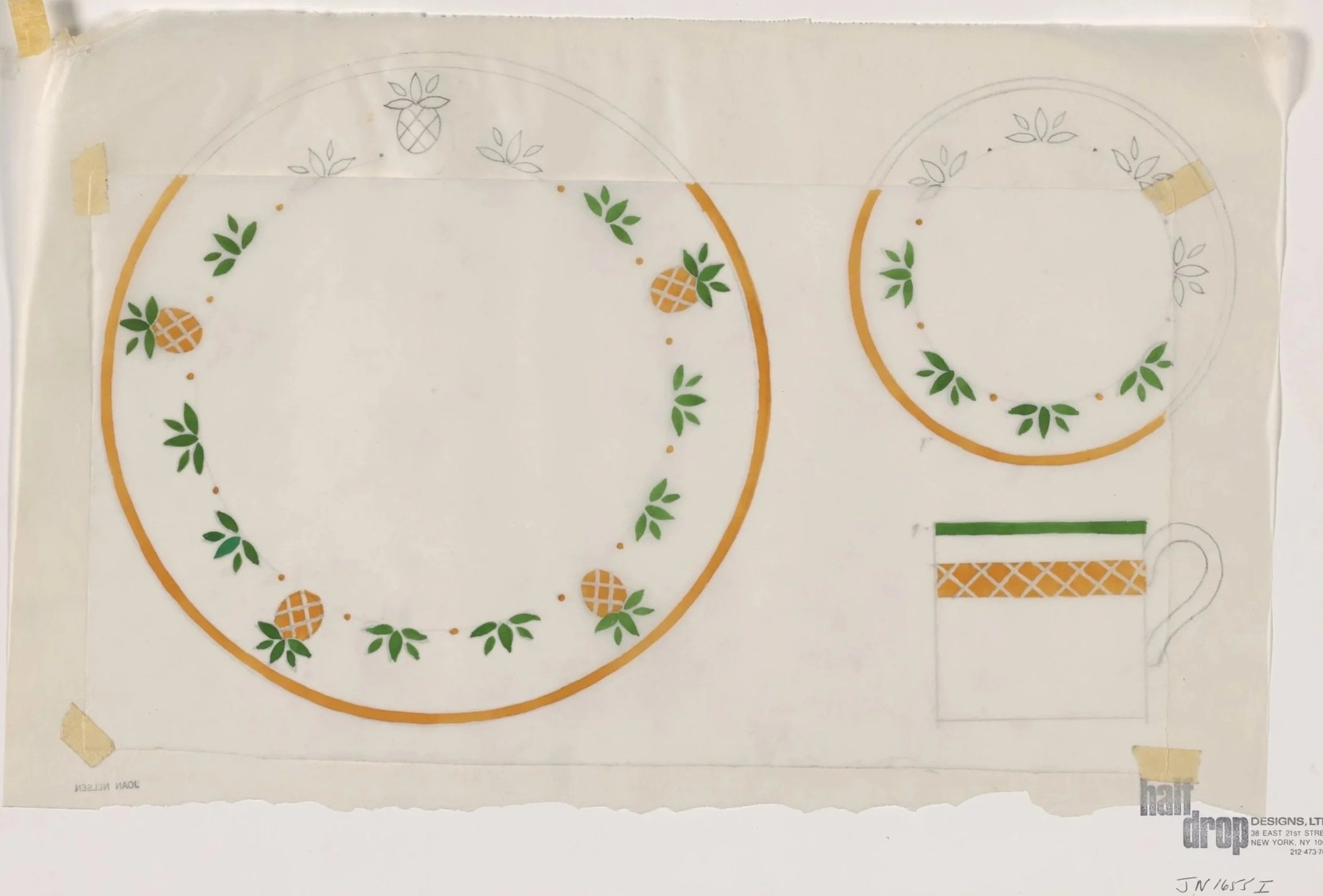
Joann Nelsen was a Staten Island-based fine artist and textile designer known for her vibrant, hand-painted wallpaper and upholstery patterns. Her work was produced by Waverly, Schumacher, and others from the 1970s-1990s. A graduate of the University of Washington and Mills College, she also founded Half Drop Designs, Ltd. Her archive at the New York School of Interior Design includes richly colored renderings and detailed color charts reflecting her meticulous process.
Friends of Joann Nelsen, Barnett Shephard and Marsha Mayer, gifted the works of Joann Nelsen to the New York School of Interior Design. (2017)
Joseph Grusczak ‘56, ASID (1936–2022)
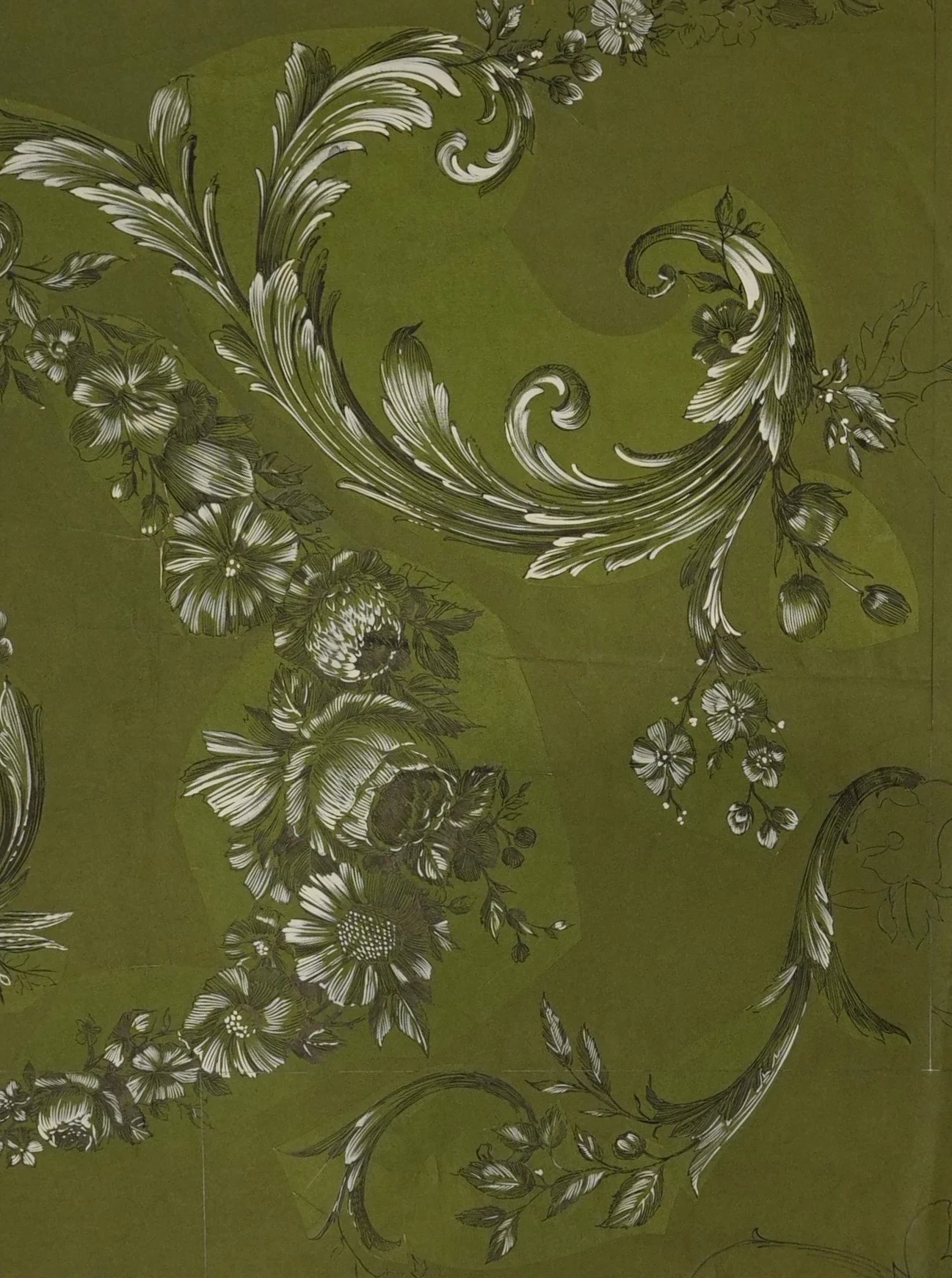
Rose & Acanthus for Charterhouse Designs, Ltd., Date Unknown Pen and Ink on Paper
-
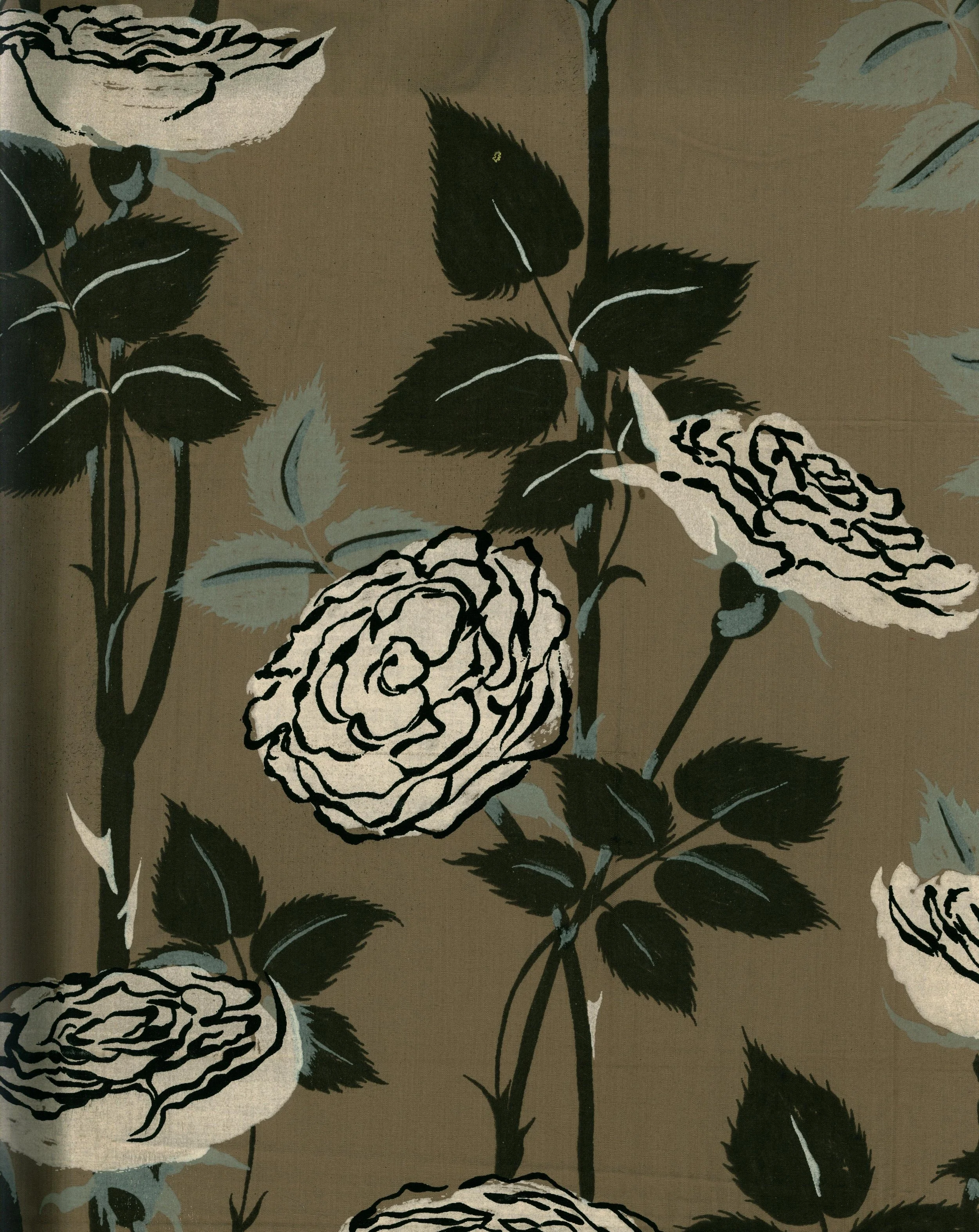
Joseph Grusczak was a New York-based interior and architectural designer known for luxury residential and global hospitality projects, especially with InterContinental Hotels. A 1956 graduate of the New York School of Interior Design, he founded firms including Charterhouse Designs and G.B. Designs. His NYSID archive includes renderings, drawings, and photographs that document his decades-long career and international design legacy.
Grusczak and partner William De Graff donated the Charterhouse Designs collection of works to the New York School of Interior Design. (2014-2022)
Joe Martin (Unknown)
Black/Brown Geometric, Date Unknown Cotton Textile
-
Joe Martin was a Connecticut-born illustrator and textile designer who studied and taught at Parsons in New York and Paris. He began in display and editorial illustration before shifting to textile design in the 1950s, eventually settling in Milan. Martin designed for U.S. and European firms including Bloomcraft, Piazza Prints, and Suzanne Fontan, and co-founded Falconetto in 1958. His collaborations with Ken Scott in the 1960s included printed furnishing textiles for Clarence House.
The collection of Joe Martin textiles was donated by Martin’s friend, John Nicholson, to the Cooper Hewitt Smithsonian Design Museum and later transferred to the New York School of Interior Design. (2001)

Inez Croom (1893–1980)
Inez Croom Design exclusively for Waterhouse Wallcoverings, Date Unknown
-
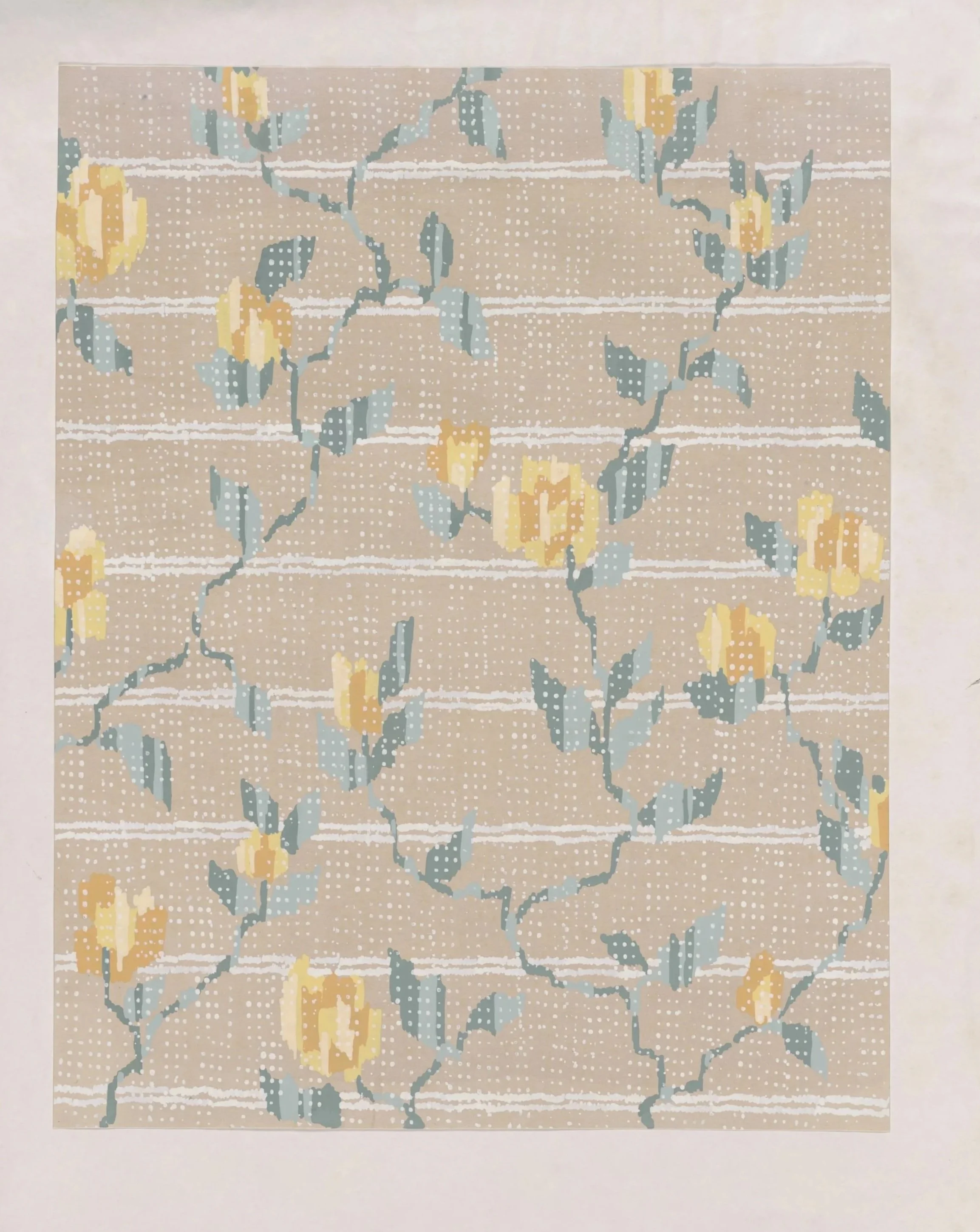
Inez Croom was a pioneering wallpaper designer, NYSID alumna, and longtime faculty member (1934-1979) known for her hand-screened patterns featuring florals and architectural motifs. A protégé of Nancy McClelland, she founded two design firms and was active in professional organizations including ASID and the Decorator’s Club. In 2016, several of her mid-century designs were reissued by Waterhouse Wallhangings, highlighting her lasting influence on American decorative arts.
The New York School of Interior Design purchased original prints of Inez Croom’s work in celebration of the school's centennial. (2016)

Owen Jones (1809–1874)
The Grammar of Ornament : Illustrated by Examples From Various Styles of Ornament, L’Aventurine, 2006
-
Owen Jones was a British architect and influential design theorist of the 19th century. His studies of color, geometry and abstraction from global cultural sources formed the basis of his design folio, The Grammar of Ornament. Since its first publication in 1856, this volume continues to inspire designers, artists, and historians alike. It is still in publication today.

Emma W. Fischer (1877–1970)
Egyptian Ornament, Collection of Plates (Final Project, New York College for Women), 1896 Pen and ink on paper
-
Emma W. Fischer was a student of the New York College for Women. In 1896, she created a book of hand-drawn architectural detail and motif plates for a final project. Fischer continued to work as an artist throughout her life, living in New Jersey.
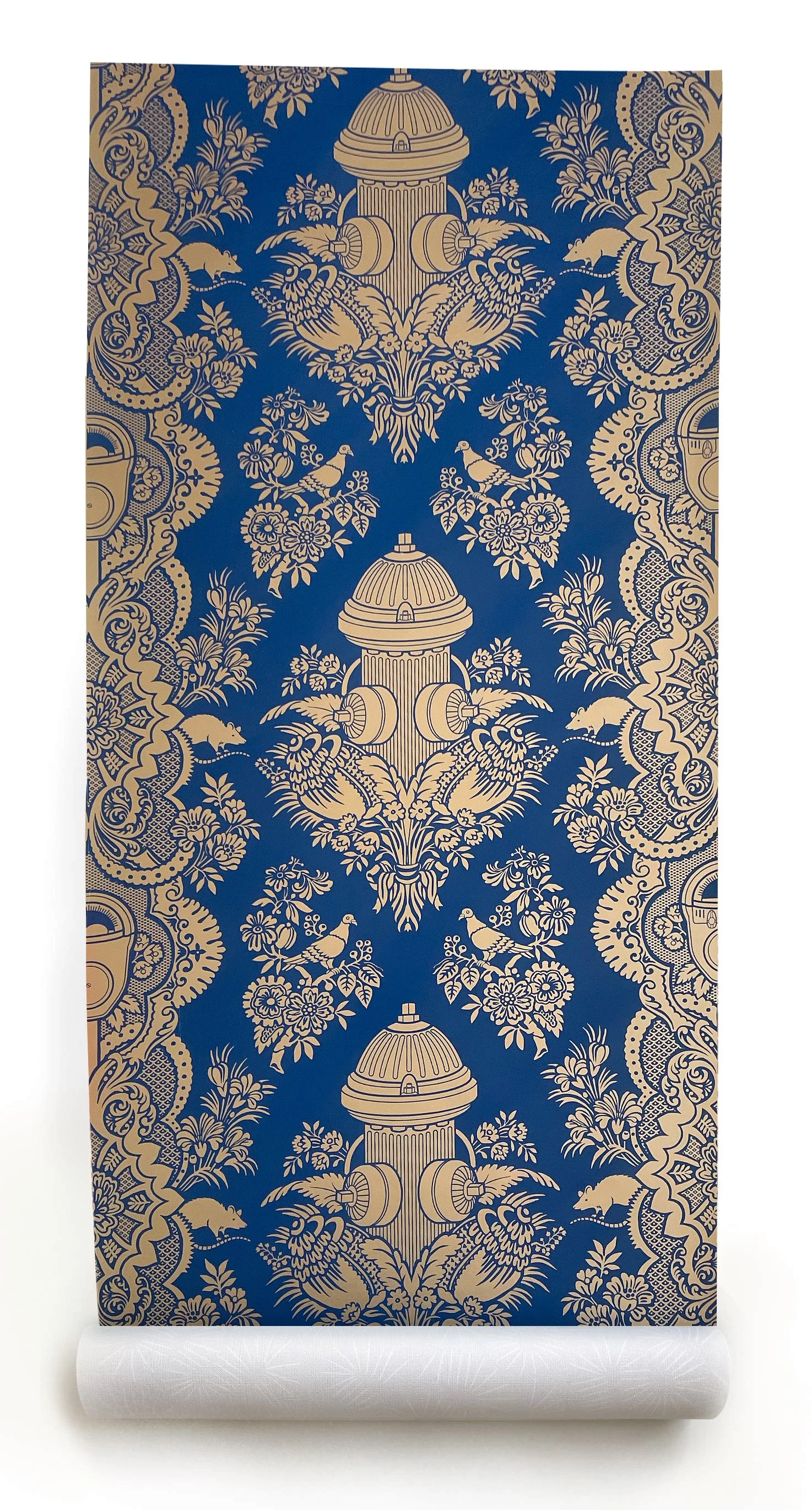
3486 City Park for Flavor Paper Wallpaper hand-screened Repeat Size: 29 in. untrimmed
-
Dan Funderburgh is an artist, illustrator, and surface designer. Dan lives and works in Brooklyn where he partners with printers at Flavor Paper to create wallpapers inspired by ornament and history. Funderburgh has created site-specific installations, including at the historic Metro-North Fordham station for the MTA Arts & Design program. His wallpaper designs have been featured at the Museum of Art and Design and the Smithsonian. His work is part of the permanent collections of the Cooper-Hewitt and Brooklyn Museum.
Amina for Spoonflower, 2023 Watercolor and digital illustration
Pattern Size: 24 in. square
-
Jeanetta Gonzales is a designer, illustrator, and educator known for her bold, joyful aesthetic and vibrant surface pattern work across apparel, home décor, stationery, and more. With over two decades of experience, her work spans graphic design, surface design, illustration, and product collaborations with brands like Target, Pantone, Michaels, The New York Times, and Edible Arrangements. Blending traditional media with digital illustration, Jeanetta’s process embraces both spontaneity and structure, allowing her to create richly layered designs that celebrate nature, empowerment, and cultural diversity through expressive color and pattern.

Li Iordanov Dan of HOUSE OF JUNE™
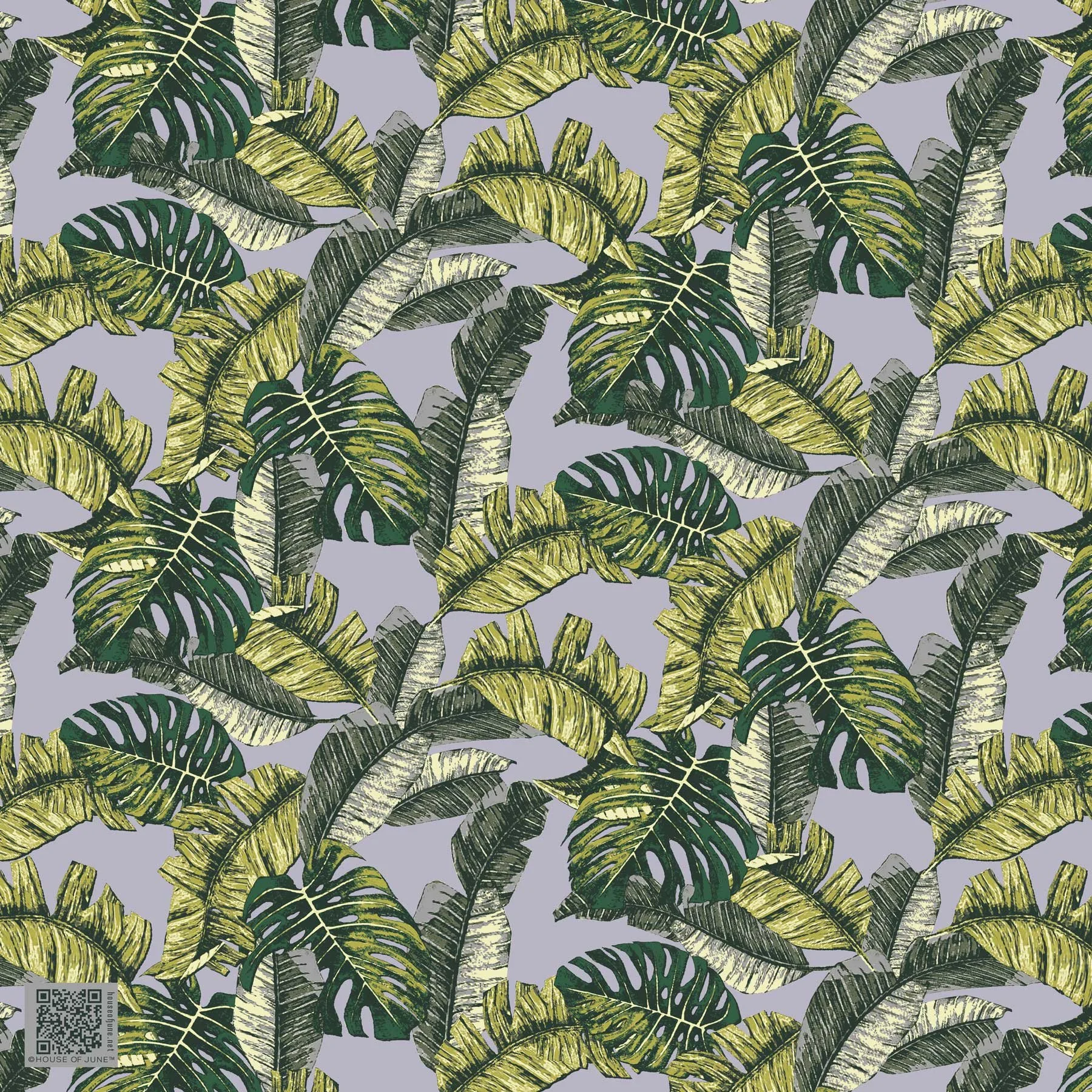
4EBE2F67 from Vintage Palm design capsule, 2020 Digital raster illustration with hand-painted, paper-cut, and collage elements Repeat size: 12.50 x 12.50 in.
-
Li Iordanov Dan is a multidisciplinary designer and head of creative at HOUSE OF JUNE™, a Brooklyn-based surface design studio. Originally trained as a classical pianist, Li transitioned into fashion, graphic, and textile design, bringing a richly layered perspective to her work. Combining digital and analog techniques, her practice focuses on the visual impact of surface design in both fashion and home interior applications. At HOUSE OF JUNE™, she leads the development and presentation of original print collections for a global clientele.
Redwood Rustication, 2024 Wallpaper from six woodblocks Pattern Unit: 17 x 22 in. Wallpaper Size: 18 x 24 in. Printed by Adelphi Paper Hangings in Sharon Springs, NY
-
Andrew Raftery is a Rhode Island-based artist who explores both observational and autobiographical narratives of contemporary American life. His artistic work combines deep expertise with an appreciation for historical methods of art-making, most notably copperplate engraving. His precise and labor-intensive works demonstrate the enduring relevance of this medium’s application to modern-day subjects in disseminating universally accessible images. Recent projects in transfer printed ceramics and wallpaper investigate prints in relation to functional objects and design.
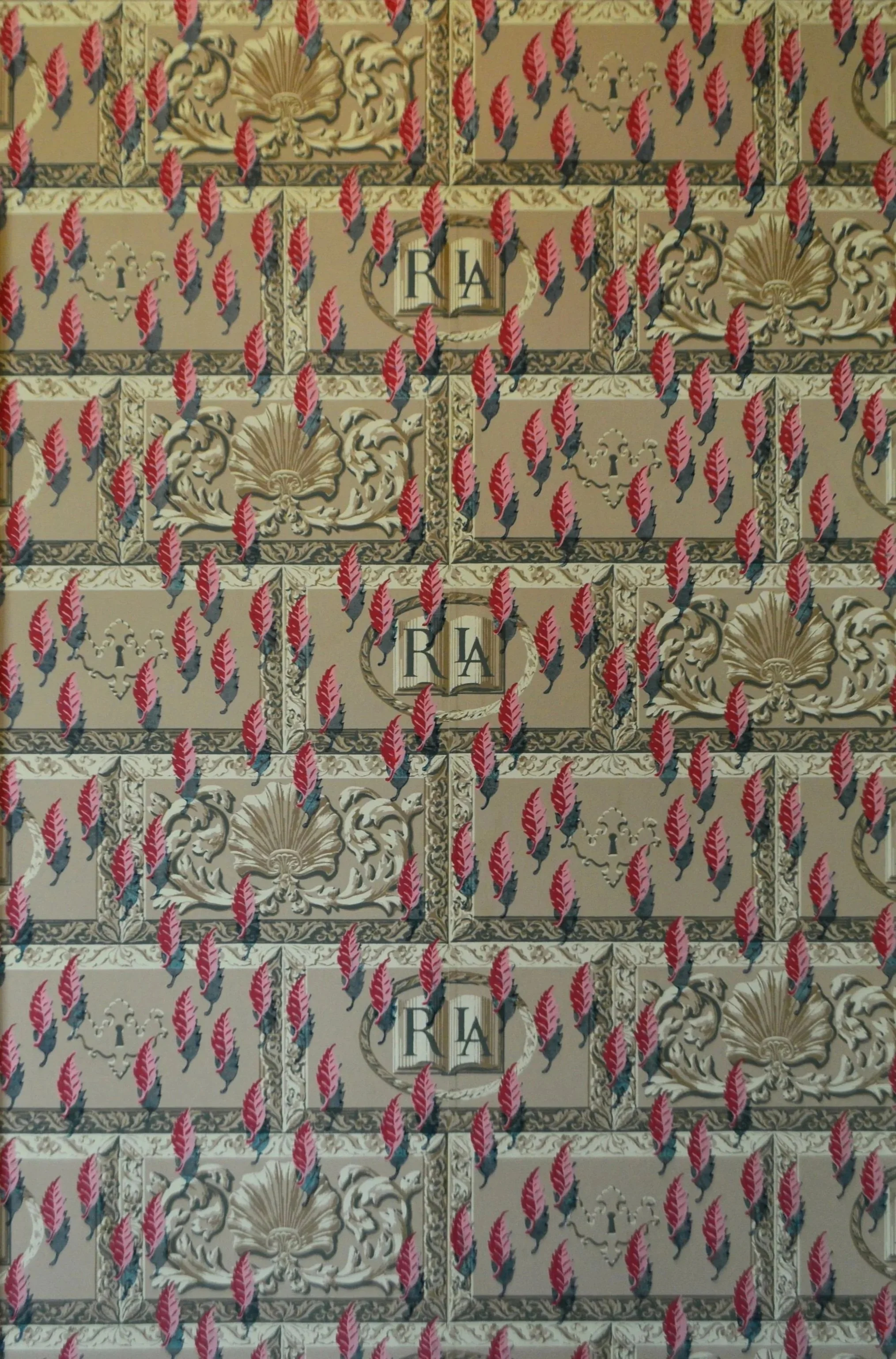
Exhibition Sections
Acanthus, Working Drawing for Charterhouse Designs, Ltd., Joseph Grusczak, ca. 1980s Pencil on trace paper
A Pattern Language
Patterns result from the repetition of an element or motif (an ornamental form that may reference history, nature, or geometry) along a system of distribution — typically, a visible or invisible network (square, brick, half-drop). Regular patterns repeat units at regular, measured intervals; irregular or informal patterns are more unpredictable. Some of the earliest motifs may have sprung from domestic industries like weaving and pottery or technical processes like latticework or masonry. At first, these motifs were byproducts of making. Over time, they became intentional, developing into a language of ornament that conveyed meaning, status, and cultural identity. Many motifs have been so widely shared, copied, and adapted to suit different cultures and places, that their original meanings have been obscured or lost.
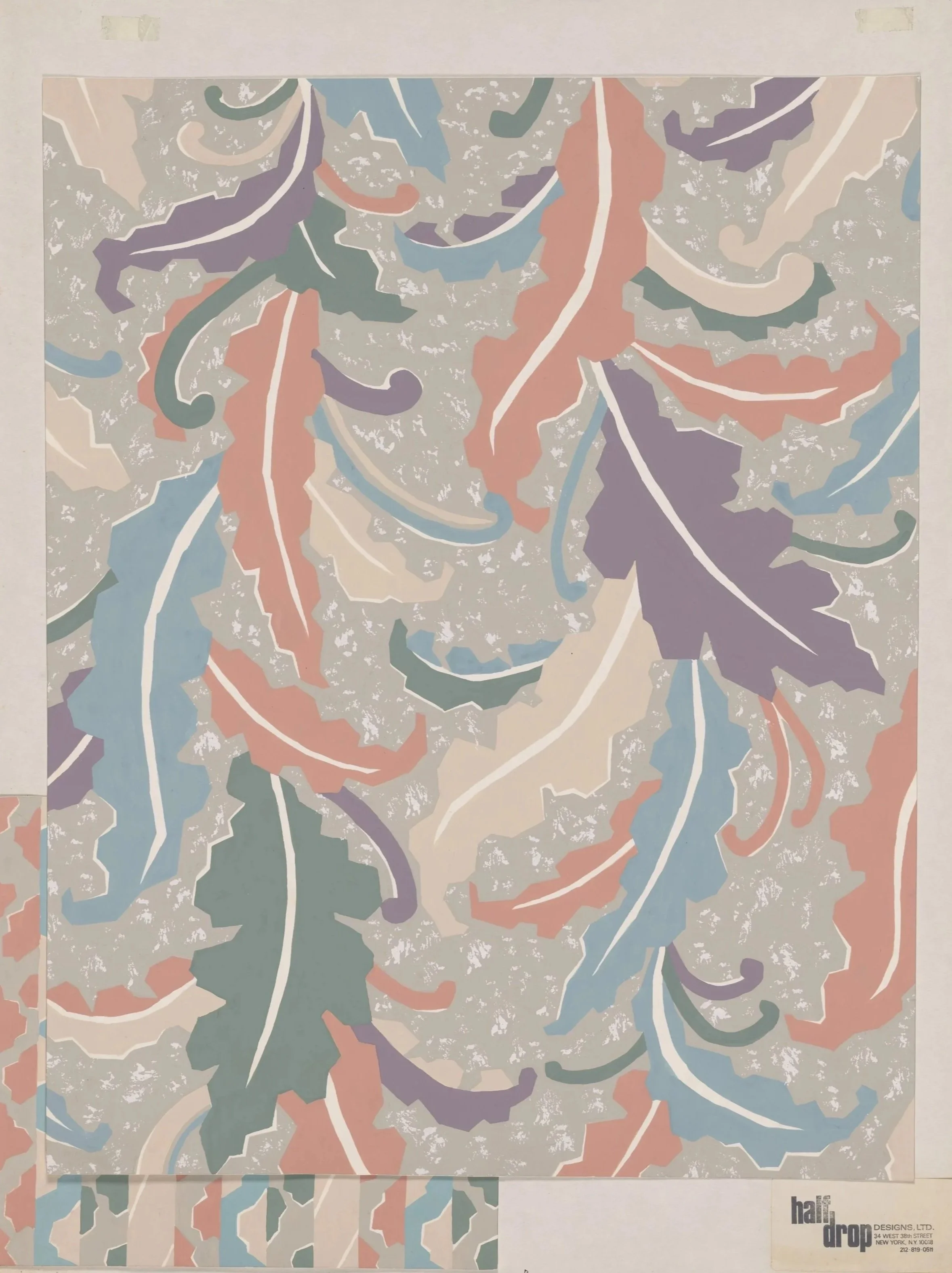
Acanthus for Half Drop Designs, Ltd., Joann Nelsen, ca. 1980s Gouache on paper
Inspired by Nature
Plants and animals have been used as ornamental devices since antiquity, although they typically appeared as idealized or stylized images rather than faithful reproductions of real species. Historically, nature-inspired motifs in pattern and ornament have been a blend of real and imagined varieties or result from the “cross-breeding” of plants and animals found in different places and cultures, and are often layered with religious or spiritual symbolism. From a formal standpoint, natural forms are useful because they are easily adapted by designers to provide symmetry, balance, and rhythm to a composition. Naturally occurring pattern structures like spirals, fractals, and tessellations demonstrate the close relationship between formalized ornament and the natural world.
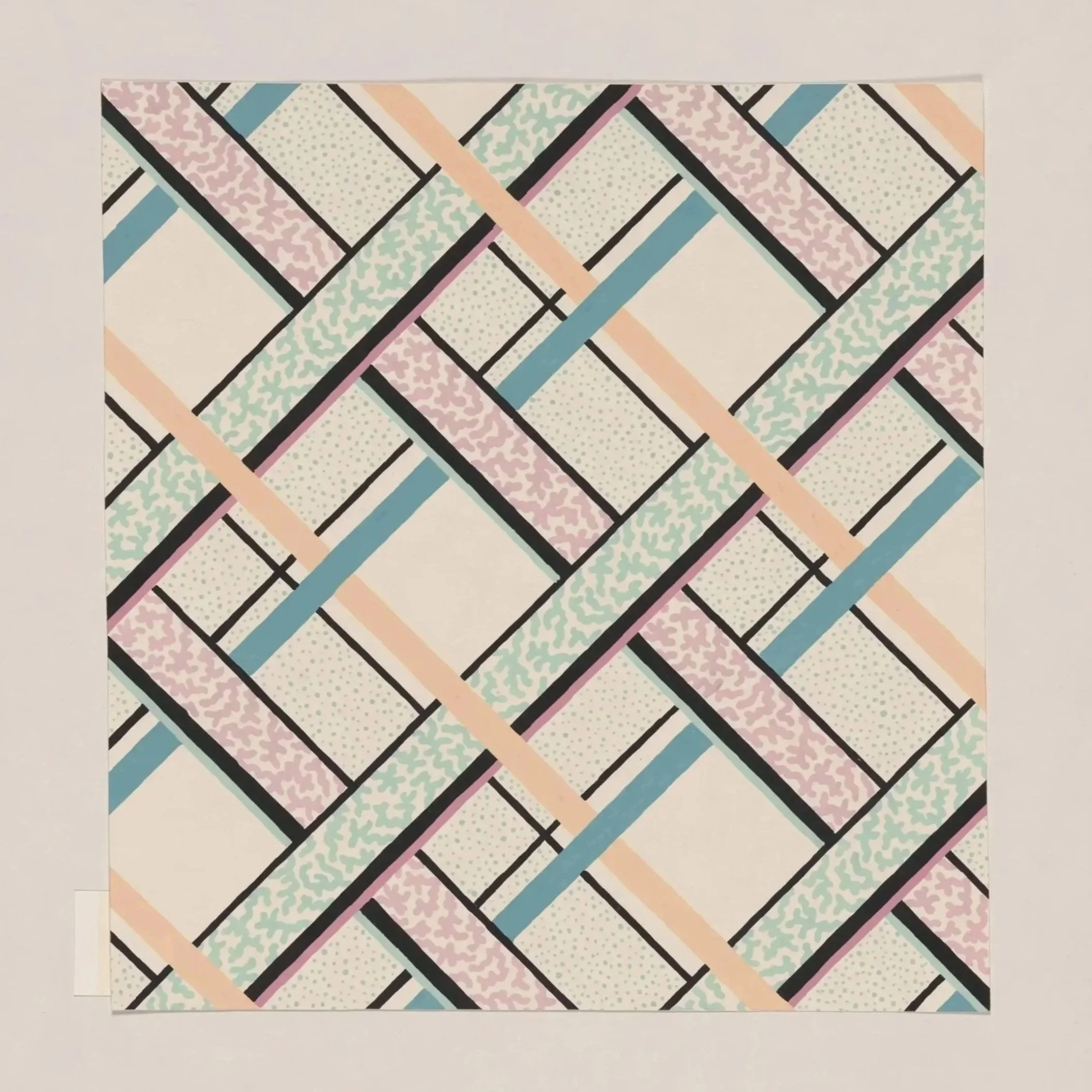
Plaid for Unknown, Joann Nelsen, ca. 1970s-90s Gouache on paper
Stripes and Networks
Striped designs are formed of bands or lines that extend horizontally, vertically, or diagonally at measured intervals. They fall into three main groups: straight, waved, or chevroned. Often, elements characteristic of both types appear in one pattern; for instance, striped bands can be composed of waved or chevroned lines, as seen in the intricate foliated borders of Islamic art. Cross-band patterns like tartans and plaids occur when two banded patterns are imposed on one another at different angles. Lines from the pattern’s underlying network—the structure that underpins all repeat patterns—are often visible in the pattern itself. Different networks have different formal qualities: a square network is simple yet capable of producing complex results, while a half-drop or triangular network gives patterns a strong sense of movement.
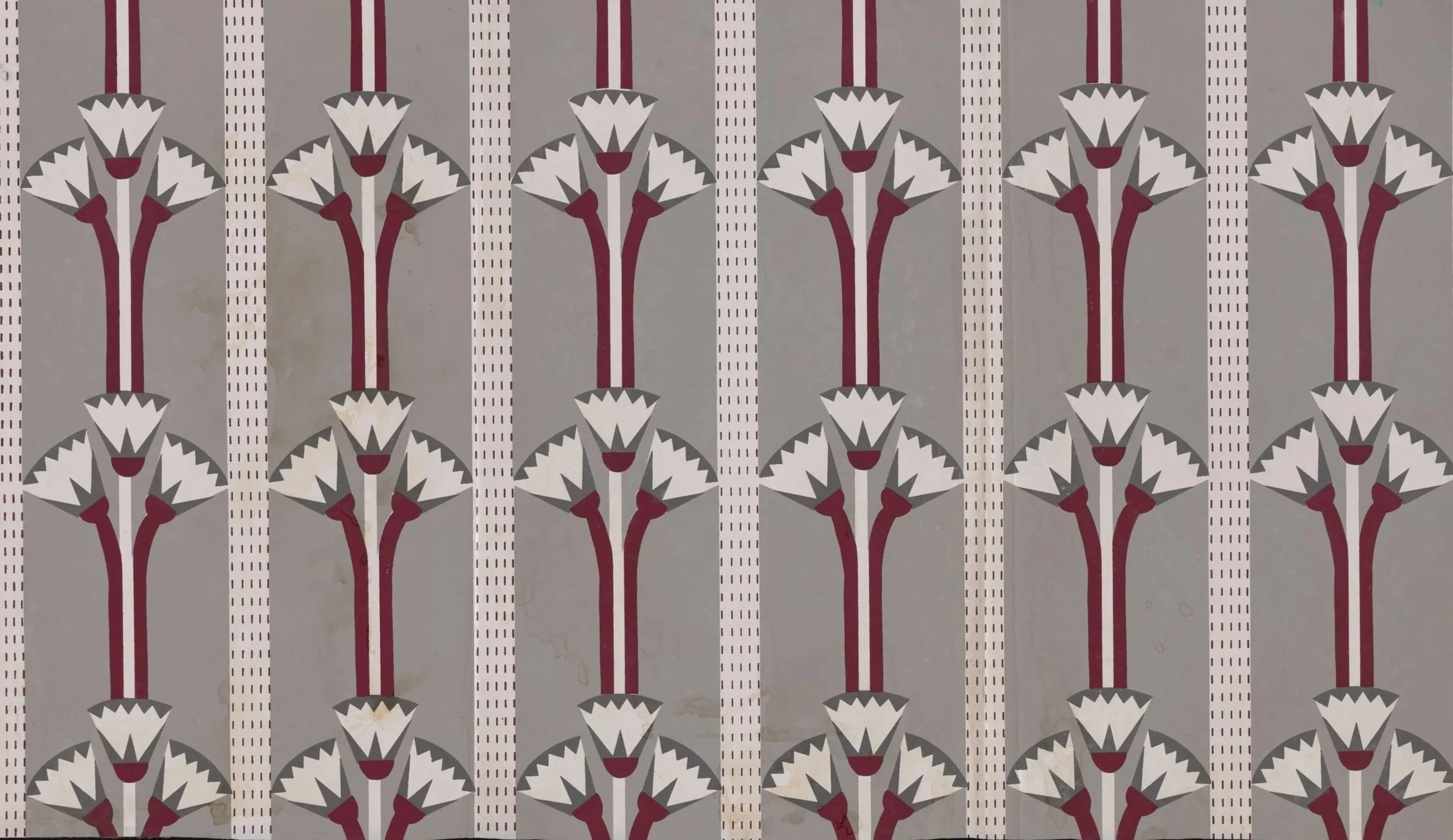
Egyptian Motif for Unknown, Joann Nelsen, ca. 1970s-90s
Cross-Cultural Exchange
As patterns and motifs have travelled across the globe, they have been altered to suit different cultures and contexts. A pattern or motif’s longevity has not been tied to any specific meaning, but rather to its adaptability—in other words, its usefulness to different designers and craftspeople as they fill or decorate a surface. Like many 20th-century American designers, those represented in the NYSID Archives often drew on global sources through a romanticized lens, adapting motifs and geometries to local markets while often stripping them of cultural context. Contemporary designers tend to take a more conscientious approach to incorporating global and cultural influences, often by taking inspiration from their own cultural and personal history.
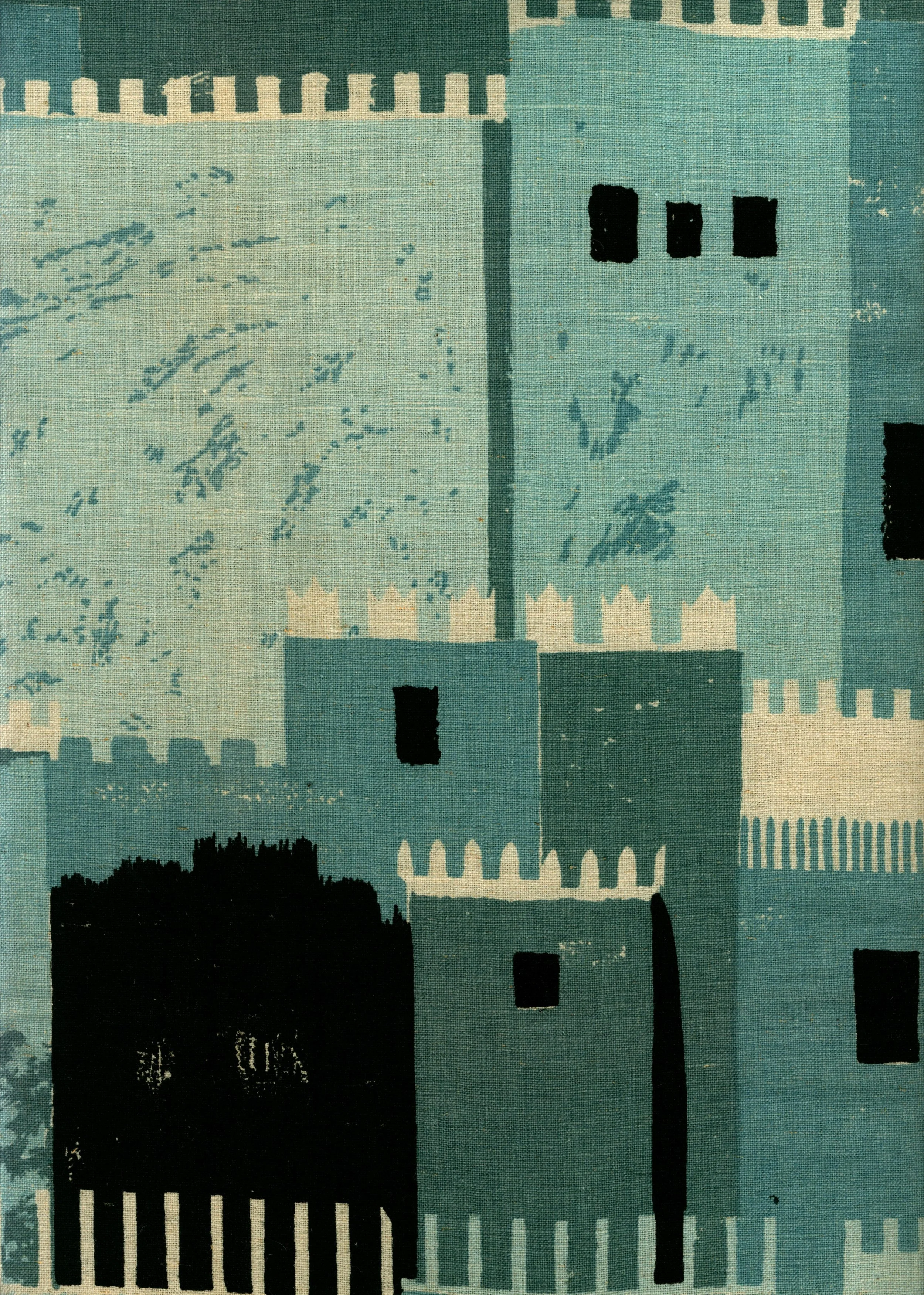
Perugia for Unknown, Joe Martin, ca. 1950s-60s Textile
Textile Traditions
Many pattern designs are derived or inspired by patterns that occur in textiles. Traditional woven structures like twill (a weave characterized by its diagonal lines) and dyeing techniques like ikat (in which yarns are resist-dyed before weaving a fabric) can be rendered by designers as flattened graphic repeats for wallpaper and other two-dimensional surface coverings. Folk textile traditions like American quilting, in which skilled makers stitch scraps of fabric together to create quilt block patterns like “Log Cabin” or “Eight Pointed Star,” lend themselves easily to reinterpretation by pattern designers. In American design, motifs and colors found in folk art are often paired with pattern structures derived from folk textile traditions, reinforcing the strong connection between pattern, craft, and cultural identity.
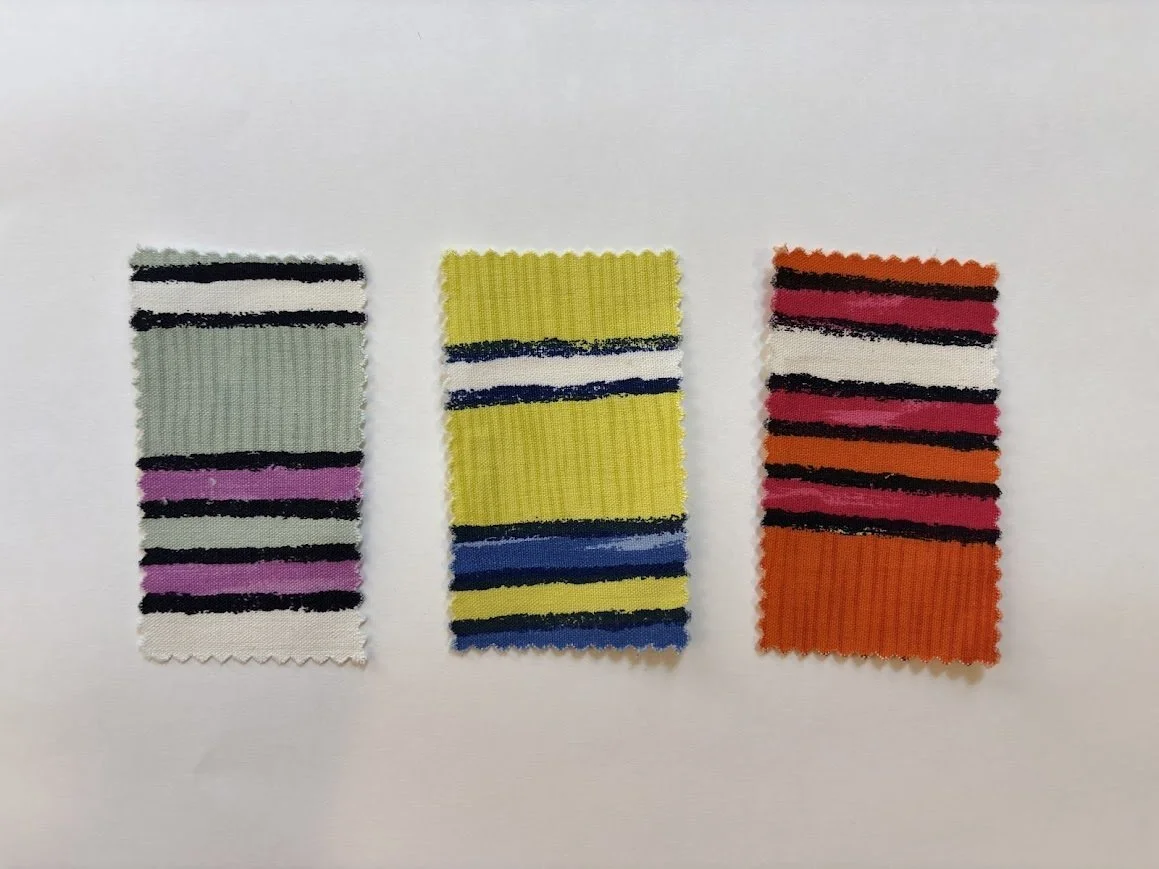
Masquerade Colorway Swatches for Patterson Fabrics, Joe Martin, ca. 1950s-60s Textile
Designing in Color
Color is essential to pattern design. Designers use color variants and contrasts to help emphasize or minimize a pattern, often creating several colorways (different color combinations) of one pattern. Colorways are especially helpful when designing a pattern for a mass market, allowing the user to find a pattern in a color scheme that works for their application. Very often colorways retain the values and intensities of the original pattern although the colors themselves vary. Understanding how to select and mix colors is a foundational skill for pattern designers; they often include color studies and samples as part of their final rendering for a pattern design.
Contemporary Pattern Design
In the 21st century, the tools available to pattern designers have transformed dramatically. Patterns are now applied to an ever-expanding range of physical and digital surfaces. Many contemporary designers employ digital technologies like computer-aided design software, photographic manipulation, and vector graphics programs as integral parts of their creative process. Yet hand drawing remains an important part of many designers’approach; some combine traditional and digital methods, while others continue to work entirely by hand.
Historical designs and methods continue to serve as an important resource for contemporary designers. For this exhibition, the curators invited four designers—Dan Funderburgh, Jeanetta Gonzales, Andrew Raftery, and HOUSE OF JUNE™—to create new pattern designs inspired by works in the NYSID Archives and share examples of traditional and contemporary techniques. These works demonstrate the interconnected nature of pattern design and the enduring relevance of history in shaping contemporary practice.
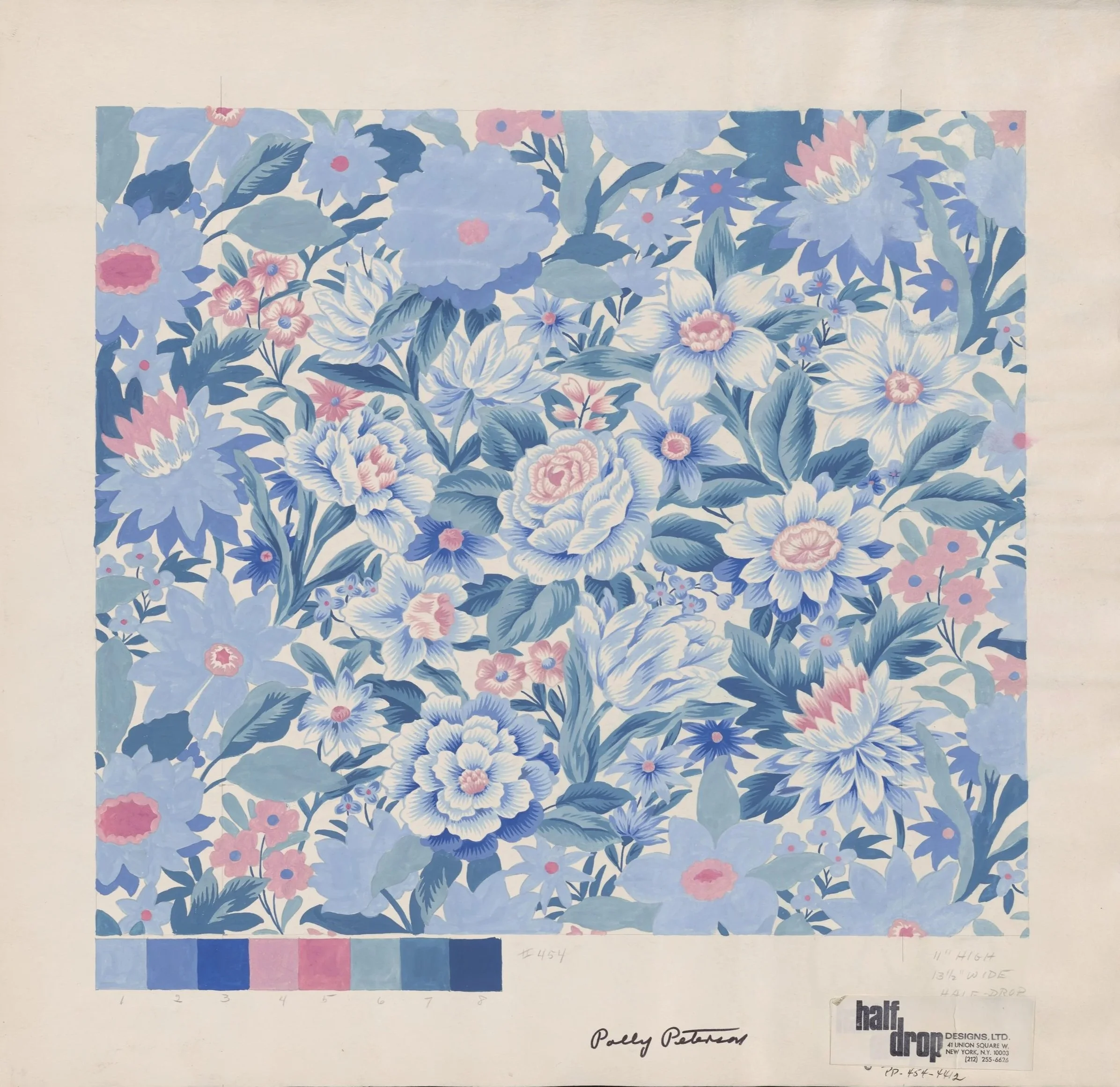
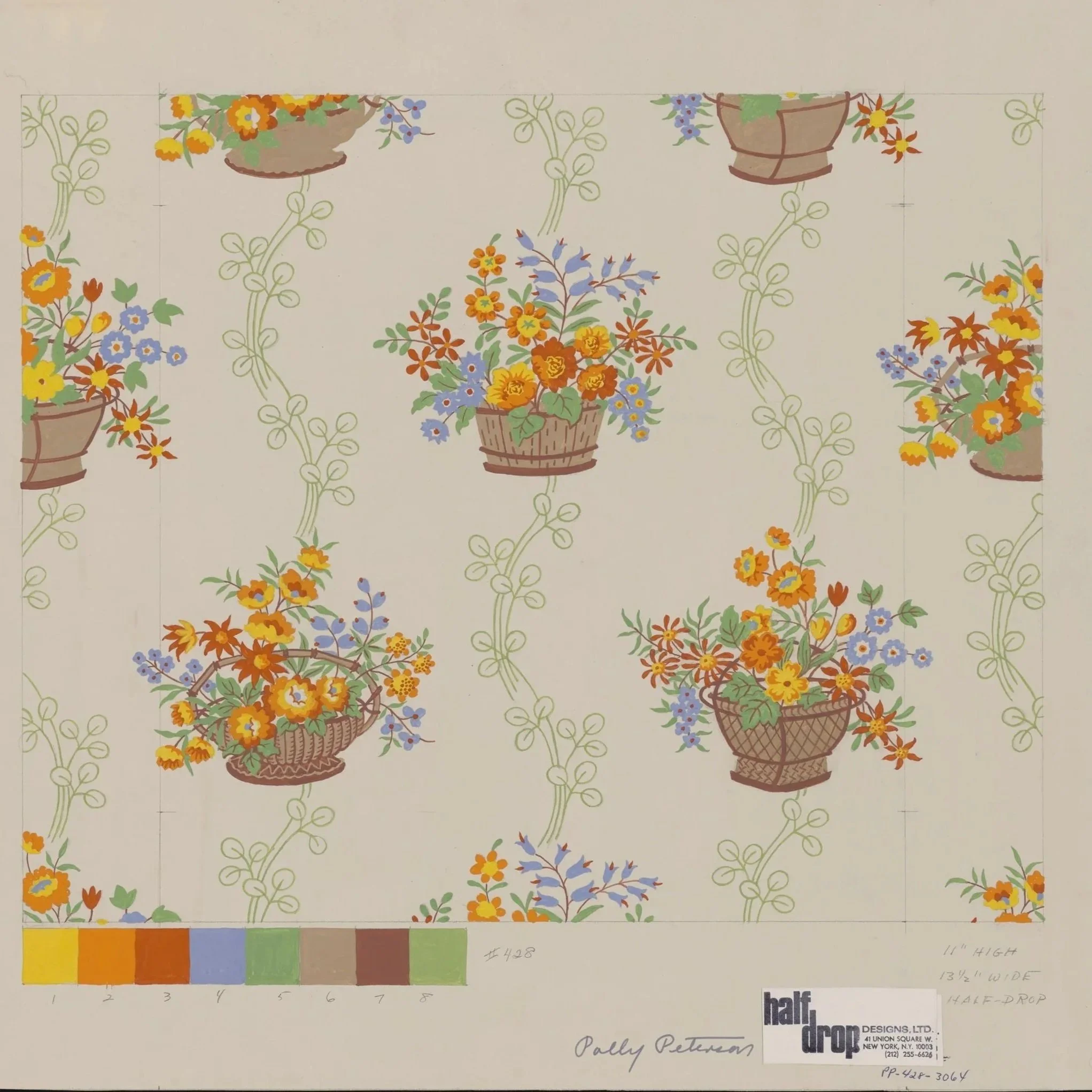
Blue Floral for Half Drop Designs, Polly Peterson, ca.1970s-90s Gouache on paper
Color for Interiors
For NYSID’s spring 2025 Color for Interiors studio classes, faculty member Randi Halpern challenged students to mix colors to match historical colorways by referencing hand-painted wallpapers from the NYSID Archives’ Joann Nelsen Collection. Students covered the backside of a full-scale print of their selected Nelsen piece with graphite, creating a carbon paper effect for tracing the pattern onto heavier paper. The NYSID Library created protective sleeves for the original artwork, allowing students to mix colors directly on the artwork. Once students developed their complete color palette, they painted their transferred pattern to create the finished work. This display highlights the projects that achieved the most accurate historical color matches.
Digital Design
Many contemporary pattern designers use digital tools as part of their creative process. In recent years, artificial intelligence has become a point of tension within the industry. For some designers, AI is a powerful tool, capable of generating visualizations, mapping patterns onto 3D objects, and streamlining aspects of production. Others raise concerns about the dilution of craft, the loss of individual authorship, and the erasure of cultural context. As with every technological shift in the history of design, the future likely lies in adaptation. Pattern design will continue to integrate new tools while maintaining its core focus: animating and enriching the surfaces that surround us. Additionally the digital interactive station enables you to create new patterns using select archival works at the NYSID Archives and Library.
Key Definitions
-
Acanthus is a floral motif of Greek origin best known by its application to the Corinthian capitals of ancient Rome. It is thought to be a naturalistic interpretation of another important classical motif—the palmette—and is perhaps the most proliferated motif in history.
-
Florals are a category of ornament that takes inspiration from nature, often as stylized or generalized versions of real species. Florals are especially useful with regard to pattern composition, as their flowing, familiar forms lend themselves well to embellishment.
-
Vines and other representations of climbing plants (like ivy) date to antiquity, when they were associated with cult rituals. Vines have also held symbolic meaning within the Christian church. Their intertwined forms are often associated with growth, connection, and renewal.
-
Pattern books are bound volumes of designs, diagrams, and illustrations that often serve as inspirational sources for designers, artists and historians alike. Books of this genre play a significant role in the dissemination of pattern design throughout history.
-
Commercial Design involves the creation of patterns for manufacturers producing a wide range of commercial products, including clothing and apparel, furnishing fabrics, wallcoverings, laminates and tiles, and paper.
-
Half-drop and brick networks have a strong sense of directional movement. Both are variations of square or rectangular networks, in which units or motifs are shifted vertically (half-drop) or horizontally (brick) in alternating fashion.
-
Whimsy is a non-descript motif that evokes a sense of playfulness. Whimsical patterns are often asymmetrical, not contained to a grid, and can incorporate elements of fantasy.
-
Ogee is an S-curved shape that combines both concave and convex contours. It is also a type of network particularly suited to curvilinear forms like vines, stems, and florals.
-
Paisley, also called boteh (Persian) or buta (Indian), is a teardrop-shaped motif with an upturned end that references natural forms like the pinecone and the cypress tree. Used widely throughout Iran and India, it was popularized in the West by the global textile trade.
-
Palmette is a motif referencing a fan-like branch of the palm tree plant Indigenous to Egypt. It is found with incredible variety in ancient Aegean, Egyptian, Persian, and Indian art and has survived in the West largely due to the Christian use of the palm as a symbol of paradise.
-
Chevron is a continuous band of bent or zigzag lines. Chevroned patterns can range from simple yet bold compositions of contrasting colors to elaborately ornamented bands.
-
Diaper is a pattern or network of repeating, connected units—often floral or geometric—in which the outline of one unit forms the outline of the adjacent unit.
-
Ikat (meaning to tie or to bind in Indonesian) is a traditional textile dyeing technique involving resist-dyeing of fibers to create a unique pattern of blended colors. In the 1970s-1990s, American designers Joann Nelsen and Joe Gruszack rendered ikat as a flat graphic repeat for wallpaper.
Archival Images from Exhibition Booklet
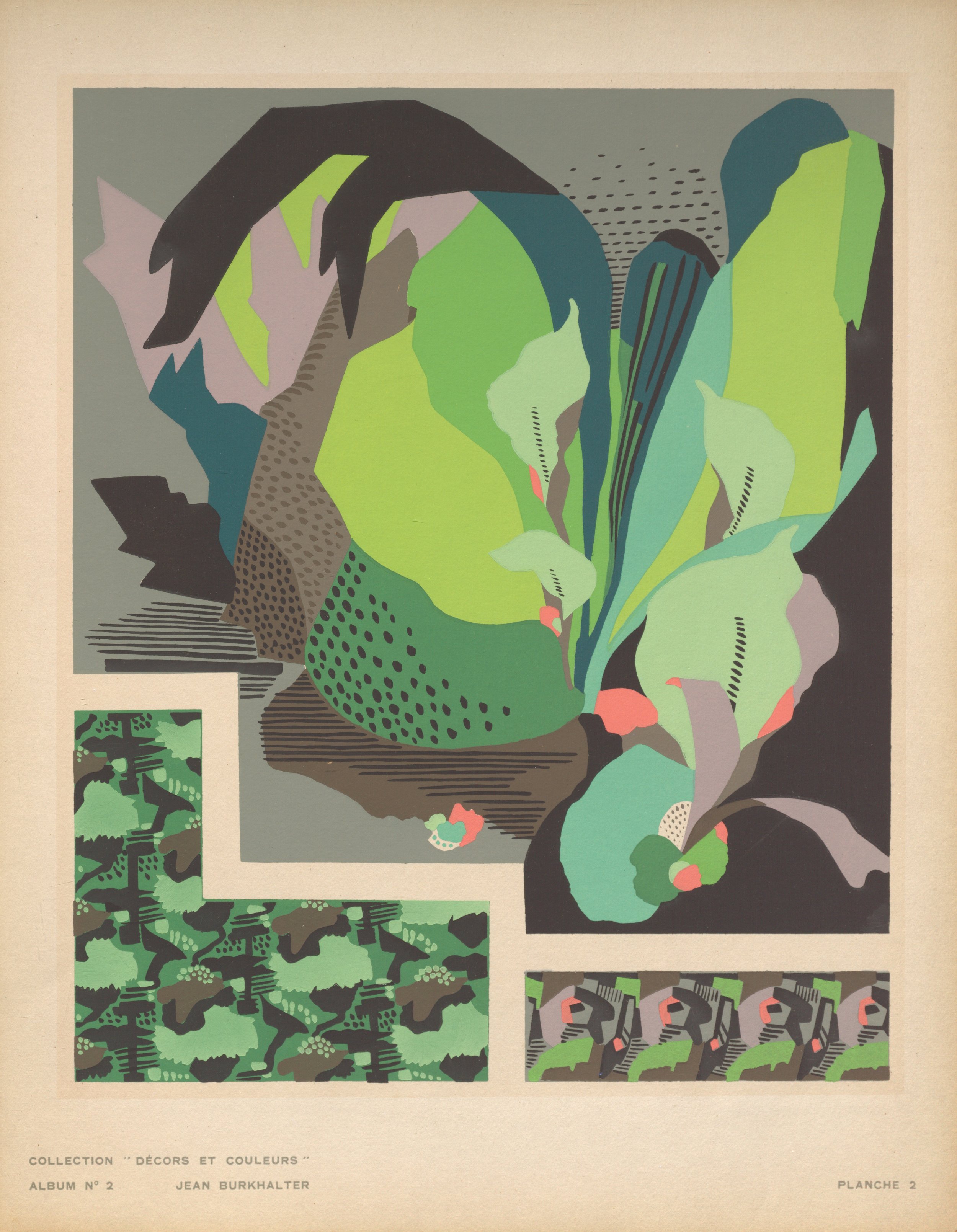
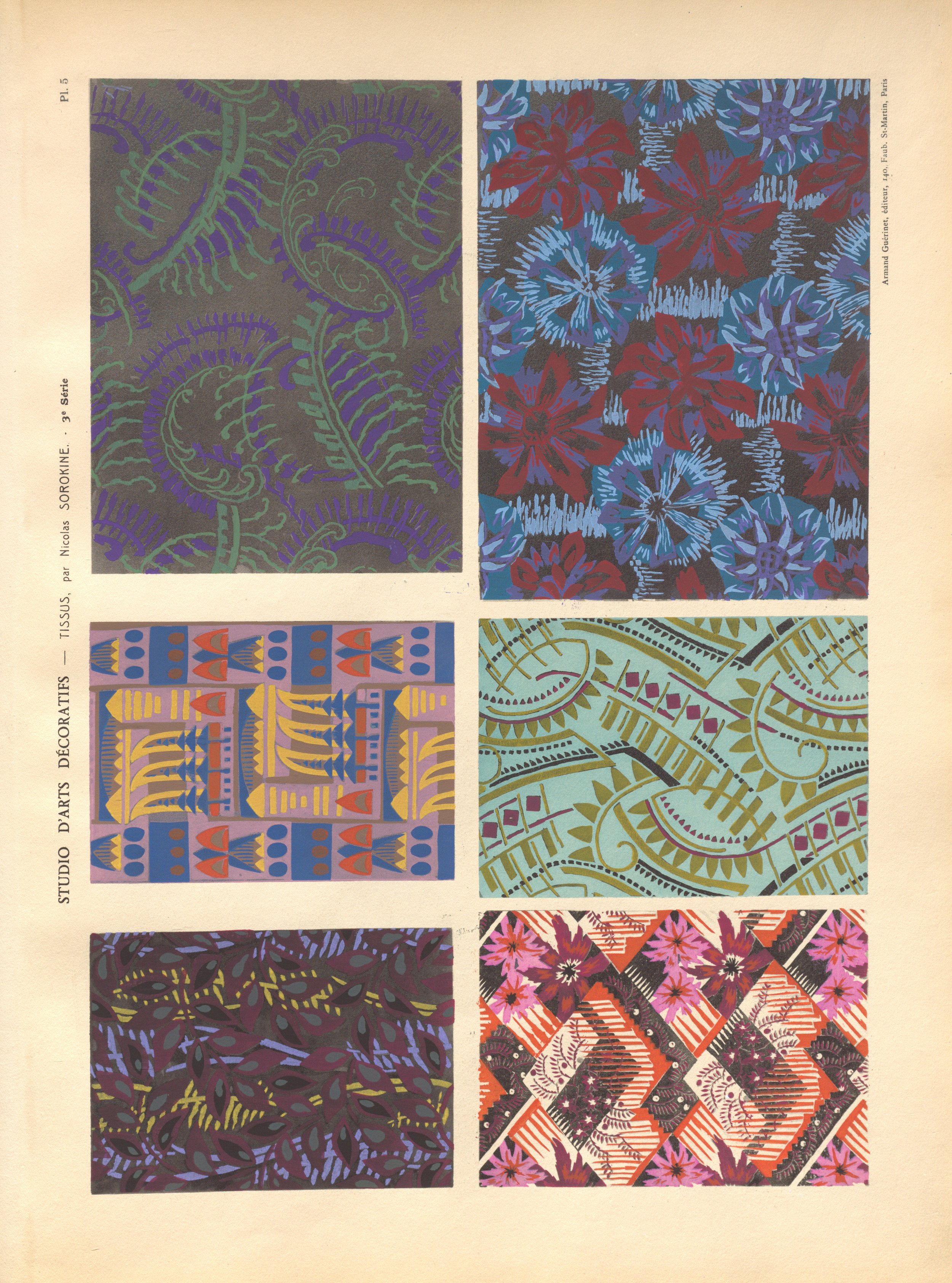
![Curved Lines. Diapers of Circles, Emma Webster Fischer [née. E. Webster Raynor], 1896, 10.25 in x 14.25 in, Pen and ink on paper Collection of Plates (Final Project, New York College for Women)](https://images.squarespace-cdn.com/content/v1/5936fbebcd0f68f67d5916ff/1758570627288-PV7GG68YTXHVP5LGS7F2/Curved+Lines.+Diapers+of+Circles+Emma+Webster+Fischer+%5Bn%C3%A9e.+E.+Webster+Raynor%5D+1896%2C+10.25+in+x+14.25+in%2C+Pen+and+ink+on+paper+Collection+of+Plates+%28Final+Project%2C+New+York+College+for+Women%29+NYSID+Rare+B.jpg)
![Egyptian Ornament , Emma Webster Fischer [née. E. Webster Raynor], 1896, 10.25 in x 14.25 in, Pen and ink on paper Collection of Plates (Final Project, New York College for Women)](https://images.squarespace-cdn.com/content/v1/5936fbebcd0f68f67d5916ff/1758570629719-X8S1A07NM6ZXQ5IAVEMY/Egyptian+Ornament+Emma+Webster+Fischer+%5Bn%C3%A9e.+E.+Webster+Raynor%5D+1896%2C+10.25+in+x+14.25+in%2C+Pen+and+ink+on+paper+Collection+of+Plates+%28Final+Project%2C+New+York+College+for+Women%29+NYSID+Rare+Books+Collection.jpg)

Highlights From the Archives
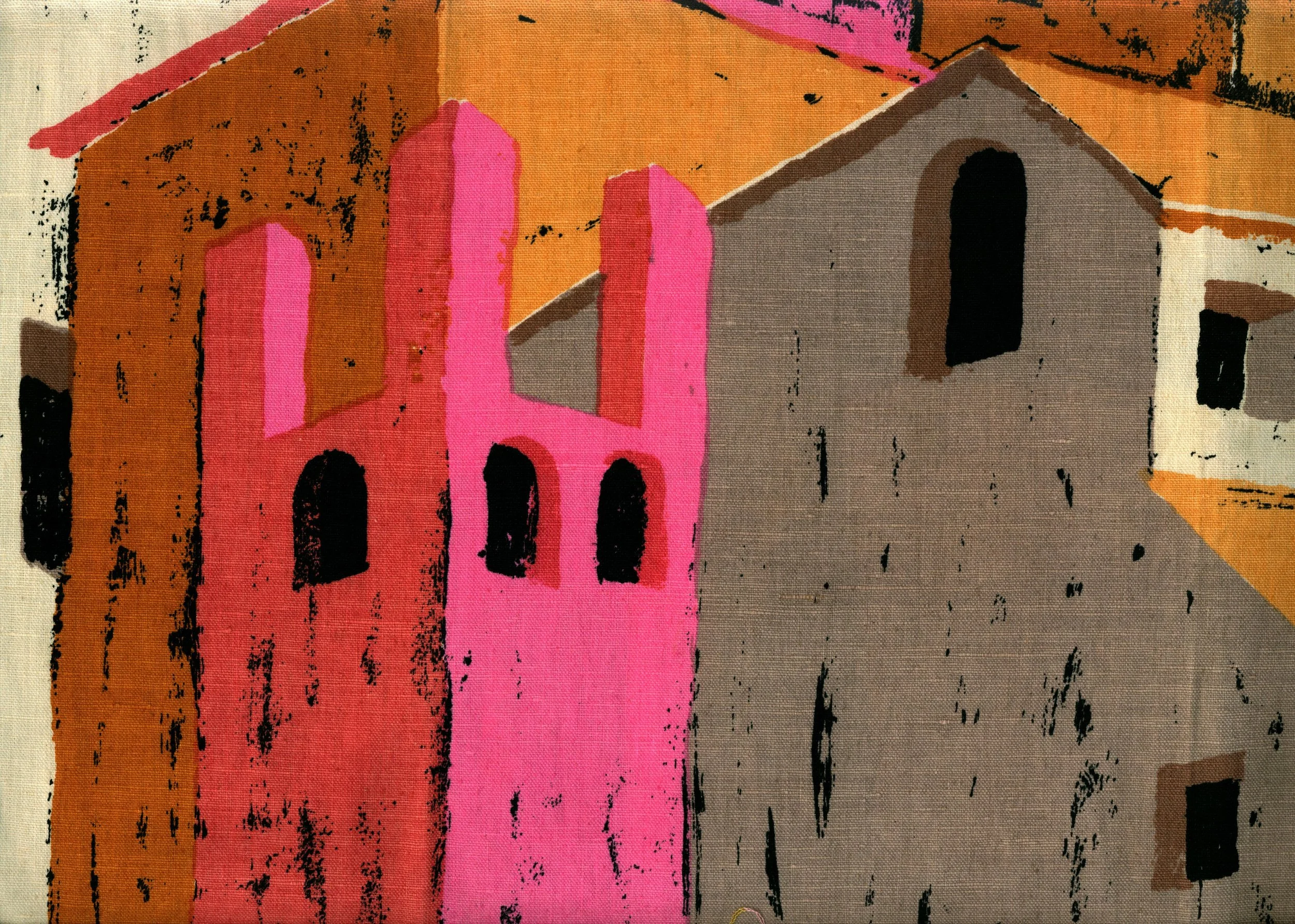
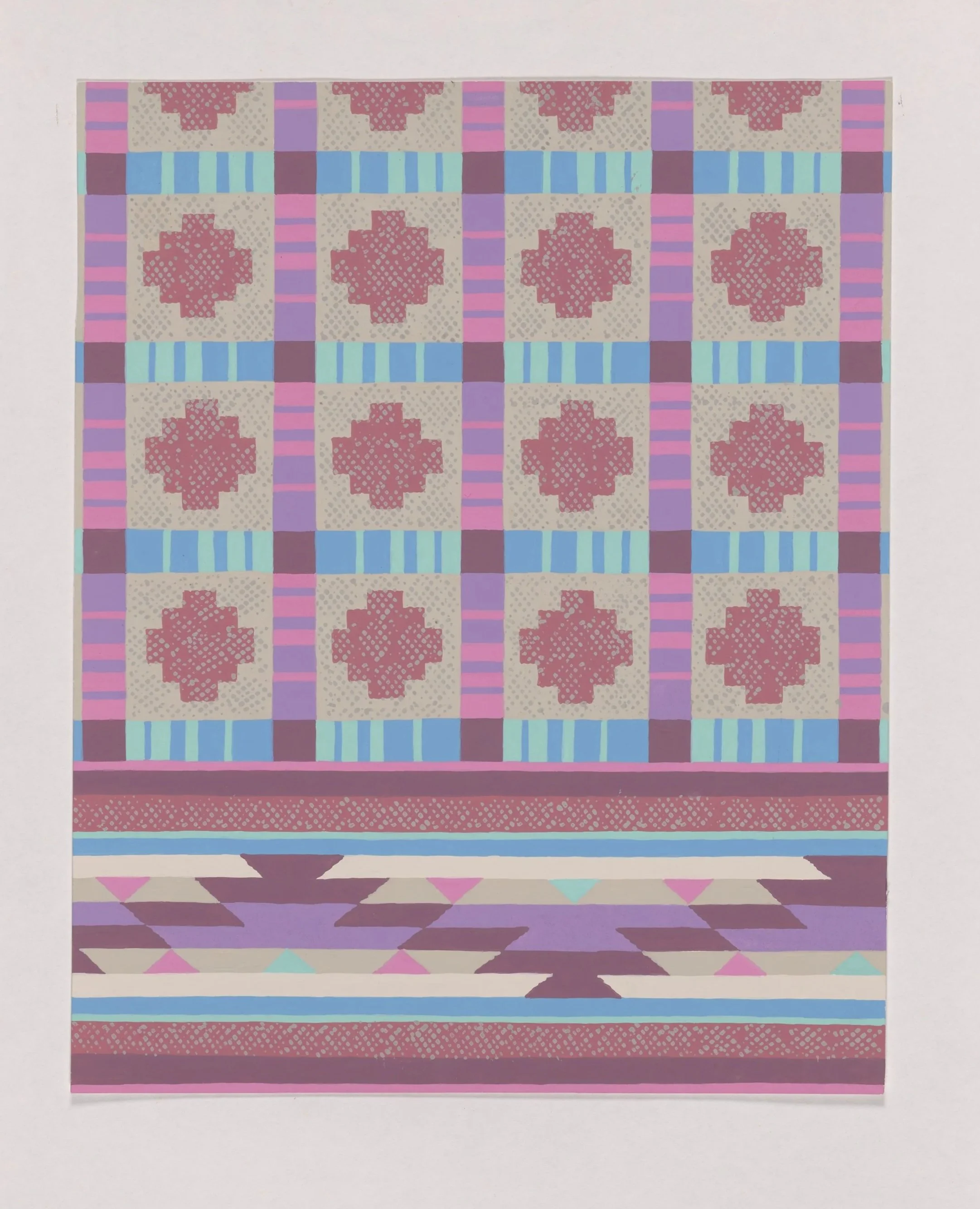
NYSID Commissioned Pattern Designs
The exhibition’s curators invited the contemporary designers to directly engage with the NYSID Archives by using archival materials as inspiration for new pattern designs. These newly commissioned works are on display in the exhibition’s workshop area alongside samples of designers’ existing pattern designs, including wallpaper and textiles printed by Adelphi, Flavor Paper, and Spoonflower.
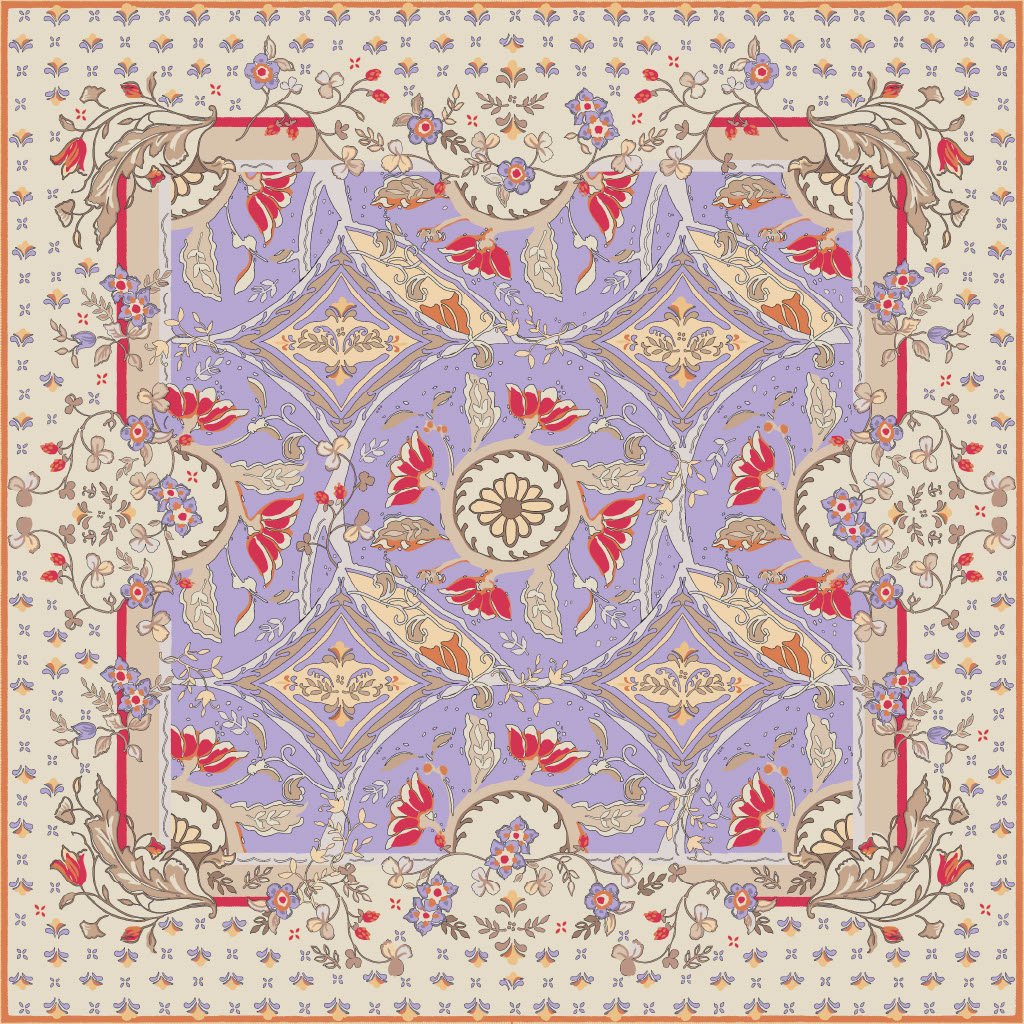
Li Iordanov Dan
Garden of the Imaginative, 13 screens, 2025 27 x 27 in.
-
Garden of The Imaginative is a pattern design that reinterprets the work of Joann Nelsen, an American designer known for her surface illustrations across wallpaper, textiles, and furnishings. Drawing from Nelsen’s design Chinashop, the work isolates both central and border motifs from her stylized interpretation of Chinese porcelain.
These fragments, originally compact and intricate, are enlarged and rearranged into a new format. Through this shift in scale, the piece draws attention to ornamental details that may have been overlooked in their original setting.
While the layout loosely recalls a scarf format, the composition resists traditional symmetry. Mirrored elements are not exact; subtle variations are embedded to interrupt visual predictability. This subversion of balance introduces rhythm across the surface. The work avoids conventional textile repeat structures, where uniformity often governs form. Instead, it proposes a more active and visually engaging pattern logic, extending Nelsen’s own interest in patterns that suggest continuity without strict repetition.
Every element is rendered with pixel-level clarity. Each color is discrete, with no blending, gradients, or soft transitions. This method reflects the production logic of pattern design, where clean separations support material transfer across mediums. While this level of control often risks flattening detail, the design maintains depth and nuance through a strategic and methodic design process. The result is a highly controlled surface that feels organic and visually alive.
Rather than presenting a direct homage, Garden of The Imaginative expands on Nelsen’s cross-cultural engagement by reframing it within another decorative tradition. Influences from Rococo and Victorian design appear in the structure and movement of the pattern, creating a hybrid visual landscape that connects multiple histories of surface design for our contemporary world.
The final composition invites close looking. Layered with inherited forms and restructured motifs, it reflects the evolving nature of design, where past and present, East and West, hand-drawn and digitally rendered, meet, transform, and converse.
Jeanetta Gonzales
Gilded Bloom, 2025 Hand painted and digital illustration Pattern Size: 24 in. square
-
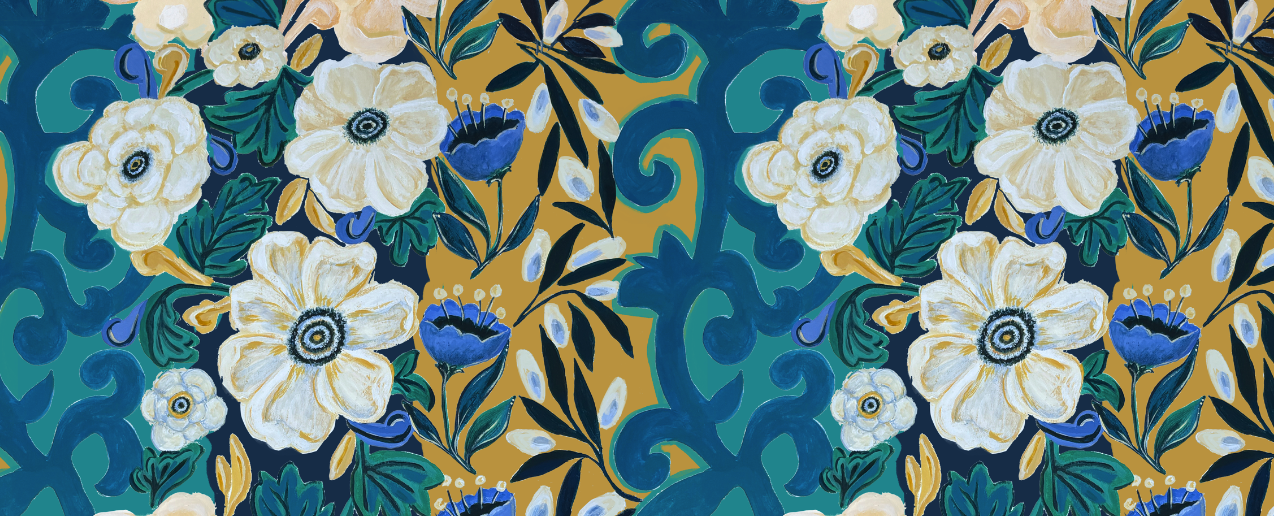
This piece, Gilded Bloom, is inspired by two works of Joann Nelsen featuring stylized florals and decorative elements reminiscent of the Arts and Crafts Movement. I was drawn to the contrast between these pieces: both incorporate botanicals and scrolls, but one is more traditional, while the other is loose and expressive. Each demonstrates her versatility to work in different styles. My goal was to blend these design elements in a linear and painterly way, reflecting Joann's approach. After completing the piece, I felt the design would work well in both warm and cool palettes and could complement different types of spaces. The new colorway, with its cinnamon and gold-colored tones, shifts the overall aesthetic of the original design, giving it more of a feminine touch, which is perfect for a room in need of warmth and a bold statement.
Dan Funderburgh
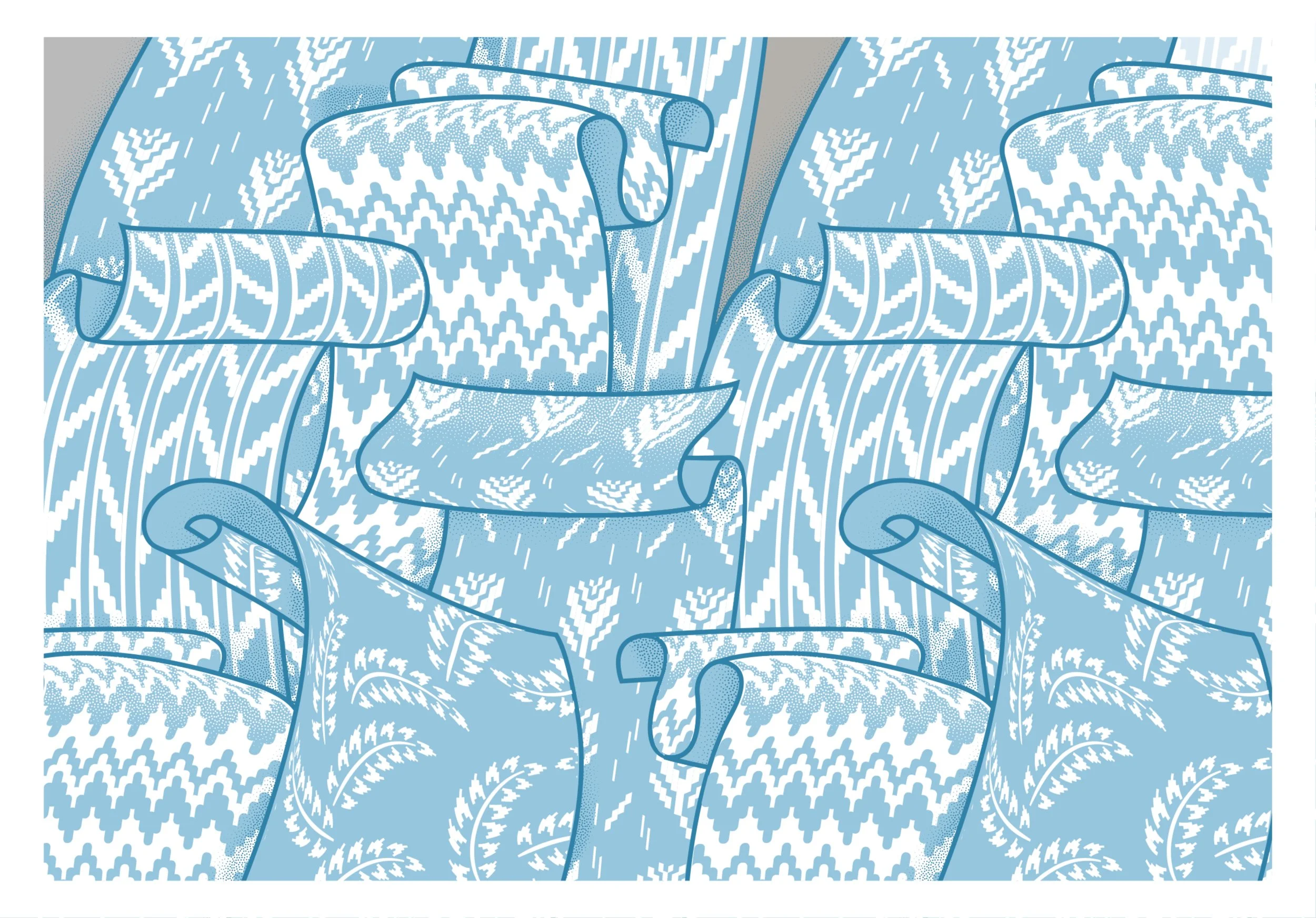
Rolling Paper (work in progress), 2025 Wallpaper Sketch, acrylic, and pencil Repeat Size: 22 x 30 in. (full size 27 x 54 in.)
-
Rolling Papers (work in progress) is the result of spending hours poring over the beautiful NYSID wallpaper archive. I loved everything I saw, but I hit a wall trying to find one sample that would be a load-bearing inspiration for a brand-new design. Each print and painting pulled me in a different direction - each appealing, but none definitively more than the others.
It’s possibly related to the internet scrolling brain, but one recurring theme in a lot of my work is the inability to stay focused on just one era or genre. I love Joann Nelson’s rounded, gentle Aztec ziggurats in 1980s pastel colors, and I love Joseph Grusczak's electric ikat and Joe Martin’s Neo Deco geometries. But what I really loved was the stack of all the contrasting and vibrating samples in a stack. After several false starts, eventually my inability to choose a favorite became the solution. Hopefully, by nodding to all of these at once, the wallpaper isn’t as much a tribute to one designer, but to the archive itself. It’s a work in progress because I think other patterns would work in there as well. Perhaps it could be made modular with multiple screens.
This exhibition is curated and designed by StudioExhibit.A, with design and management by Poleshuck Design Inc.
Exhibition sponsors: Kravet Inc., Benjamin Moore