
Design Between the Covers: Elizabeth Lawrence on Decoration
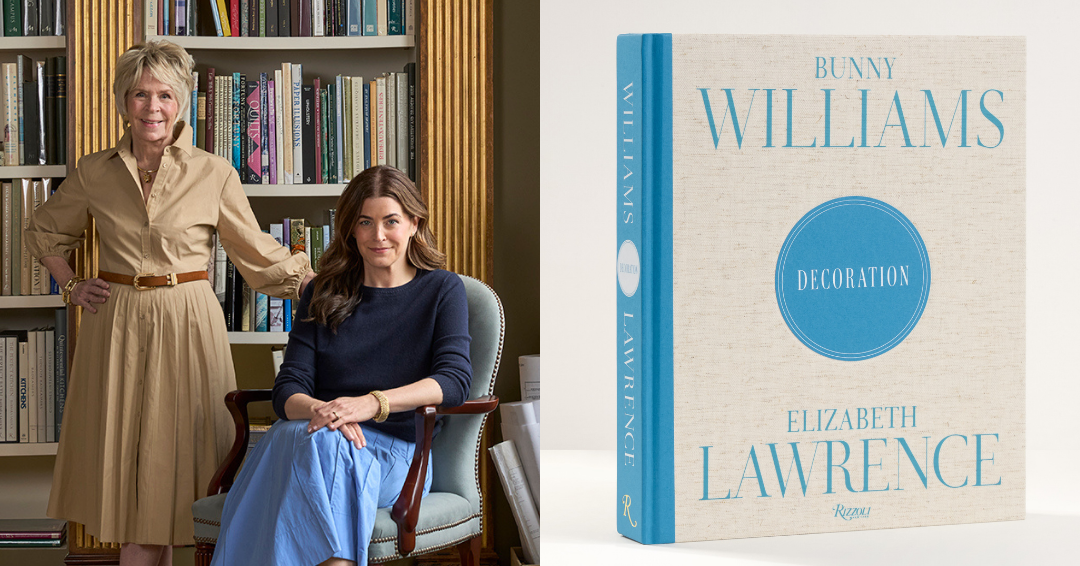
Bunny Williams and Elizabeth Lawrence. Photo by Francesco Lagnese
NYSID’s “Design Between the Covers” series delves into the thinking behind interior design books. We launch this series with NYSID alumna Elizabeth Lawrence '03 (AAS) on her first book, Decoration, which Rizzoli will publish in September 2026. The book captures the ethos of the legendary interior design firm Williams Lawrence, led by partners and co-authors Bunny Williams and Elizabeth Lawrence.
Lawrence began working at the firm, then called Bunny Williams Interior Design, in 2003 while she was a student at the New York School of Interior Design, and became a partner of the firm, now known as Williams Lawrence, in 2017. The firm was renamed Williams Lawrence in 2023. The duo’s projects have been published in The New York Times, Architectural Digest, Elle Decor, Veranda, House Beautiful, and many other publications. Lawrence was honored with NYSID’s Rising Star Award at the college’s Gala 2020. She volunteers as a student mentor at NYSID. Williams is a member of NYSID’s academic advisory board and was awarded the Albert Hadley Lifetime Achievement Award in 2015.
The partners will speak about Decoration at NYSID in an event sponsored by the Institute for Classical Architecture & Art (ICAA), on Wednesday, September 16 at 6 pm. Tickets may be purchased here. There are a limited number of free spots available for NYSID students. Students can register by selecting the Member ticket. Jennifer Dorr, NYSID’s managing editor, sits down with Lawrence to get a glimpse behind the book.
Jennifer Dorr: What’s the most important decision you and Bunny made about the format and organization of this design book?
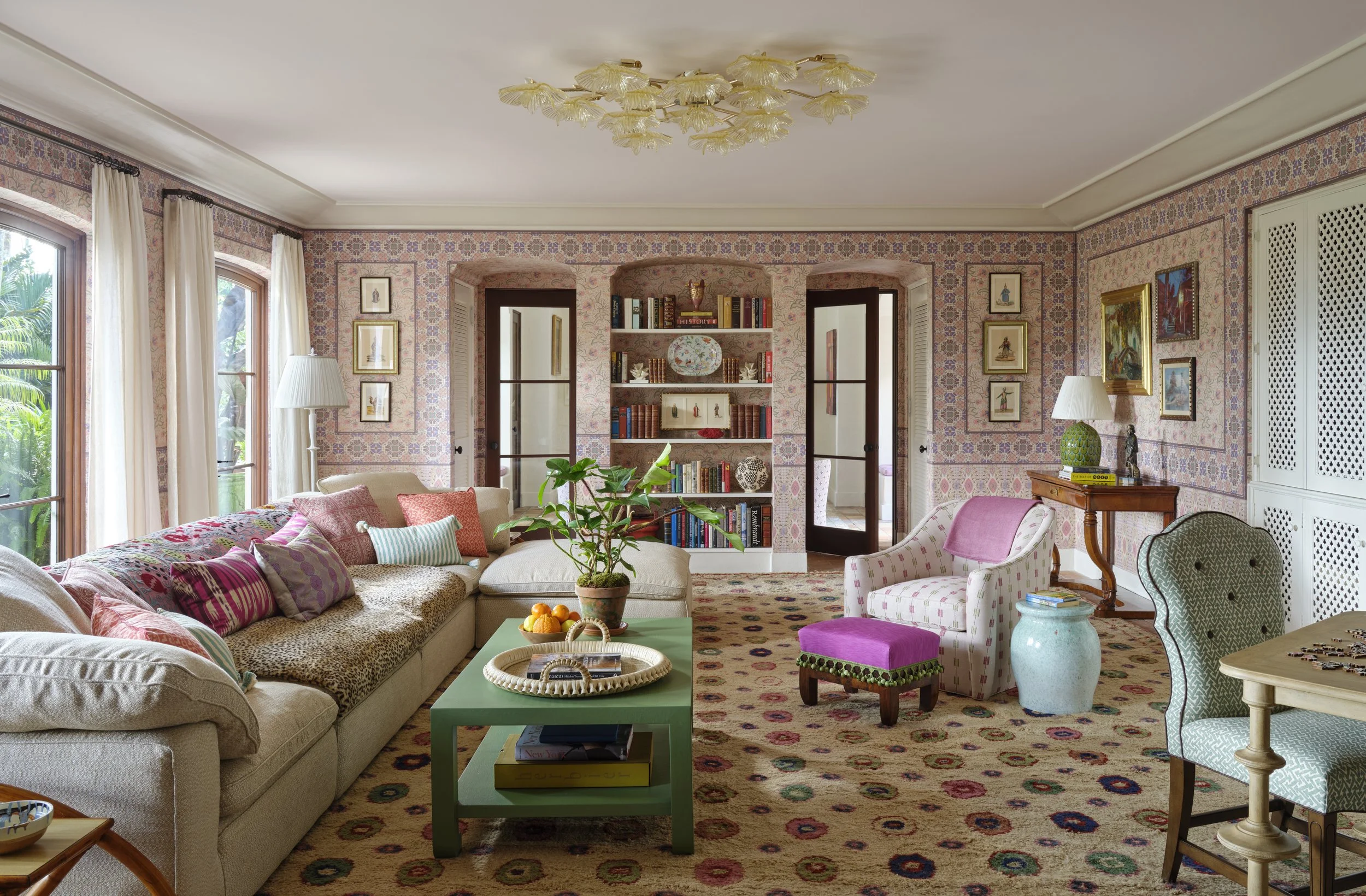
Family room by Williams Lawrence. Photo by Francesco Lagnese, Art by Amy Bernays
Elizabeth Lawrence: Bunny has done so many books. We wanted this book to stand out and be slightly different from other coffee table books. I think the big thing is that it's not organized by project, but by concept...For Decoration, we wanted to impart knowledge, but this wasn't going to be a how-to book. We wanted to let the reader in on the conversations that happen in our office, so we organized the book into essays around the principles and values we bring to every project. It was about challenging ourselves to find a different way to present the work. It was fun to take all these images from the past 10-plus years, and throw them down, and say, OK, what do we like with what? There's a lot of thought that went behind what images got paired together. We did that initially, and then Doug Turshen, the book designer, worked with us, page by page, to realize the vision. People often think of our firm as very traditional, but we've done work that is not. We loved the juxtaposition, on some pages, of our more modern projects next to our more traditional interiors. We wanted to showcase that no matter what kind of design we're doing, there's a level of quality, service, and thought that goes into it. We wanted this book to be an inspiration designers could keep coming back to, so it reflects the ideas we talk about when we're doing a project. Also, what I find really interesting when talking to other interior designers is their personal experiences: the stories of the hunt for rare pieces; stories about the clients; stories about how a project came to be. We wove those stories into the essays.
What concept do you want emerging designers to take from this book?
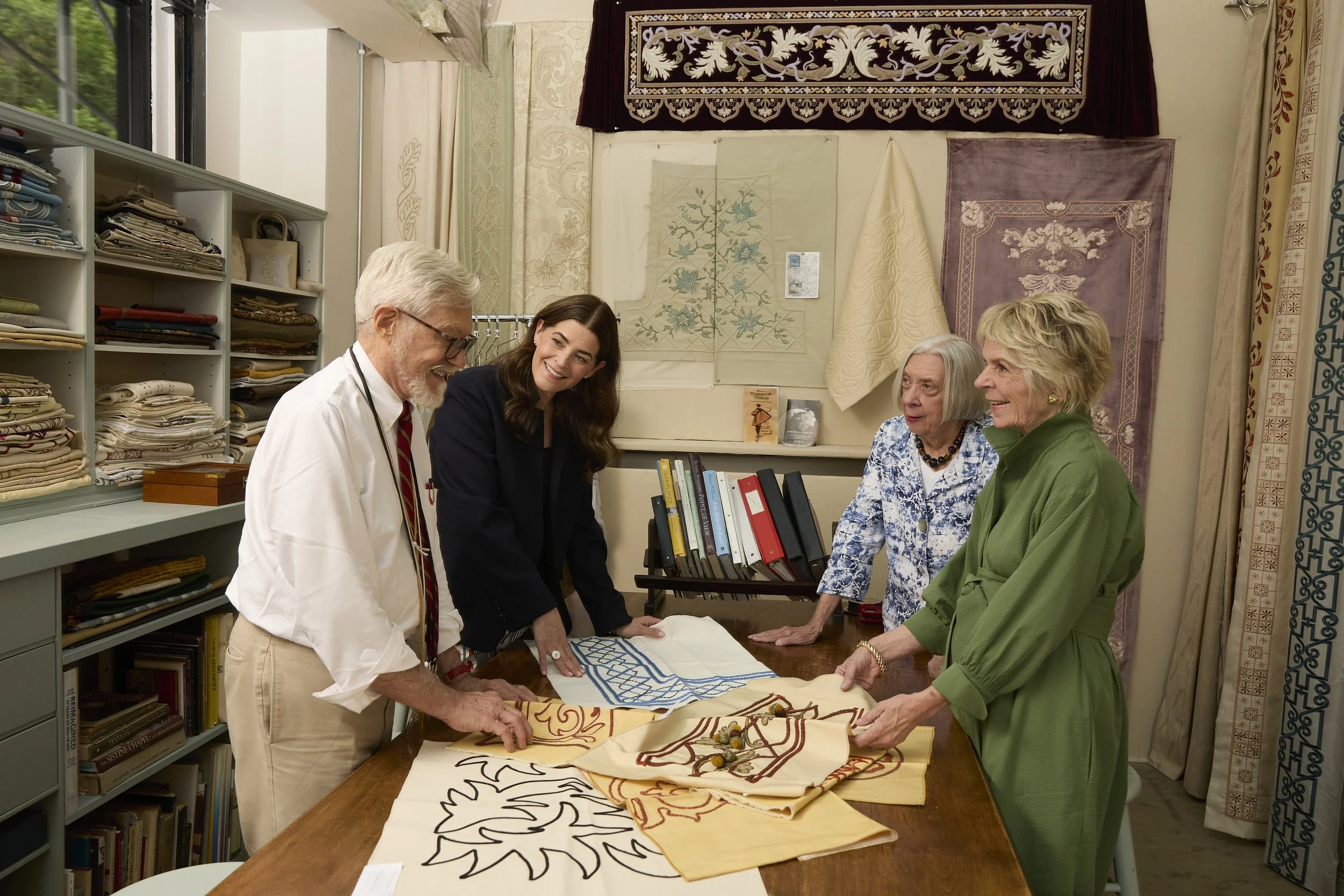
Elizabeth Lawrence and Bunny Williams with artisans Ernie Smith and Evelyn Crescimanni of Penn & Fletcher. Photo by Francesco Lagnese
We wrote a whole chapter on “Couture” and the artisans who make it possible, because we wouldn't be able to do what we do if it weren't for those people. And some of this level of craftsmanship is dying a little within the profession. It's getting harder to find some of these craftspeople. We think they should be celebrated. We talk a lot about collaboration in this book: the collaboration between the clients, the architects, and the craftspeople. So this section on couture was really important to us. We took a photographer to some of our workrooms and had them take pictures behind the scenes. Couture does not have to be super expensive—it can be accessible within all different budgets. The people who are doing this customized work make the possibilities endless. As designers, we get to dream up these things, and work with people who can help bring them to life. How cool is that?
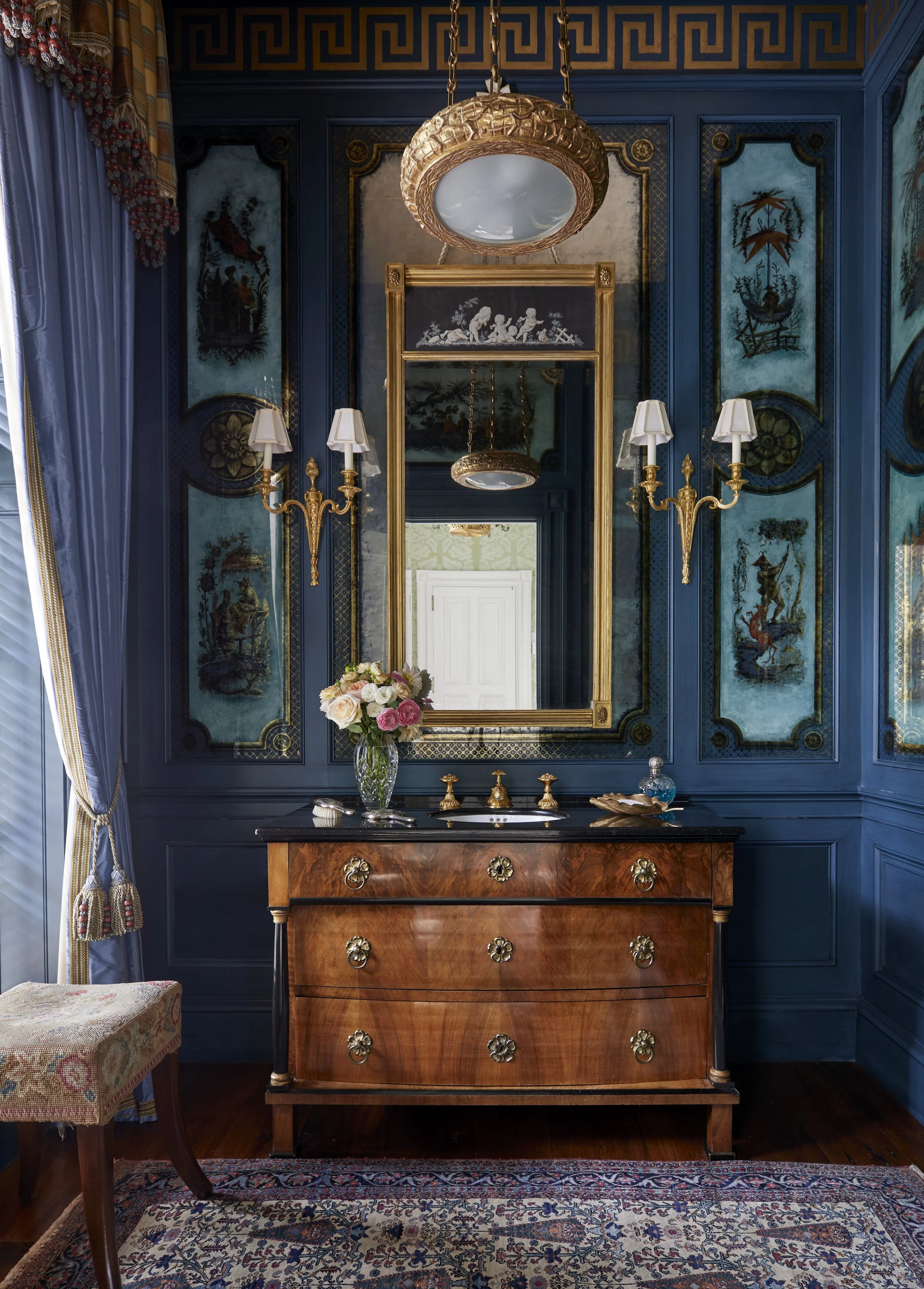
Foyer powder room by Williams Lawrence. Photo by Francesco Lagnese
I loved your essay on the “trained eye,” which you defined as “the ability to see beyond surface beauty and to recognize proportion, authenticity, patina, and potential.” How was your eye trained?
My mother has always been a huge influence on me, and I feel like a lot of my mentees say the same thing. It started with my mother dragging me to antique shops and through old homes in England. My mother is an artist who would decoratively paint the walls and slipcover chairs, and so this became a huge part of my visual vocabulary. In college, I got really into photography: framing a shot, looking at a space, or the view. This made me observant about detail and proportion. Through my travels, I have always just had my eyes open, looking, ever since I was a child. The other part of it is ongoing education and experience. I live near the Metropolitan Museum of Art, and despite so many repeated visits, there's still so much to uncover. We talk about that a lot at the firm: you have to constantly be learning, constantly be a student, constantly be looking.
In this book, your voice alternates with Bunny’s, conveying the creative energy and respect in your partnership. What do you want interior designers to understand about partnerships?
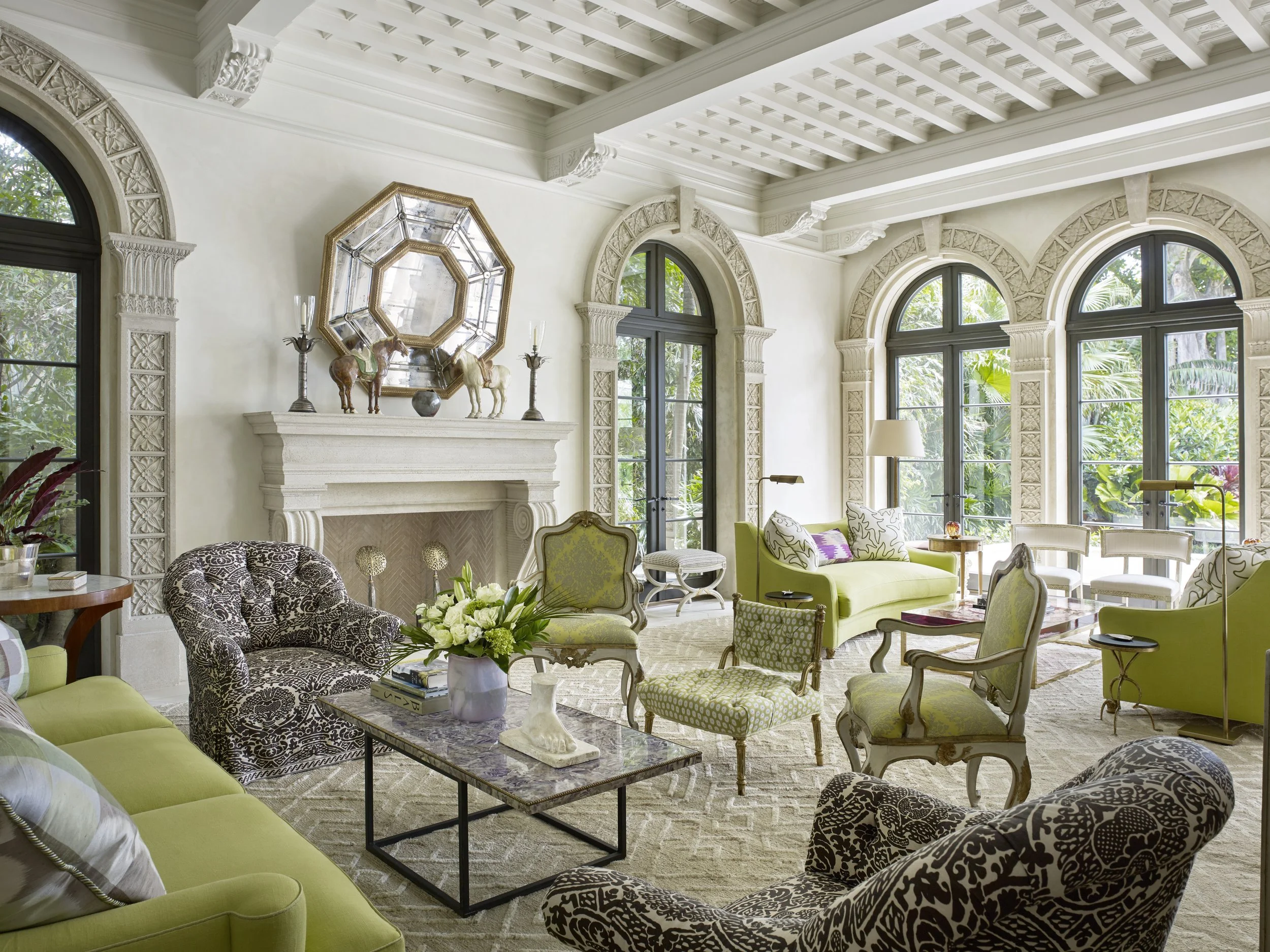
Living room by Williams Lawrence. Photo by Francesco Lagnese
Partnership is really important. I always say that if Bunny and I do this right, it will help future generations see the possibilities and the benefits (of intergenerational partnership). It's not easy, and not everyone has succeeded. Partnership is like a marriage, and I have more paperwork tying me to Bunny than I do to my husband! I feel very fortunate that while I was a student at NYSID, I was encouraged to intern and work for someone with such experience. Over the years, I did every job in the office. I did whatever was asked of me. And now, running the company, that's what I look for in people. Hopefully someday, we will find another partner, because one thing Bunny said to me when I became a partner was that it had been kind of lonely for her. It's so important to be able to sit down with another creative you trust and say, “I had this idea. Is it crazy?” And that's what I love about our office; we do that for each other.
Something else Bunny talks a lot about is how important it is to work somewhere where you can learn and make your mistakes under someone with more experience. I know a lot of people go out on their own right away, and that works for some people, but when I was starting out, I needed to learn from experience and mentorship. You know, Bunny was at Parrish Hadley for a very long time. Partnership didn't work out for her there. Sister Parrish dragged her feet, though Albert Hadley really wanted the partnership. At the time, Bunny was bringing in a lot of the clients. So, decades later, when I came to talk to her about my future, she immediately said, “I've been thinking about this. You should be here as my partner.” That's the thing about Bunny: she's always very forward-thinking. She said to me immediately, “We can change the name of the firm,” but I was not ready. It took me a little bit of time to get there on changing the name, but there was a really defining moment when I said my name needs to be on the door, because people want to hire the name on the door. I think because Bunny had huge hurdles, she was always open to letting me rise. Designers who have established themselves and might be thinking about the future of their firm can learn from this story. Look at these great firms that no longer exist, especially Parrish Hadley. What a missed opportunity. It's really important that young people know these opportunities exist, because I think in our industry everyone thinks you have to start your own firm. I hope that more successful designers will consider allowing their most capable junior people to rise and become equals and owners.
Jennifer Dorr: Was there a design book that influenced you or served as a model?
There’s a book I often refer to that’s a biography, not a coffee table book, called Nancy Lancaster: Her Life, Her World, Her Art. The summer I moved to New York to attend NYSID, I could not put it down. I loved all the stories of her and John Fowler traipsing through the English countryside, finding and painting wicker furniture. It seemed so romantic. The stories captured me. I always tell the students I mentor to read the biographies of masters like Nancy Lancaster, Sister Parish, and Dorothy Draper, because those stories are the history of our field and the decorative arts So even though Bunny and I were writing a coffee table book, I wanted to make sure it was narrative, and that the stories of our clients and our collaborations were woven in…I wrote about a young client I've worked with since I designed her teenage bedroom, and now I'm doing her adult home, and she has four children, and how fun that is. I wrote about another client who has moved more times than I can count, reusing all of her things each time she moves. I love to hear stories about design, and I love to tell them, and that’s reflected in the book.
***
NYSID’s “Design Between the Covers” delves into design books. Interior design books are important because they preserve the history of the profession, capture innovation, and provide insight into the thinking of interior design masters.