Portfolio: Clay Mohrman '25 (MPSL)
The Office of Academic Affairs awarded Clay Mohrman ’25 (MPSL) the Chairman’s Award for her overall performance at NYSID. At NYSID, capstone projects are long journeys that challenge students to brainstorm, conduct research, and synthesize all they have learned. The journey ends with a presentation to a jury of faculty and industry professionals. Our students work closely with faculty to create hypothetical designs that offer solutions to real-world problems.
Student: Clay Mohrman
Project: Lighting Design for Buchanan Hall
Program: Master of Professional Studies in Lighting Design
Instructors: AC Hickox and Marty Salzberg
The waterfront access at Western Washington University made it an ideal setting for Clay Mohrman’s capstone project, an 80,000-square-foot dormitory for graduate students in the school’s oceanography and marine biology program. He wanted to use lighting to give the students a “place that is calming and reminiscent of what they’re studying.”
Buchanan Hall, their residence, combines indoor and outdoor living in a mixed-use setting. Lighting possibilities presented by an outdoor café, a series of courtyards between dormitory areas, and a glassed hallway with views to outside are what drew Mohrman in. Part of his strategy was to enhance views from the inside out, and the outside in.
Mohrman wanted the dormitory to feel both calm and expressive of what it is, but different from a typical residential setting. He also wanted to interpret his concept so that it felt mature without using color in a gimmicky way. Key to achieving this goal was harnessing lighting’s “ability to transform spaces to be more high-end through layers of light and the types of lighting being used,” he says.
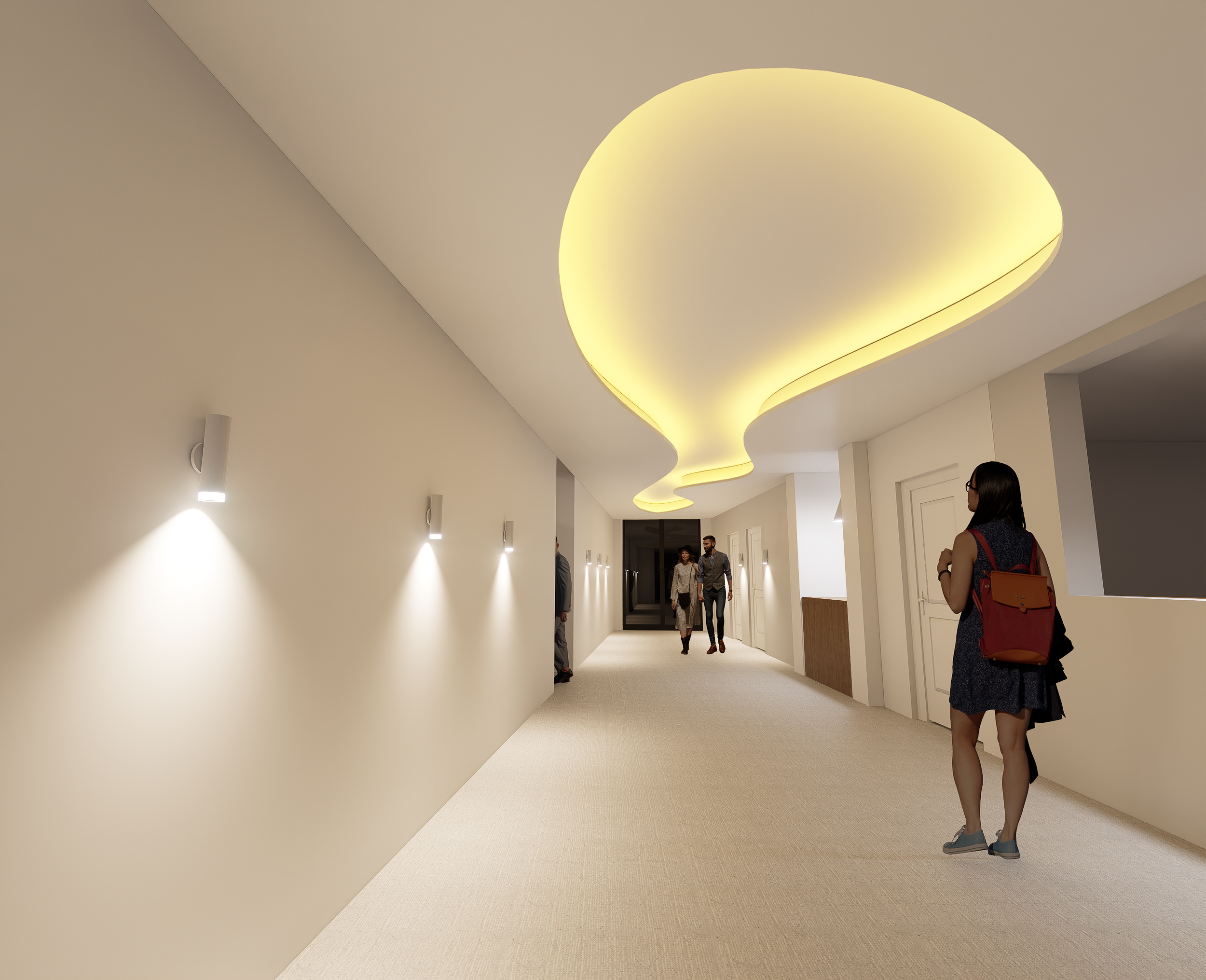
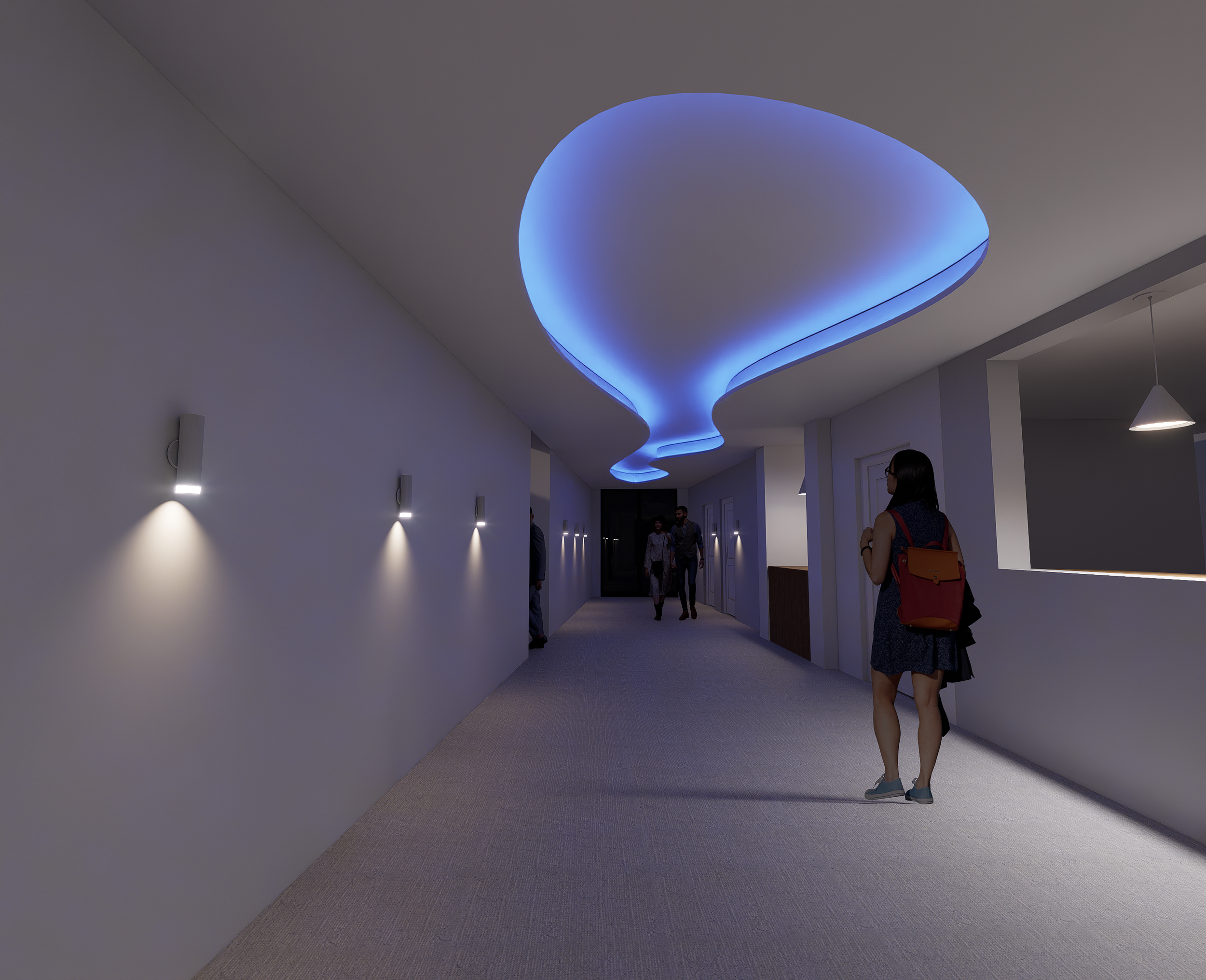
Typically, blue light in a residential space is a no-go for designers, as very cool lighting can look institutional. But Mohrman, a lighting designer at Lighting Workshop, an architectural lighting design studio in DUMBO, made it a feature. “I wanted to find a way to replicate and use blue light so it morphs like the glow of an aquarium,” he says. “It was a challenge to myself: How do we incorporate blue lighting in a calming way?”
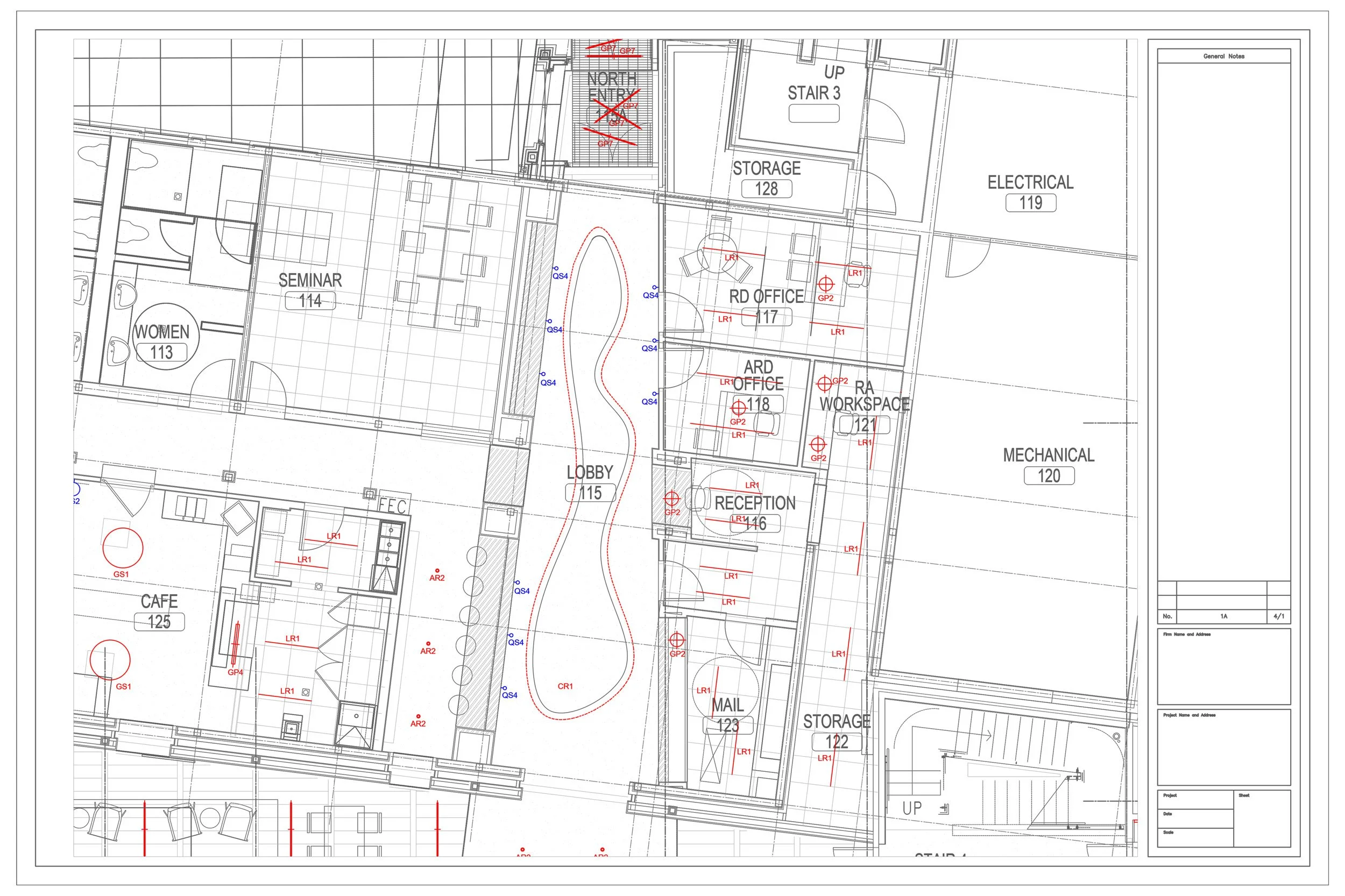
One innovative blue light application was at the north entry, where he added a digital multiplex (DMX)-controlled, curved cove that mirrors tidal changes in the Washington Bay area. “With tidal change, some things happen every day,” says Morman, “but some tidal flow elements happen twice a year or once a month, for instance a neap tide or a spring tide.” That led to dramatic lighting opportunities and a unique non-linear exploration in this outstanding project.
— Leslie Robinson ’21 (MFA1)