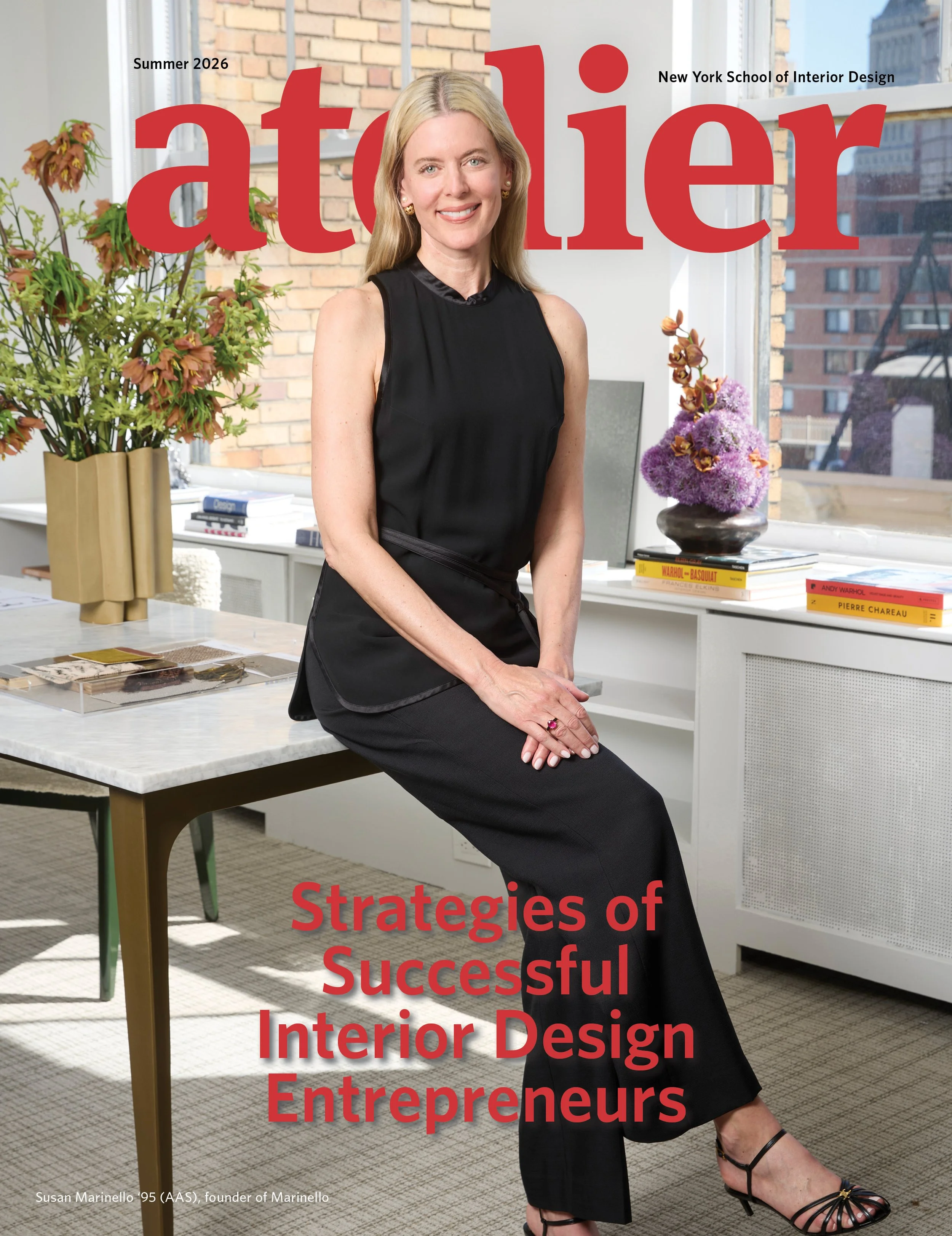
Strategies of Successful Interior Design Entrepreneurs
NYSID Alumni on How They Have Grown and Evolved Their Firms
It would be impossible to fit the many design entrepreneurs who have graduated from the New York School of Interior Design into the pages of a single magazine. This special section focuses on several design firm founders whose businesses have been expanding (and hiring) in recent years. Susan Lin ’21 (AAS), founder of Susan Lin Design in Lauderdale-By-The-Sea, FL; Brooke Lichtenstein ’10 (BFA) and Yiannos Vrousgos ’10 (BFA), founders of INPUT in New York, NY; and Susan Marinello ’95 (AAS), founder of Marinello in Seattle, WA, and New York, NY. These founders, with firms at varying stages of development, share the lessons, strategies and philosophies that helped them transform from start-ups to established brands.
Calculated Risk-Taking Helps Susan Lin Design Flourish
Lauderdale-By-The-Sea, FL • Six-year-old firm
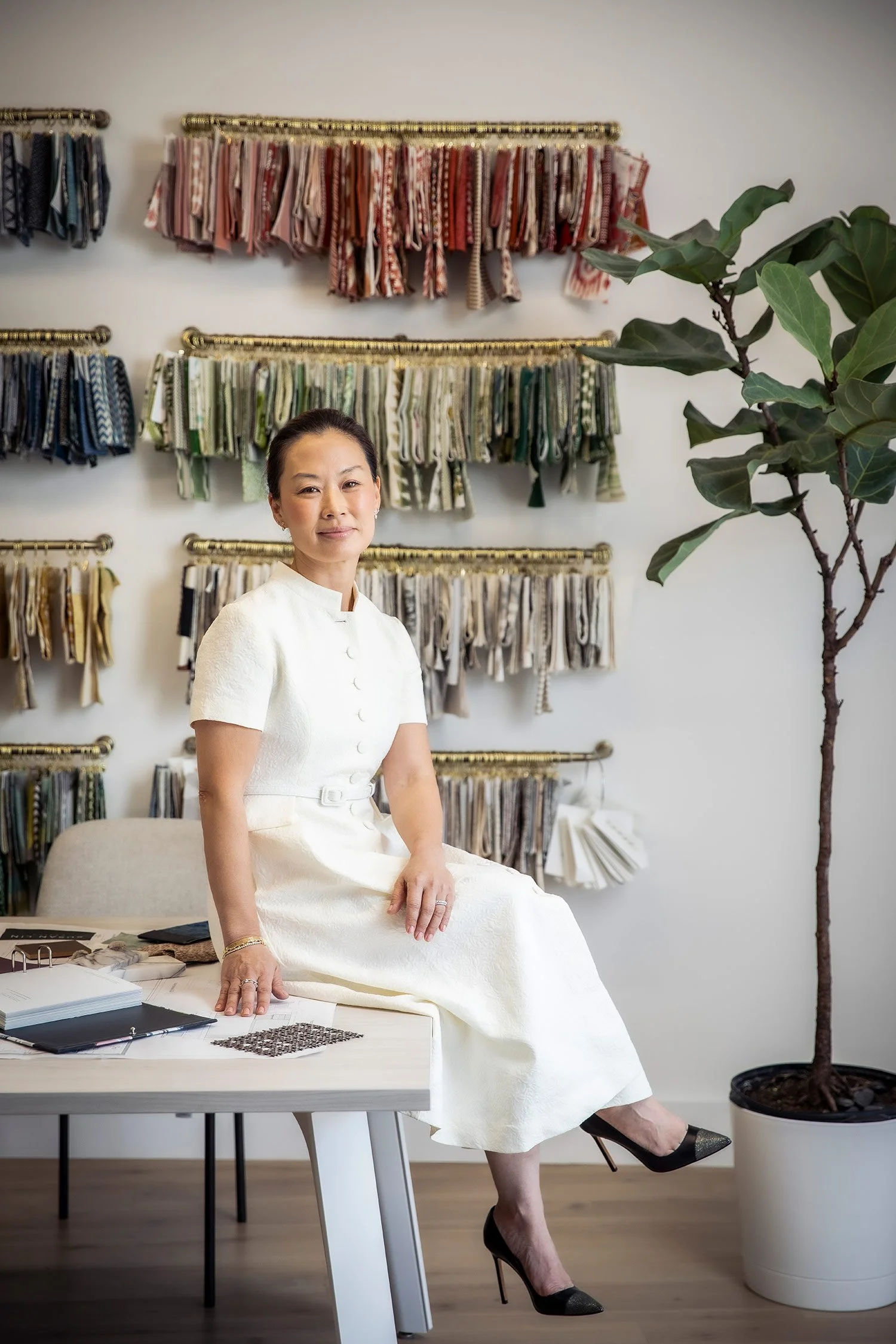
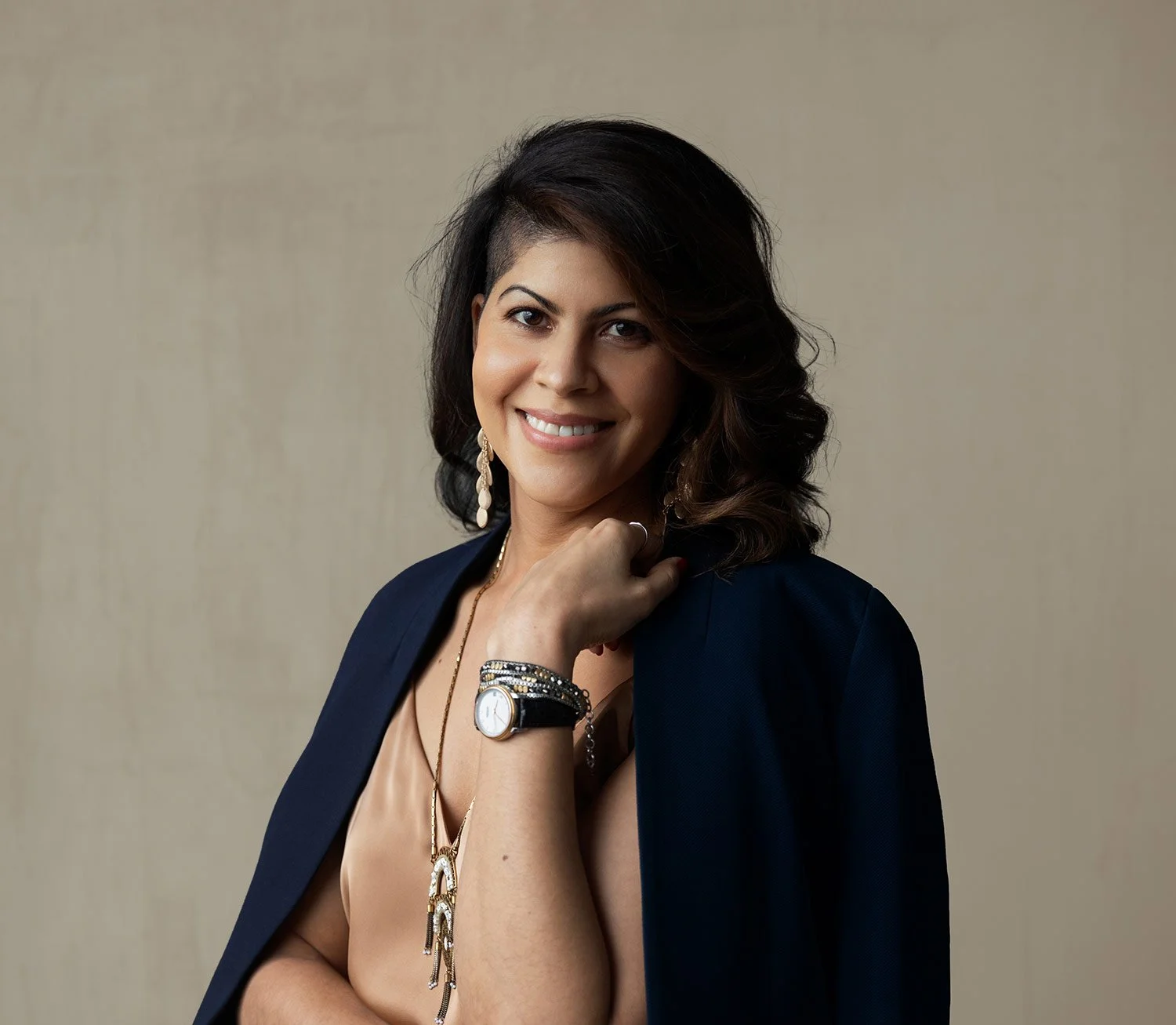
Susan Lin ’21 (AAS). Photo by Sonya Revell.
“We’ve experienced sustained and accelerating revenue growth in recent years,” says NYSID alumna Susan Lin ’21 (AAS), founder and creative director of her eponymous firm, based in Lauderdale-By-The-Sea. Lin started her firm in 2020, before she graduated from NYSID’s Associate of Applied Science in Interior Design (AAS) in 2021. She is now an employer of 7, including NYSID alumnus Matt Hou ’21 (MFA2), the firm’s design manager, and Kallee La Rosa ’24 (MFA1), an interior designer. Lin is actively searching for new hires.
About 80 percent of the firm’s business is high-end residential work, while the other 20 percent is commercial (private education and hospitality). Susan Lin Design was recently featured in The Wall Street Journal and selected for the AD Pro Directory. Lin believes it’s neither the size of her staff, the prominence of her media coverage, nor the number of projects that benchmark the firm's growth. Lin, who has an MBA and worked at JP Morgan as an investment manager in her first career, keeps weekly tabs on her firm’s revenue. Understanding her revenue streams and profitability guides her decisions and helps her decide when she is ready to grow.
“I recommend outsourcing bookkeeping and accounting,” she says, adding, “I approach my firm with the mind-frame that there is reckless risk-taking, and there is calculated risk-taking. Before I make any decision, I ask myself: Do your hours justify you taking another client? Do your projected numbers justify you hiring another staff member? Is the use of this marble justified by the client’s budget?” You can minimize risk by looking at risk-reward in a strategic way.”
Her Education & the Origins of Her Firm
Prior to founding her firm in 2020, Lin worked for nine years as a junior designer for C + H Interiors, based in Atlanta. In 2006, she got NYSID’s Basic Interior Design Certificate to learn the foundations of design and transition from her decade-long career in finance. Lin had a talent for design, connections to high-net worth individuals, and a knack for procuring business. Her employer allowed her to work remotely from New York, and later from Tokyo, Japan, when her husband was transferred there. Everywhere she moved, she landed clients and designed spectacular homes. Over the course of 15 years, while working and raising three children, she took classes “in the summers and whenever I could” in pursuit of NYSID’s AAS. “A formal education in design gives a framework around everything you do and helps you understand that our profession is about logic and empathy, not just picking pretty things,” she says. “The validation I got from my Residential Design I instructor, Ethel Rompilla, gave me the confidence to (eventually) start my own firm.”
Lin’s father was an entrepreneur in the restaurant business, bringing Japanese cuisine to America in the 1970s. Lin always dreamed of becoming a design entrepreneur. When she moved to Florida in 2020, she took the plunge and started her own firm. She finished her NYSID degree remotely through online courses. “The business that came to us was word of mouth. A lot of people use marketing dollars at the beginning… I feel grateful that we did not need to,” says Lin. Asked what distinguishes her firm, she says, "We are a service business. Trust is the backbone of what we do. Some of our clients are CEOs. These folks are busy, and they entrust one of their most valuable assets to me. Service, discretion, and reliability are first and foremost. Also, our aesthetic sets us apart. Things can go a little coastal down here. Our work is clean and minimalist, and we revere natural materials.”
Lin added employees strategically, avoided overhead, and selected clients judiciously. For the first 4.5 years of her firm’s existence, she and her employees worked out of her home. Knowing when to hire, and whom to hire, has been the biggest challenge of leading her firm. She says, “My rule of thumb is as long as design fees can cover salary, then I am in a good position to hire.”
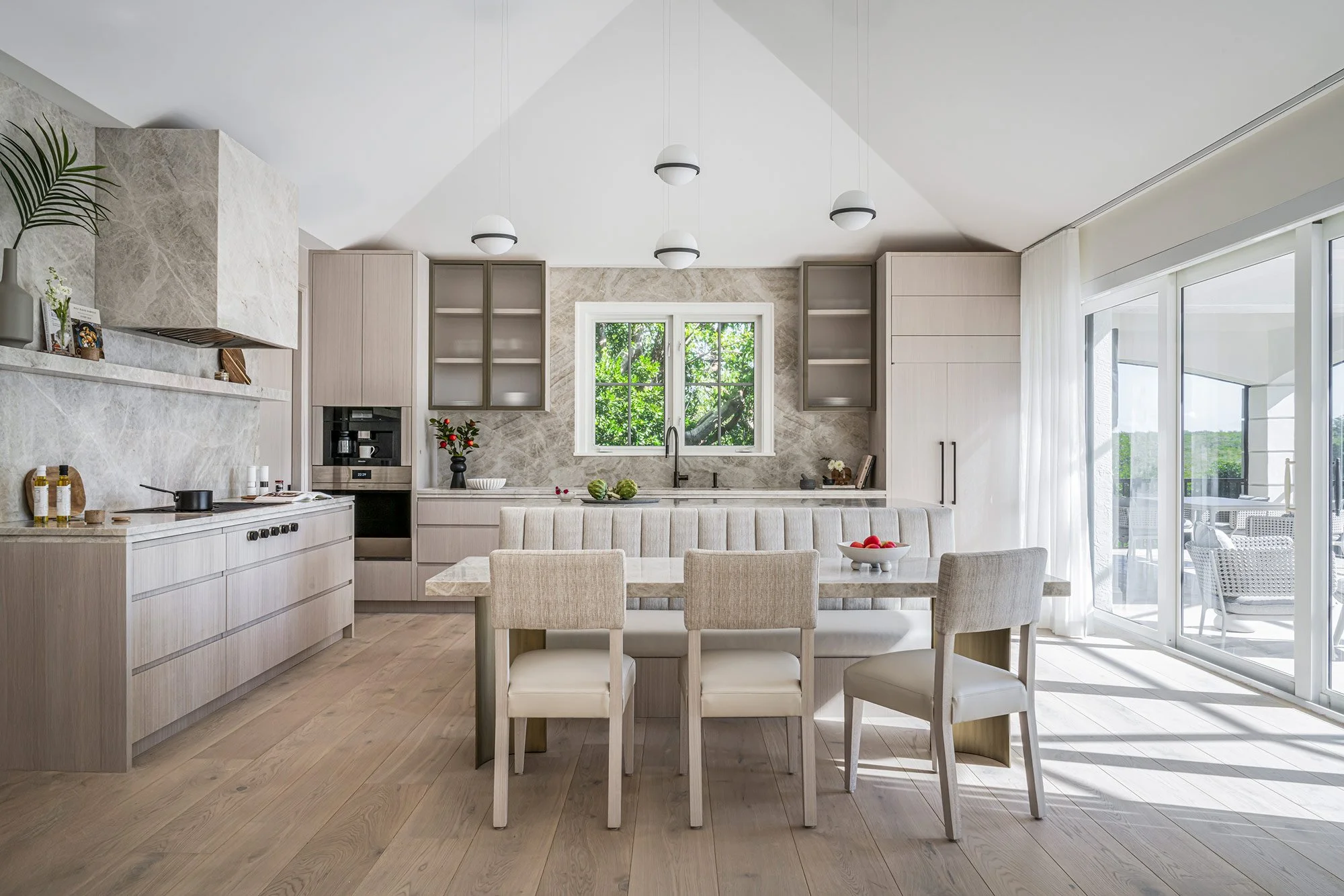
Private residence in the Florida Keys. Photo by Venjhamin Reyes.
Select Projects that Push You
“Taking on a ton of work is not my thing,” says Lin. She prioritizes work-life balance and counsels her designers to leave at 5 p.m. Yet, maintaining a superior level of service is paramount. So, she calculates the hours she thinks each project will take, and chooses projects carefully, often turning down work.
Two recent projects have been pivotal to the firm’s growth. The first was a residential project in the Florida Keys for a CEO and former athlete, a house with views of the waterways leading to the ocean. She and her team transformed it into a peaceful sanctuary. She says, “The scope and size of the project brought us to a new point. It was the biggest budget I have ever worked with, and it enabled us to provide gorgeous, customized millwork, with one-of-a-kind edges on the countertops, and innovative stonework.”
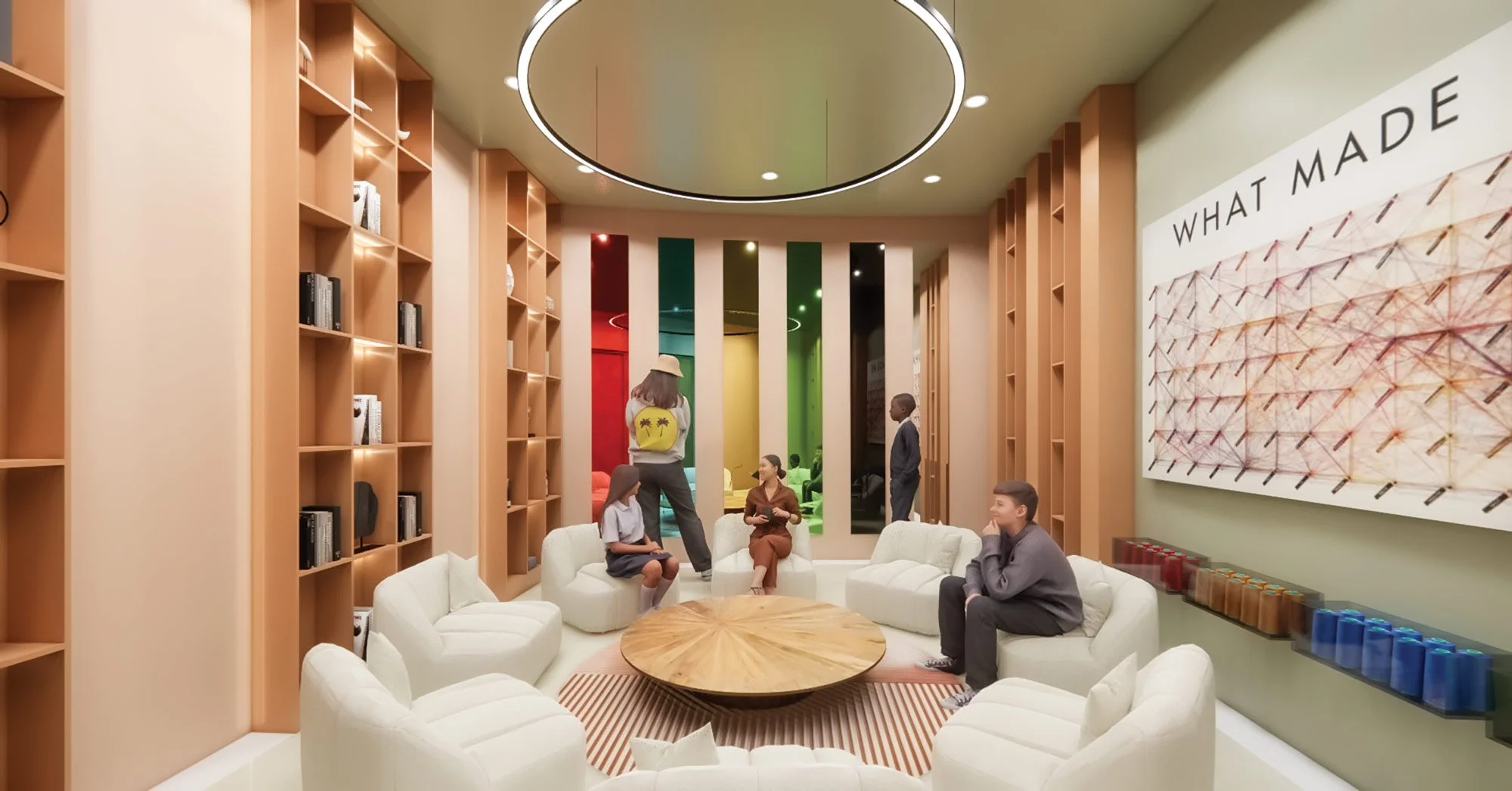
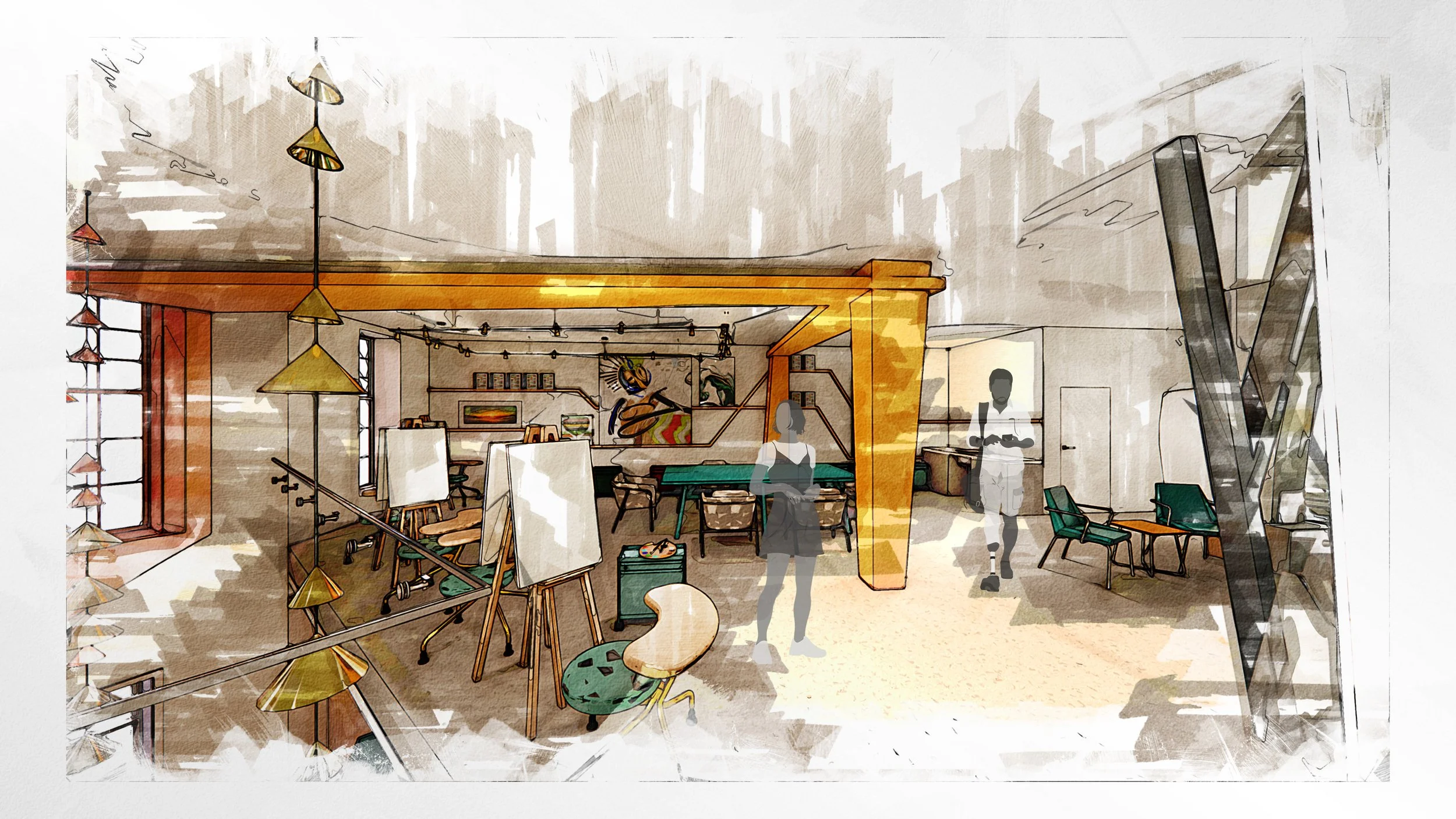
The second project was a new direction for her firm. “We got the opportunity to design and build, from scratch, a 25,000-square-foot learning center: the lobby, classrooms, and library. This project challenged us to develop design solutions that enhance acoustics, support optimal learning, and foster effective gathering,” she says. “When you are growing, go for one project that pushes you past what you are used to. Take calculated risks. Break out of the status quo. This project pushed our firm into a new stratosphere.”

Matt Hou ‘21 (MFA2), Kallee La Rosa ’24 (MFA1), Susan Lin ‘21 (AAS). Photo by Sonya Revell.
Remove the Guesswork for Your Team
Systems thinking, and a generosity of spirit, are key to Lin’s management style. She says, “My way of managing is ‘servant leadership.’ I create the conditions for the team to excel, but I don’t want to be the star of every project. Creative people thrive when they feel they are trusted and they know the guidelines and processes.” The way she gives her designers autonomy is to create and document standard operating procedures that automate every stage of the design process, and take the guesswork out of everything from a first client meeting to FF&E. She says, “I am a big picture thinker on every project, but I hire talented people so I can give the ownership of the creative process to them.”
What she seeks in employees is technical skill, an aesthetic that moves her (demonstrated in the portfolio), and emotional intelligence, which she describes as grace under pressure. NYSID is one of the first places she looks for hires. “There is such a long, rich history to NYSID, and that’s embedded in the courses they teach,” Lin says. “The technical mastery that I find in these hires from NYSID is amazing. The rigor of NYSID’s programs prepares students for the reality of work life.” ■
INPUT’s Founders Capitalize on the Unexpected
New York, NY • 16-year-old firm
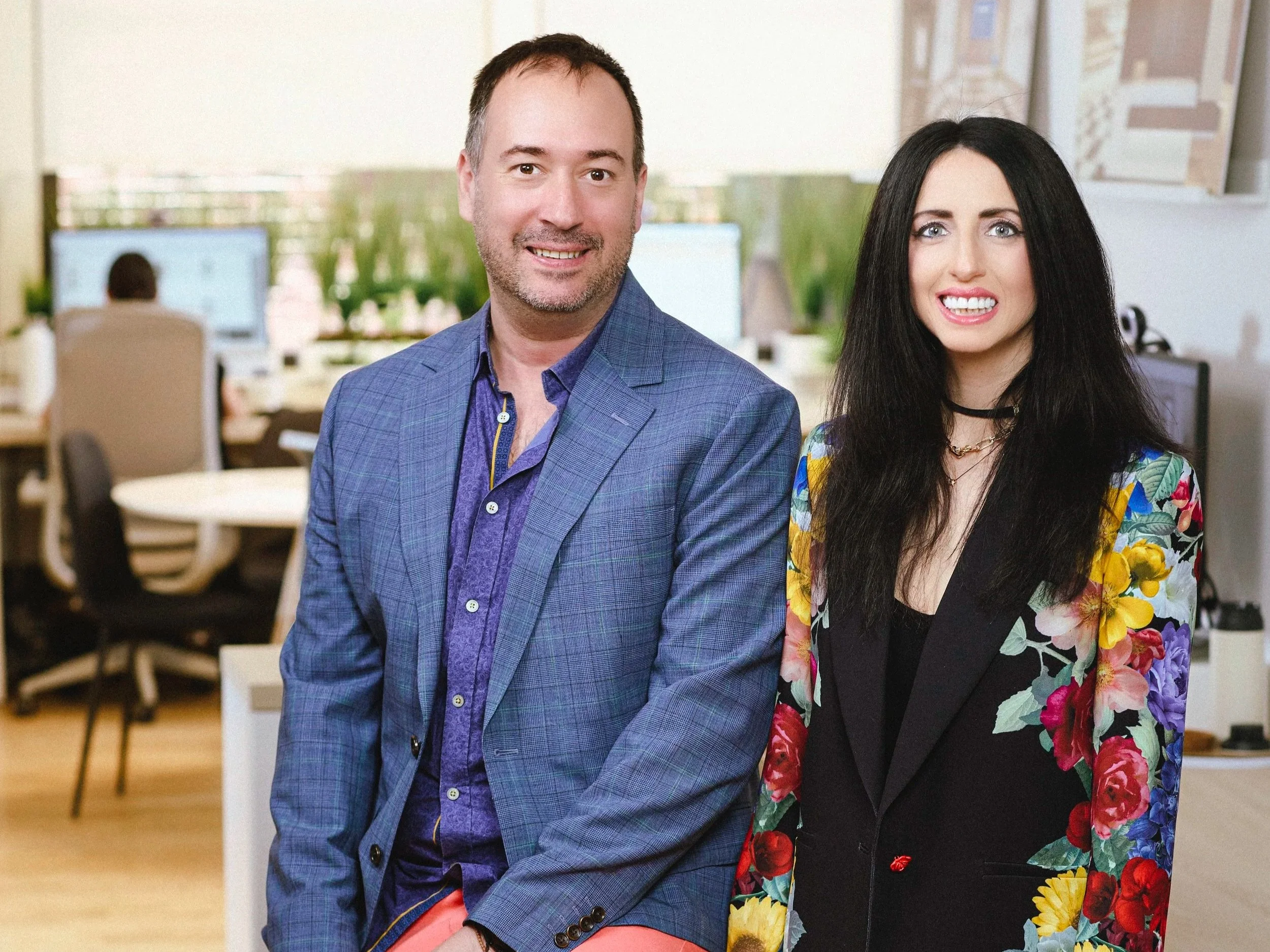
Yiannos Vrousgos ’10 (BFA) and Brooke Lichtenstein ’10 (BFA) . Photo by Matthew Septimus.
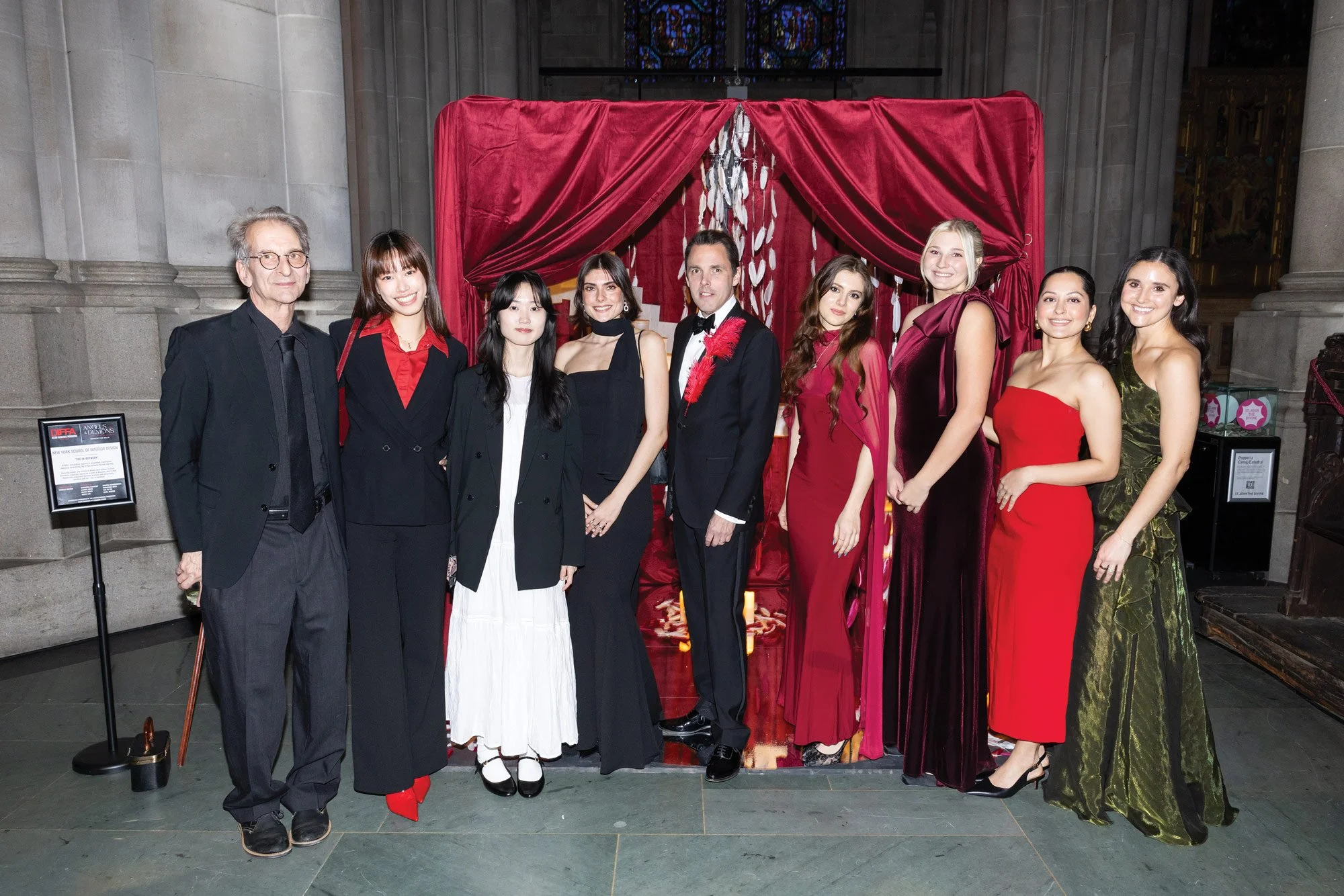
When one speaks with Brooke Lichtenstein ’10 (BFA) and Yiannos Vrousgos ’10 (BFA), founding principals of INPUT, and a married couple who met at NYSID, it’s easy to glean why their partnership works. Each one credits the other for their success. Lichtenstein and Vrousgos’ collaboration as designers began on a charity project, when they were NYSID students designing an installation for the Design Industries Foundation Fighting AIDS (DIFFA) Dining by Design benefit, in 2010. The DIFFA gala is a faculty-mentored opportunity to engage with the industry that NYSID still offers its students today. In the words of NYSID’s President David Sprouls, “Brooke and Yiannos were each outstanding students, but when they came together, they became a force to be reckoned with.” Recalls Lichtenstein, “The critiques (at NYSID) were so important. You had to get up in front of a room and justify your design choices and take feedback. I developed a tough skin, and this prepared me for real-life clients.”
Lichtenstein and Vrousgos founded INPUT just after they completed their BFA senior year at NYSID, in 2010. Their New York City-based interior design firm is known for creating luxury multifamily developments that are hundreds of thousands of square feet and tell the stories of the neighborhoods in which they are situated, as well as commercial interiors. Their projects bring the amenities of hospitality into residential buildings, and the comforts of home into hospitality spaces. The couple was honored with the Rising Star Award at NYSID’s Gala 2026. The studio has a full-time team of 15 employees, works with a network of part-time designers, and continues to expand selectively. In 2025, INPUT brought in 11 new clients and signed 38 new projects, some of them in SoHo, the Upper East Side, and Park Slope. The founders are deliberate about growth, particularly when it comes to talent. “We’re always hiring,” says Lichtenstein. “We take our time. We look for quality of work, strong technical skills, and people who bring big smiles. We believe in investing in our team and supporting their growth.”
Identify Opportunity
Vrousgos, who has another BFA degree in architecture from New York Institute of Technology, comes from a family of entrepreneurs, and he never wanted to work for anyone else. Lichtenstein worked through her time at NYSID as a design assistant at a residential firm called SPI Designs and planned to spend the beginning of her career working with a seasoned design team. But just two weeks after they graduated, Vrousgos reached out to Lichtenstein to tell her a large project had come his way. The project would involve the design of a 70,000-square-foot showroom in Thessaloniki, Greece, to serve as the headquarters of the entire Balkans region, for a leading Chinese LED manufacturer. She decided to take the client and go into business with him. “It was a risk. If an opportunity to start your own firm comes along, you need to ask yourself whether you need a well-thought-out, methodical plan for your career, or whether you can jump in feet first and adapt,“ she says. “We jumped in,” says Vrousgos. “To do this, you have a very specific personality. There are incredible highs and lows that no education can prepare you for.” Lichtenstein adds, “I do advise people to get prior experience or surround themselves with mentors.” The partners leaned on former NYSID instructors Judith Gura and Peter Brandt as “advisors and cheerleaders” at the beginning of their career, says Lichtenstein, but mostly, they relied on each other.
“I don’t believe in luck,” says Vrousgos. “Success comes from recognizing and seizing opportunities.” In 2012, they were invited to compete in an office furniture design contest for Lenovo, which they won. This victory earned them a contract to re-envision what the Lenovo retail experience would be by designing stores all over the US, which attracted other corporate clients, including Samsung. They were poised to center their career entirely on commercial design, when Lenovo moved its strategy away from brick-and-mortar retail stores. For a while, there was a lull in their work. They decided to go back to their roots and do a pro-bono charity project, designing the entrance to the 2013 DIFFA Dining by Design benefit. “Giving back through design is in the DNA of our company. Your motivations for choosing projects do not always need to be transactional: Sometimes go for a project because of the exposure, the experience. or the good it will do,” advises Vrousgos. Their DIFFA entrance was featured in The New York Times, and several days later, they got an unsolicited email from a representative from a branding firm who was interested in having them design a supermarket for his client, a developer in Brooklyn. They thought it was spam. It was not. Says Lichtenstein, “The developers loved the supermarket we created. We got our first contract for a luxury multifamily development because we succeeded in designing a supermarket.”
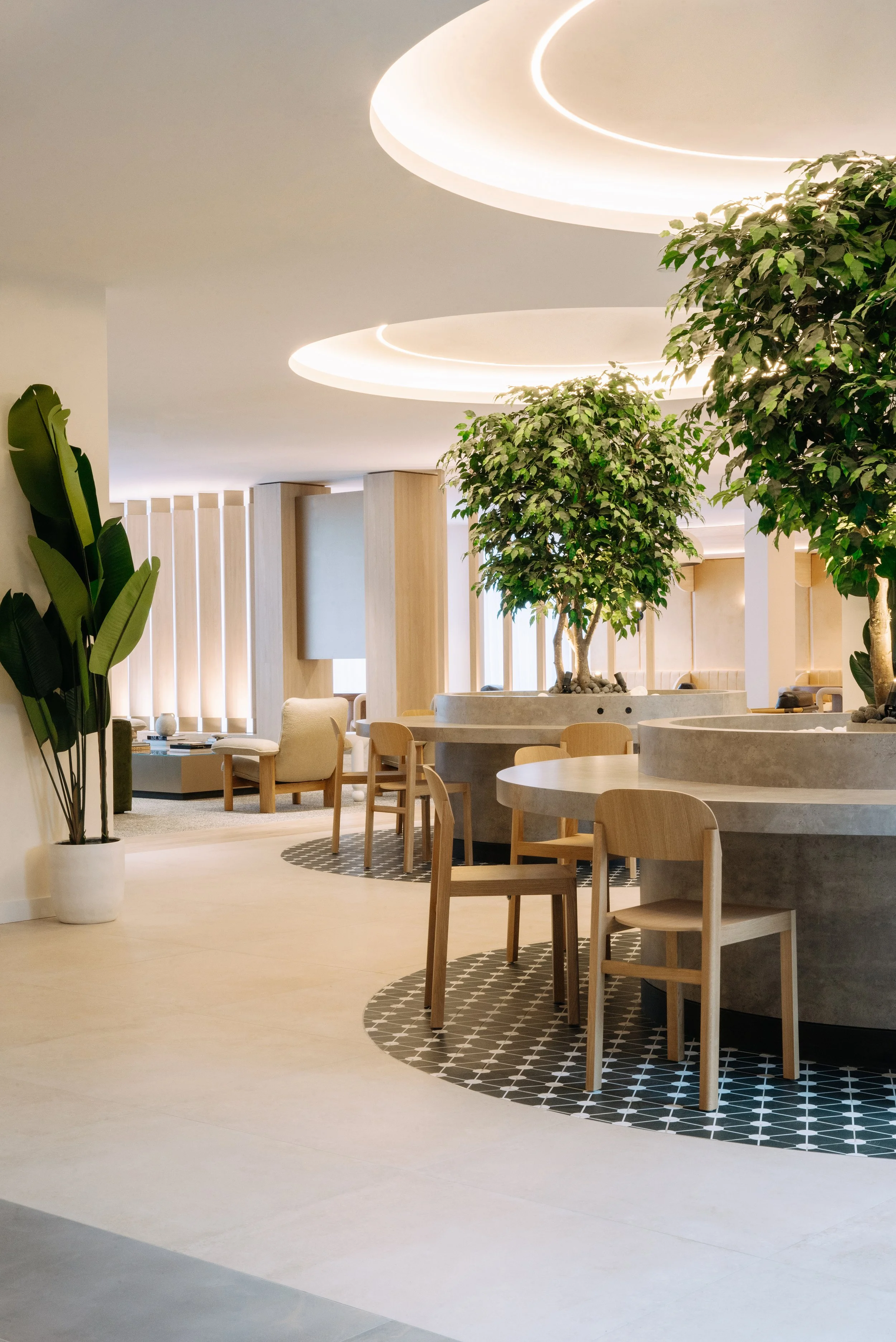
The Westmark, in the Gowanus neighborhood of Brooklyn, NY. Photo by Rich Johannes Weinberger.
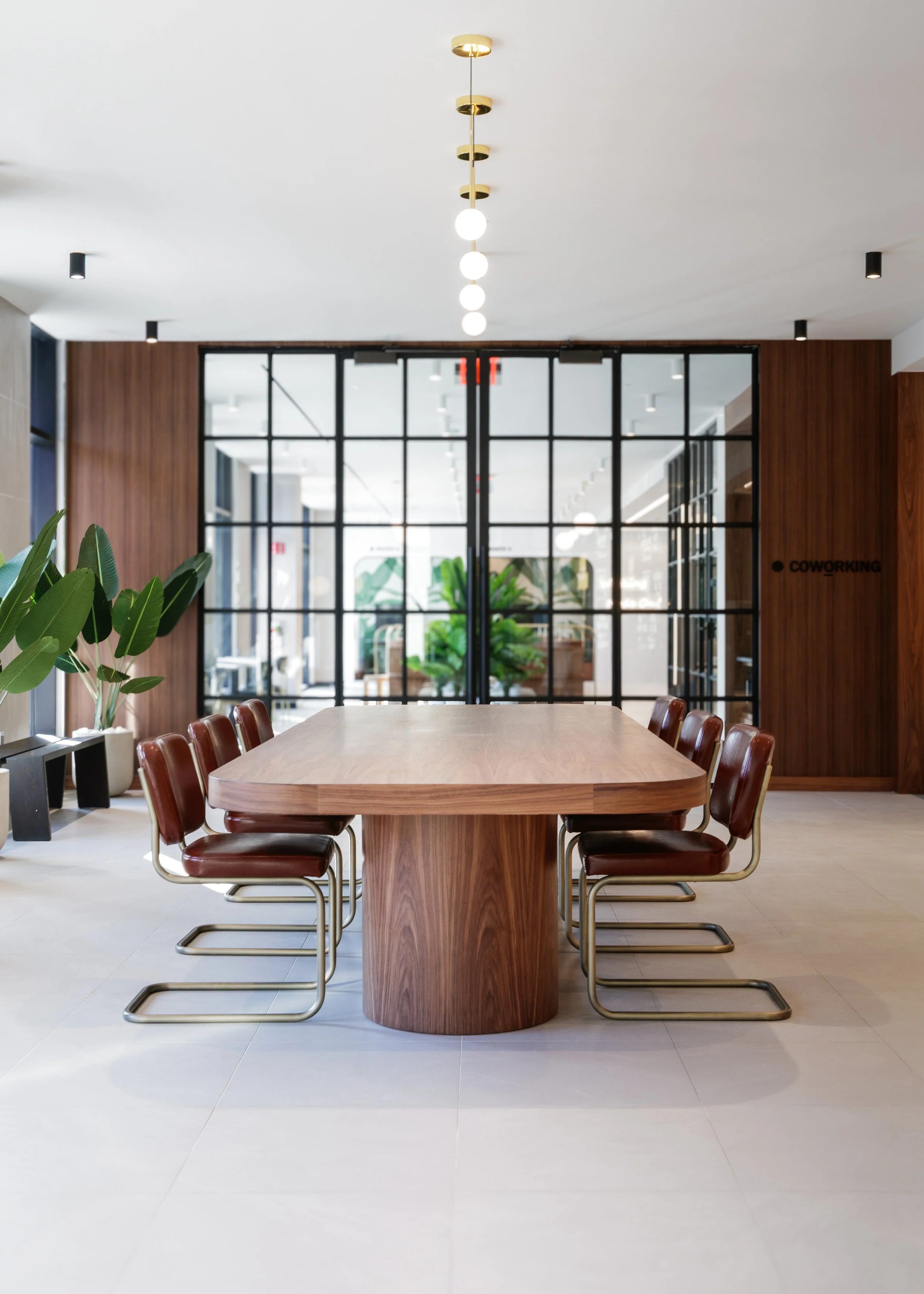
95 Anderson Street in Hackensack, NJ. Photo by INPUT.
Constantly Refine Your Design Voice
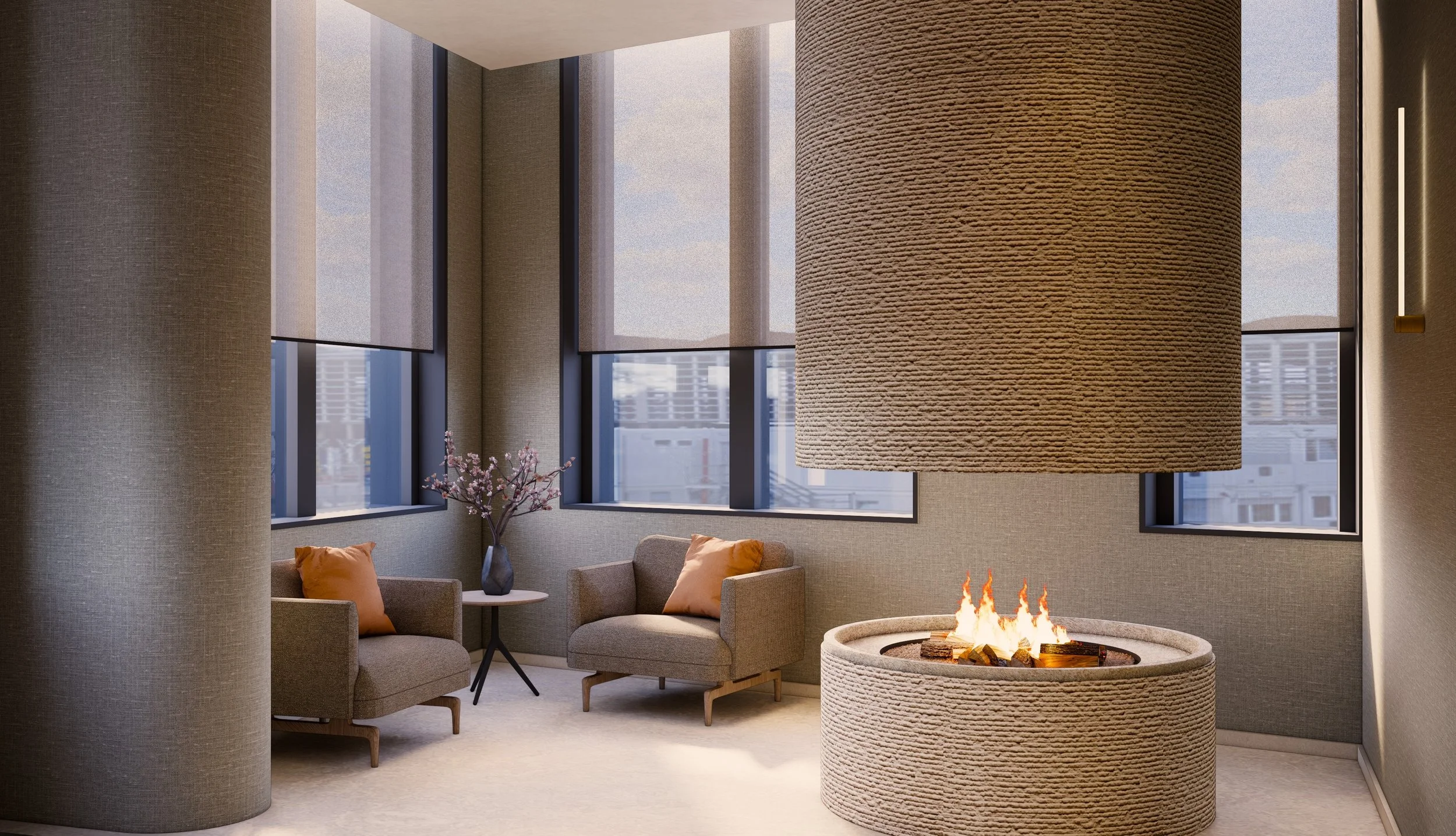
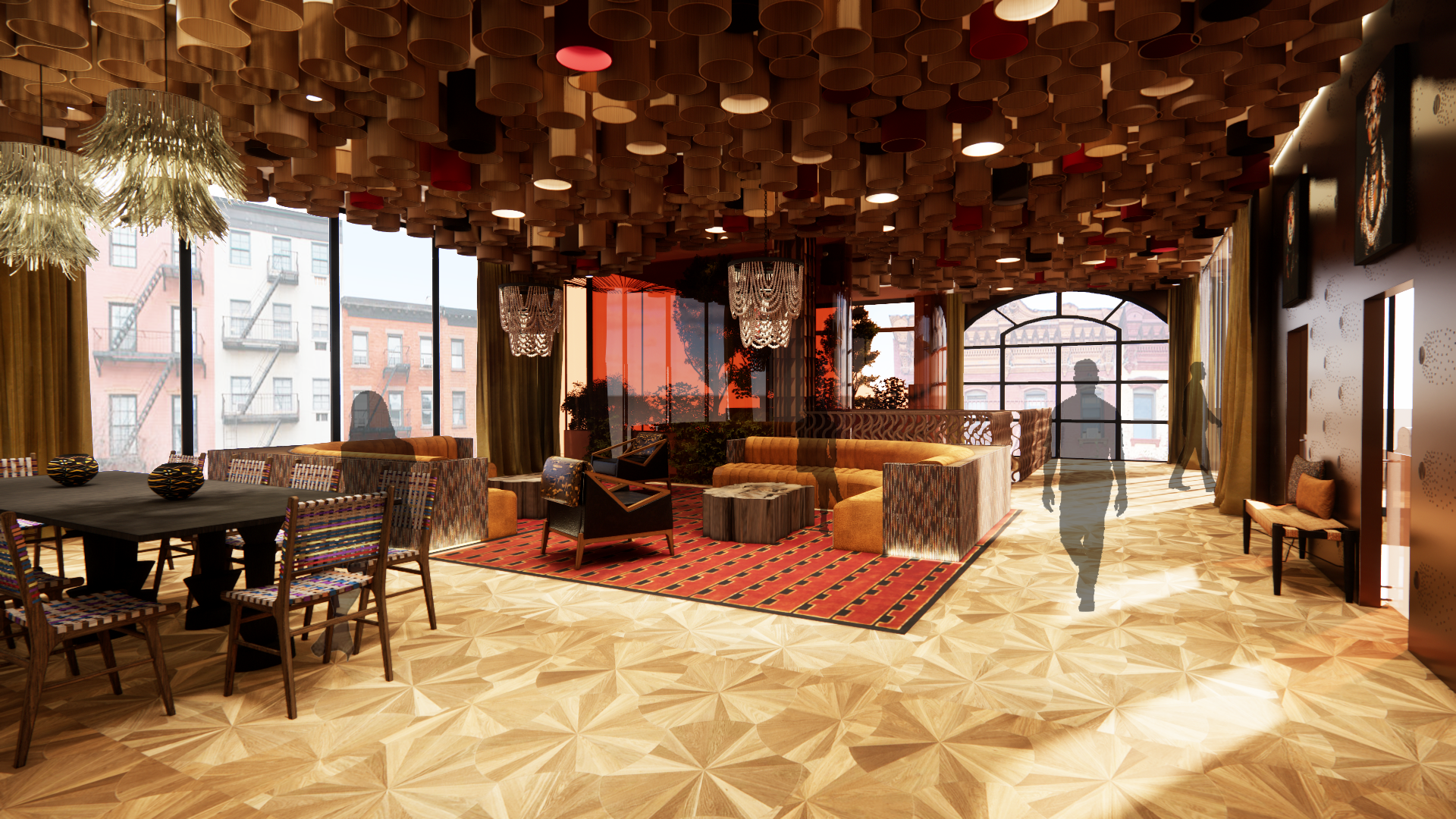
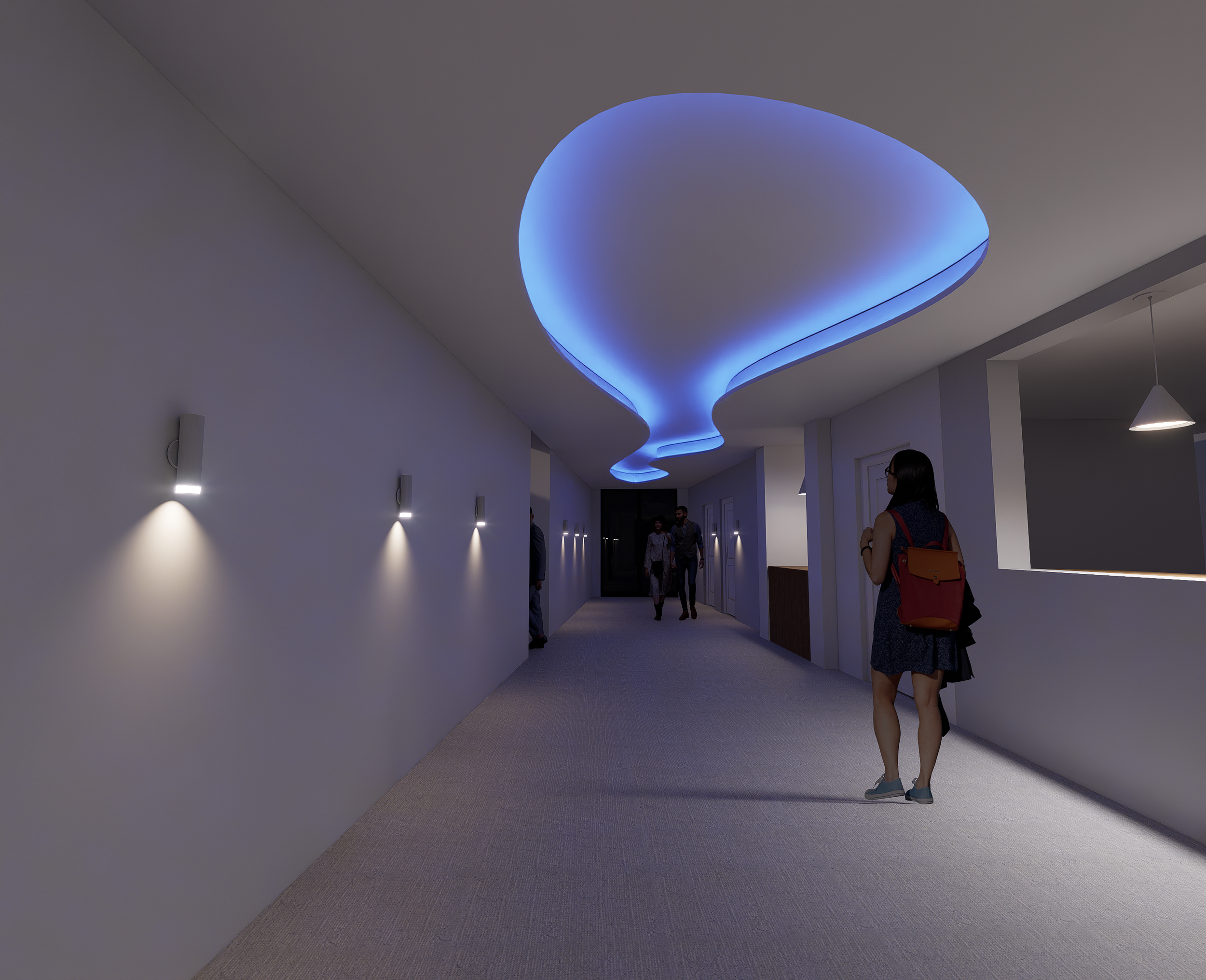
Lichtenstein, Vrousgos, and their team recently completed a project that was a milestone for them, both because of its scale and its potential to impact the neighborhood. The Westmark is a 672,000-square-foot residential complex that consists of 604 units, 124 of them reserved as affordable housing, in the Gowanus neighborhood of Brooklyn, NY. Says Vrousgos, “This project allowed us to flirt with different types of size and scale and bring enormous spaces down to the human level.” The neighborhood is bounded by the Gowanus Canal, a superfund site undergoing one of the most massive EPA cleanups in history, which is expected to be completed in 2030. The team has outfitted the building with 24,000 square feet of amenities specifically tailored to families, from playrooms to enclosed gardens to a fitness facility, with views of the canal, and biophilic elements that evoke the resilient flora and fauna that have endured in Gowanus. “The project is exciting because it’s part of the revitalization of the canal, and we’re essentially, within this building, creating a community that’s going to set the mark for what this neighborhood becomes,” says Lichtenstein.
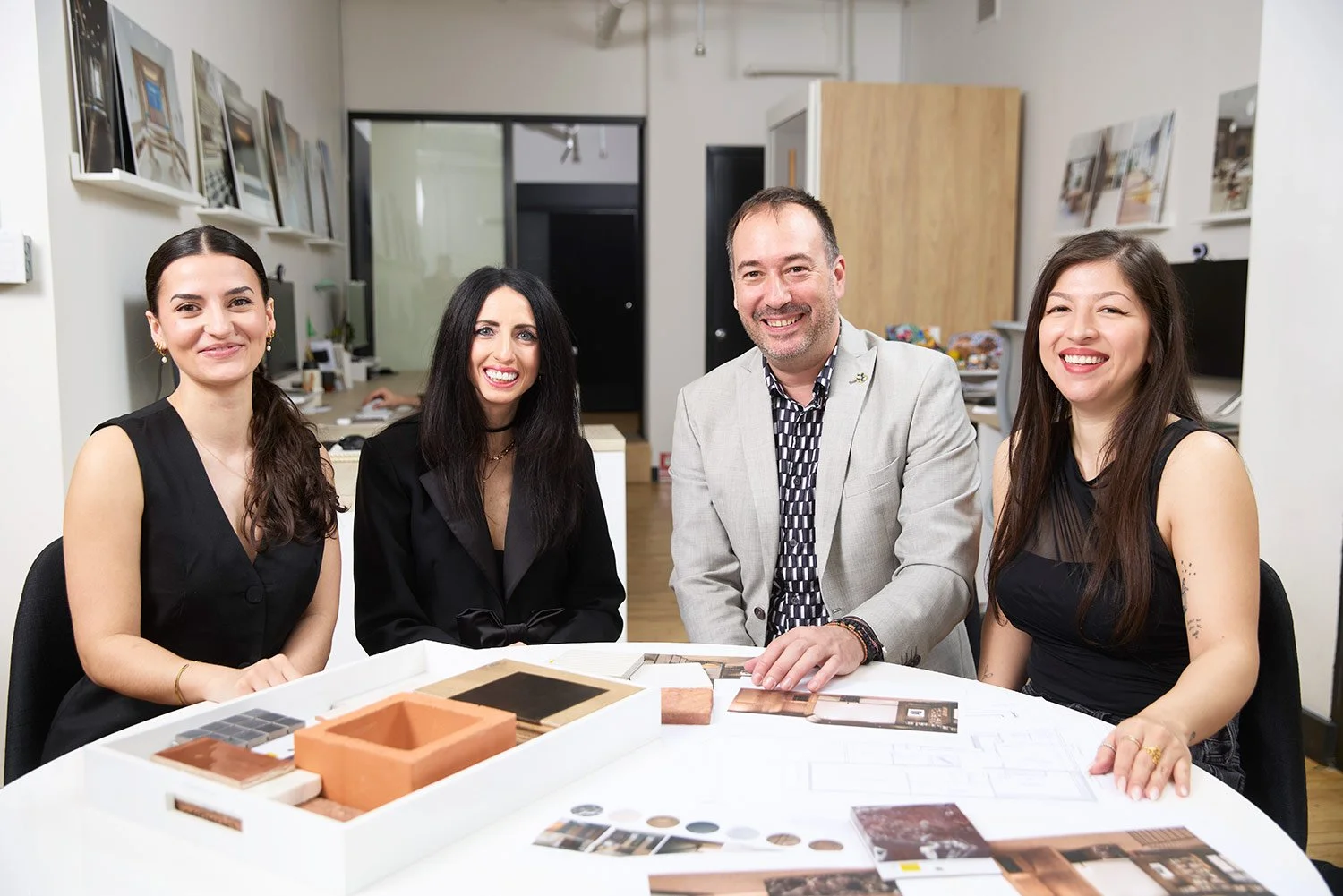
Cristina Llewellyn ‘25 (MFA1), Brooke Lichtenstein ‘10 (BFA), Yiannos Vrousgos ‘10 (BFA), Natalia Melendez ‘22 (BFA). Photo by Matthew Septimus.
Core to their brand is creating residential complexes that reflect the extensive research they do on prospective users. Their buildings spark community. “I think that the way we’ve gotten where we are is Yiannos’ obsession with positioning,” says Lichtenstein. “Every time we reach a certain level, he finds a project that pushes our brand a little further.” Adds Vrousgos, “You must constantly redefine your design voice.” In the 16th year of co-leading their firm, Lichtenstein and Vrousgos still believe being a design entrepreneur is all about adapting. Lichtenstein says. “I will always be proud of the fact that we did it: We built this design firm in New York City.” ■
After 30 Years, Marinello Remains a Firm that Exercises Fearlessness
Seattle, WA and New York, NY • 30-year-old firm

Alessandra Marinello ‘21 (BFA) and Susan Marinello ’95 (AAS). Photo by Matthew Septimus.
Few people decide to launch their own design firm months after having their first child, but that’s exactly what Susan Marinello ’95 (AAS) did. She began her design career in New York, after graduating from NYSID’s Associate of Applied Science in Interior Design (AAS) in 1995. She and her husband opted to move back to her hometown of Seattle in 1996 so that she could raise her children near extended family. To find clients, she took the invitation list from her wedding and sent a letter to everyone she knew, announcing that she was starting a design firm, and offering her services. Friends who needed to renovate a waterfront home on Lake Washington gave her a chance. That very first project was published in Traditional Home, and soon after, the queries from potential clients “snowballed.” She soon went on to design the interior of the Private Residences at the Four Seasons, Seattle.
Perhaps the most beautiful thing about this origin story is that it was told, admiringly, by Susan Marinello’s daughter, Alessandra Marinello, now an interior designer at Marinello running the new New York office and a NYSID BFA alum who graduated in 2021. She joined her mother’s company only after she established her own reputation at the much-admired Studio Sofield, over the course of four years. The younger Marinello says of her mother, “It wasn’t luck that made this company. My mother put herself out there. It began with grit.” Susan Marinello adds, “The first years were tough. I had just had a baby and we got busy so quickly. I exercised fearlessness by being willing to roll up my sleeves and figure it out.”
Expanding and Evolving After 30 Years
Marinello, the firm formerly known as Susan Marinello Design, is celebrating its 30th anniversary year in 2026. The Seattle-based company recently opened a New York office in Tribeca, managed by Alessandra Marinello. Says Susan Marinello “Alessandra is immensely talented and exceptional in her ability to assimilate information into positioning.” Today, Marinello is a firm that has 17 full-time employees. Its principal, Susan Marinello, and four senior designers visit the New York office for short-term residencies. The team works on 20 to 50 projects at a time, all over the country, from Seattle, WA, to Sun Valley, ID, to Manhattan’s Upper East Side, to Palm Springs, FL, with a portfolio that has a majority of residential projects and a steady flow of commercial projects. Susan Marinello says, “We think of ourselves as classic modernists who value the architecture of place.” She emphasizes the importance of cultivating workplace, hospitality, and residential projects in a firm’s portfolio: “Having what I call ‘the three legs of the stool’ means we can pivot at any time in response to economic ups and downs,” says Marinello. Alessandra Marinello recently led a search to hire two new employees in NY. Both hires graduated from NYSID: Ko-Hsuan (Averie) Chiu ’26 (MFA1) and Regina Galeeva ’26 (BFA).
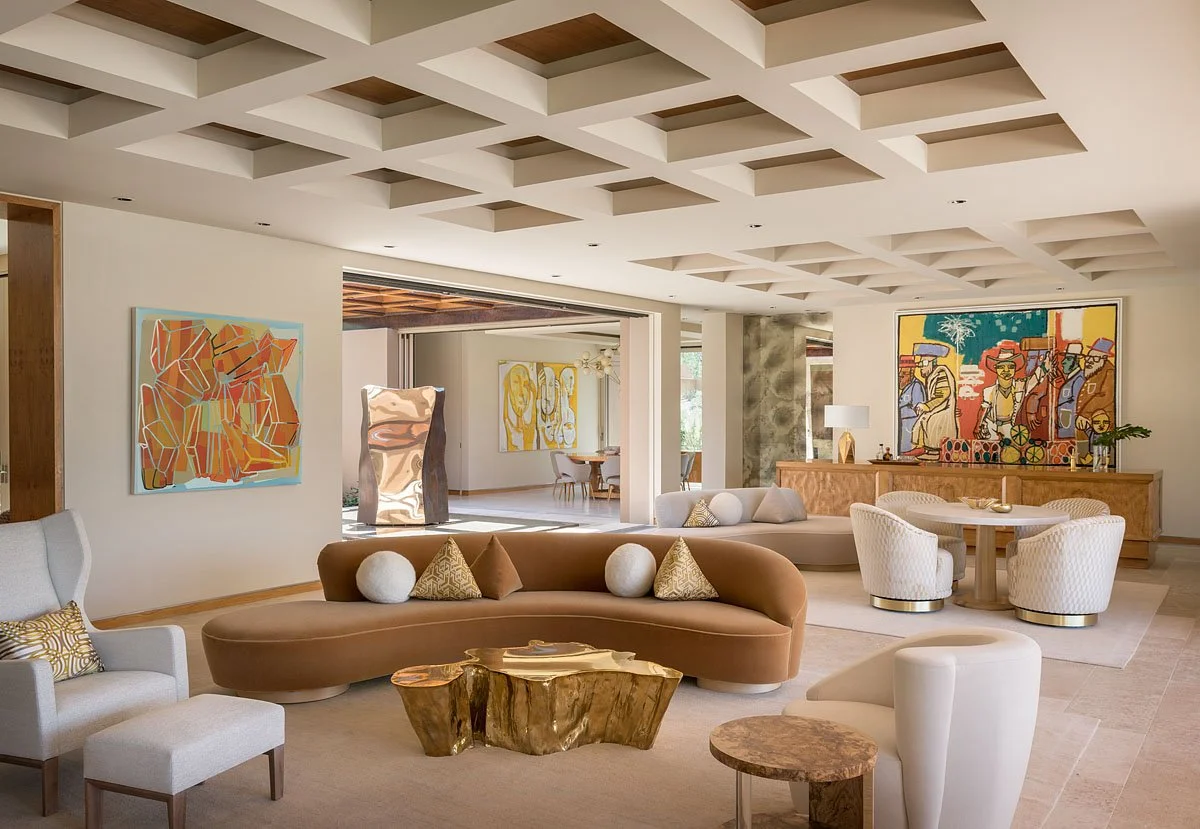
Indian Wells Residence. Photo by Aaron Leitz.
Stand for the Value of Interior Design
One of the aspects of the business that Susan Marinello excels at is communicating the value of interior design. Says Alessandra Marinello, “When my mother established her firm, many people on the West Coast viewed interior design as an unnecessary luxury. She was a major contributor to establishing interior design as a necessity in Seattle.” Susan Marinello recalls, “I had to learn how to sell the value of interior design. Whether I was speaking to a high-end developer or a homeowner, I learned to demonstrate, strategically, why interior design was important, from a financial standpoint and at a humanistic level.”
Susan Marinello credits NYSID for her ability to communicate the worth of human-centered design, as well as her professional poise. She says, “Going beyond teaching historical styles and the decorative arts, NYSID instills the importance of professional practice, as well as the business side of the practice. When your clients are highly successful, they have an expectation you will be able to track with them in the areas that matter to them. Often the wealthiest clients have the highest standards around budget adherence. I was well prepared for this.”
To Marinello’s founder and designers, creating designs that stand the test of time, enhance the human experience, and increase the value of the built environment are paramount. Susan Marinello recently walked into the lobby of The Lodge, a hospitality project in the Northwest she designed in 1998 and was moved by how relevant it still felt. She says, “What we want to provide every client is timelessness that feels relevant 25 years later. When you design interiors to last, every dollar matters, and creating transparency about this is how we uphold the ethics of our industry.”
Profitability as a Byproduct of Integrity
Susan Marinello has a tremendous sense of responsibility to her employees, clients, and the craftspeople she has collaborated with for years. “We map out an operating budget for the year and that becomes the roadmap for decision making,” she says. “Understanding the financials for me is an empowering tool for how to be a leader, and how to make decisions about all aspects of the business, whether it be hiring, or a new office.” She works with a three-person team to make projections: her director of operations, a part-time controller, and a CPA. The business is profitable and it was even during the pandemic.
Says Alessandra Marinello, “Susan has relationships with clients that last for decades because the level of care she demonstrates is unlike anything I’ve ever seen. I believe these lasting relationships with clients stem in part from the lasting relationships she has with all of the vendors and contractors involved. Everyone loves working with her because of the tone that she sets from day one.” Says Susan Marinello, “The integrity with which you approach your work and your reputation are everything…. I’m profoundly proud of the quality of work that my team delivers.” In short, your reputation is your brand in interior design.
Keep Your Brand Agile
Susan Marinello has a vision for her company that extends beyond herself, the reason she changed the name of her company. She loves that the designers on her team bring agility, energy, style, and new skills. “In the coming years, Alessandra will continue to evolve the firm’s legacy,” she says. The Marinellos reference fashion houses as a model for the firm. “Many brands are iconic because they remain true to their founder while also making room for a new generation. A brand in flux is a brand with a future,” says Susan Marinello. ■

Ko-Hsuan (Averie) Chiu ‘26 (MFA1), Alessandra Marinello ‘21 (BFA), Susan Marinello ‘95 (AAS), Regina Galeeva ’26 (BFA). Photo by Matthew Septimus.